dailynewsnblog
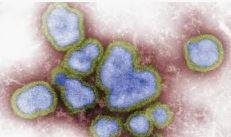
Today, the World Health Organization is removing Taiwan, China,
from the list of areas with recent local transmission of severe acute
respiratory syndrome (SARS). Taiwan is the last area to be removed from
the list. It has been 20 days, or two consecutive 10-day incubation
periods, since the last case on June 15. Based on country surveillance
reports, the human chains of SARS virus transmission appear to have been
broken everywhere in the world.
However, due to the many questions remaining about SARS and
the possibility that cases may have slipped through the surveillance
net, WHO warns that continued global vigilance for SARS is crucial for
the foreseeable future. The world is not yet SARS-free.
“We do not mark the end of SARS today, but we observe a
milestone: the global SARS outbreak has been contained,” said Dr. Gro
Harlem Brundtland, Director-General of the World Health Organization.
“At this moment, we should all pause and give thanks to scientists,
public health and hospital workers who took risks in the face of a new
and unknown disease. And, we must remember those frontline workers who
died of SARS. Their daily dedication, courage and vigilance averted a
global catastrophe.”
From the Guangdong province in China, the SARS virus travelled
in humans to 30 countries and areas of the world but it became deeply
embedded in just six. In these areas, the pattern of transmission was
the same: An imported hospitalized SARS case infected health care
workers and other patients; they infected their close contacts and then
the disease moved into the larger community. In affected areas
approximately 20% of all cases were in health care workers. To date,
8439 people have been affected, and 812 have died from SARS. Now, five
months after SARS began its spread around the world, it is close to
being driven out of humans.
SARS continues to threaten the world. Close to 200 people
remain hospitalized with the disease. And, it is possible that
undetected cases may have slipped through the surveillance network.
Thus, while today we have no reports of local transmission, that may not
be the case tomorrow.
“This is not the time to relax our vigilance. The world must remain on high alert for cases of SARS.” said Brundtland.
SARS will continue to menace the global public health system.
It is possible that new SARS cases will appear. SARS could be a seasonal
disease and return later in the year – a possibility based on what we
know about other members of the coronavirus family. Further, the
original source of this SARS outbreak may still be in the environment
and could ignite a new outbreak in the coming months. For example, it is
possible the virus still circulates in an animal reservoir and may
cross into humans again when conditions are right.
“To answer these and other questions, research into SARS must
continue. Scientific evidence will be crucial for our ability to best
handle another SARS outbreak should there be one,” said Dr Brundtland.
The public health research agenda for SARS is long and
growing. At the top of the list is a early diagnostic test, which can
detect the presence of the disease within days of disease onset. This
will be needed to distinguish SARS patients from those suffering from
other respiratory illnesses, especially when the flu season arrives.
Without a diagnostic test, hospitals may be forced to isolate all
persons with respiratory disease fitting the SARS case definition, and
this will be enormously expensive and divert essential resources from
other health needs. WHO is working with it’s partners to develop case
investigation, case management and surveillance protocols for SARS in
the post outbreak environment. These will be living documents revised
regularly as our knowledge expands.
Second, intense investigations into a possible animal
reservoir are needed. Only by identifying the original source of this
outbreak, and understanding the way the virus moves from the original
source to humans, can future outbreaks be prevented. Third, a global
database is required to give epidemiologists and clinicians the power of
large numbers to better understand SARS. Also, we need a better
understanding of the advantages of different therapeutic approaches in
the treatment of SARS.
“SARS is a warning,” said Dr Brundtland. “SARS pushed even the
most advanced public health systems to the breaking point. Those
protections held, but just barely. Next time, we may not be so lucky. We
have an opportunity now, and we see the need clearly, to rebuild our
public health protections. They will be needed for the next global
outbreak, if it is SARS or another new infection.”
Preparing for the next outbreak requires restoring and
strengthening the public health infrastructure. More epidemiologists and
other public health specialists are needed. Better surveillance and
response systems must be established which include strong national,
regional and global linkages in reporting. And governments need to
invest more in hospital infection control.
“SARS is teaching us many lessons,” said Dr Brundtland. “Now
we must translate those lessons into action. We may have very little
time, and we must use it wisely.”
For additional information see SARS homepage