
 dailynewsnblog
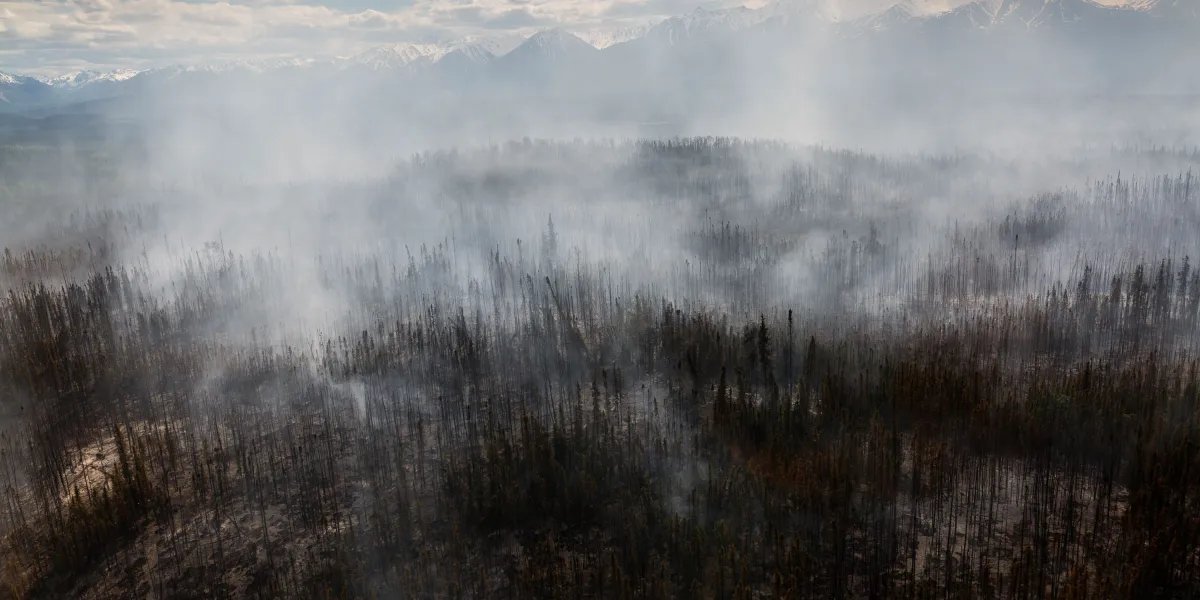
Hilary Shook, the coordinator of the consortium, stepped off the trail with her thaw probe, a T-shaped pointed metal rod used to detect the upper boundary of the permafrost, the ancient layer of frozen soil that underlies 15% of the land around the Northern Hemisphere and stores roughly twice as much carbon as the atmosphere.
A test of the ground just outside the burn scar hit the concrete-like layer about a foot below the surface. But as Shook applied pressure here, where the fire had burned away the moss and organic-rich topsoil that insulates the permafrost, the probe plunged at least three times deeper into the ground.
“That was an immediate effect of the fire,” said Alison York, the outgoing coordinator of the organization, who was standing nearby. “When we monitored right after, it had already thawed quite a bit.”

LEIF VAN CISE
This rudimentary tool, offering a measure of depth from a single point in the earth, reveals an escalating problem across the far north. As climate change fuels increasingly frequent and severe fires in the planet’s northern latitudes, they’re accelerating the thawing of more and more permafrost. This allows the organic matter to break down and release powerful greenhouse gases that contribute to a spiraling climate feedback effect, propelling more warming, more fires, and the loss of still more permafrost.
Most dramatically, intensifying wildfires in Canada released more carbon than the nation’s combined fossil fuel emissions in 2023. As in Alaska, many of these megafires occur in vast remote areas where the policy is to let them burn so long as they don’t threaten human habitats. Yet if intensifying fires and warming are left unchecked, the world’s boreal forests and permafrost could increasingly transition from giant carbon sinks into massive sources of atmospheric carbon.
Now, international teams of researchers across the US, Canada, and elsewhere are scrambling to understand what’s at stake, financially as well as ecologically. They’re looking at preventive measures, like controlled burns, and studying the potential to rapidly detect and extinguish wildfires before they grow out of control. They’re even exploring what was once unthinkable: sending in human firefighters not to save lives or structures, but to protect one of our planet’s great stores of carbon.