dailynewsnblog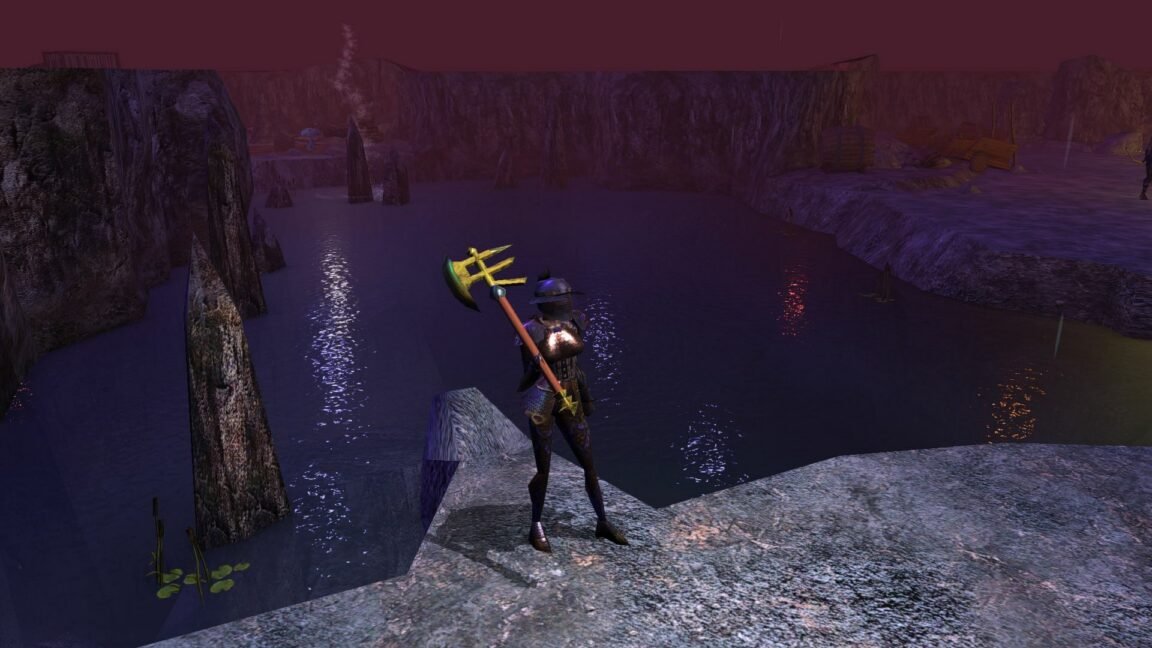
Baldur’s Gate and Icewind Dale did have multiplayer, where each player could control one or more characters directly. As noted, Neverwinter Nights limits each player to one character, but it adds a new role: a dungeon master, who can spawn enemies, occupy and act as NPCs, and more, to aid in group storytelling, similar to a pen-and-paper game.
“While Arelith is essentially a mini MMO, many of the other servers pride themselves in running highly curated, beautifully crafted campaign worlds much closer to tabletop role-playing game emulator that Neverwinter Nights was first intended as,” Morris told me. He called Neverwinter Nights “a direct translation of the tabletop role-playing game experience into the digital sphere.”
It’s as much a construction kit as it is a game
The game’s modding kit and easy-to-use scripting tools let players build scenarios relatively quickly. It essentially let players build a little RPG world, run it, and inhabit it. It was a bustling scene back then, and there’s still a community doing this today. The combination of the relative simplicity of the graphics and the elegance of the tools make this toolset an unusually excellent balance between flexible, powerful, and easy to learn.
“The tile-based areas are basic and limiting in some respects, but they do mean that building areas is quick and easy,” explained NelaK. “It’s much more approachable than a lot of other platforms.”
For NelaK and some other members of the game’s community today, the game’s tools aren’t just the remaining appeal—they’re the main appeal.
“I’ve been playing Neverwinter Nights since launch day. I remember one of my friends dragging me along to the store because they really wanted the game and I went just to keep them company,” he remembered. “I ended up buying it, and I’ve been hooked ever since, but to this day, I’ve still never played through the original campaigns… and yet I’ve played Neverwinter Nights or spent time building or working on something Neverwinter Nights-related most days since.”