dailynewsnblog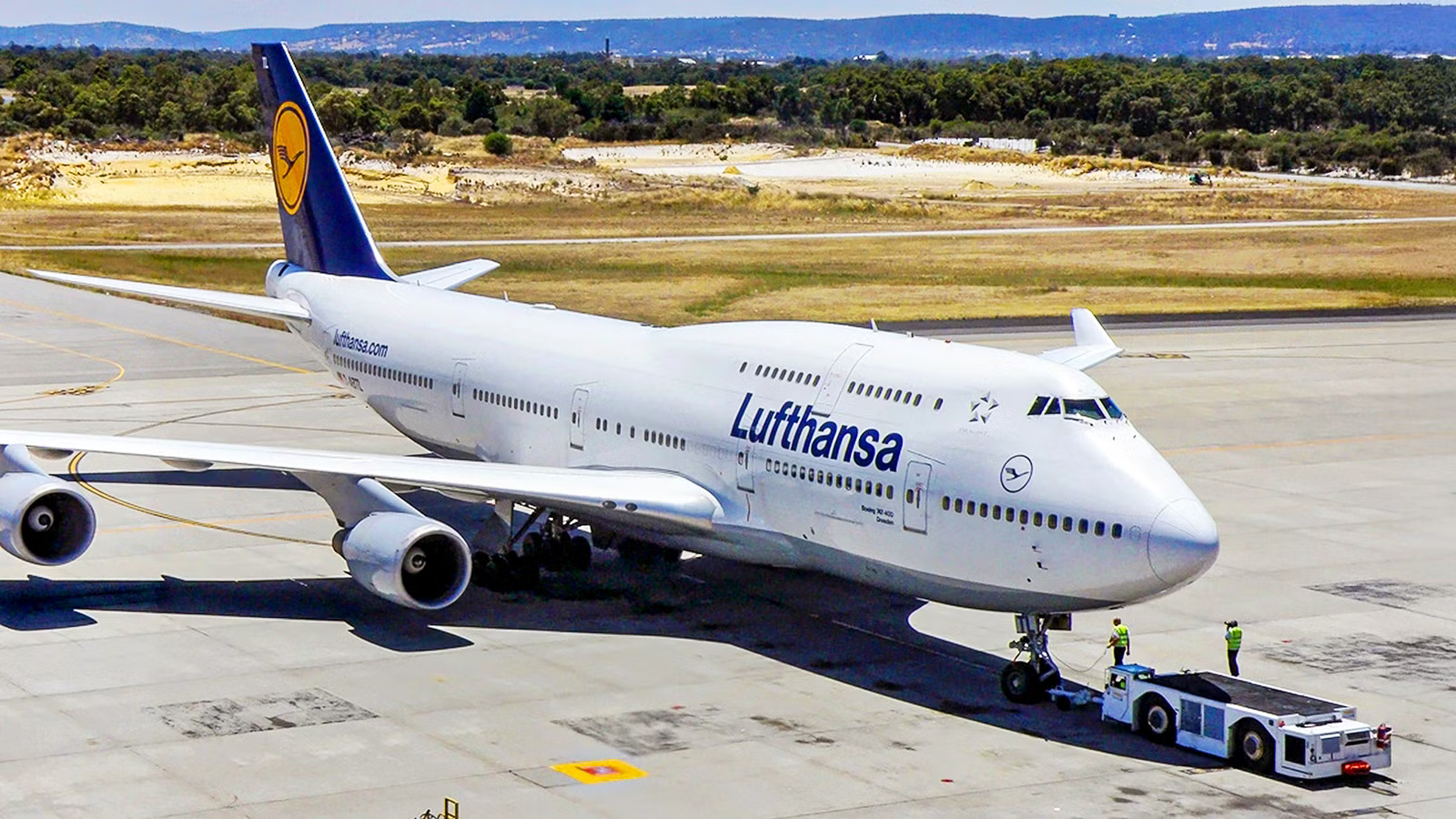
It has been more than five decades since the Boeing 747 entered commercial service and almost five years since the last example rolled out of the US planemaker’s Everett factory. The aircraft, widely known as the “Queen of the Skies,” is now a rare sight as airlines retire the four-engine jet for more fuel-efficient twin-engine aircraft. However, a handful of carriers continue to operate the type, and  Lufthansa is one of them.
According to ch-aviation, the German flag carrier currently operates 25 Boeing 747s, comprising eight 747-400s and 17 747-8s. It has been gradually retiring its older 747-400s, which have an average age of 26.5 years. Like British Airways and KLM, Lufthansa accelerated its retirement plans during the COVID-19 pandemic.
Notably, the airline parked six of the aircraft at a small airport in the Netherlands, where low parking costs made it an attractive option during the downturn. However, getting the aircraft out again proved difficult. The airport could accommodate their landings, but the aircraft could not take off.
Lufthansa Has Operated The Boeing 747 For More Than Five Decades

Lufthansa has been operating the 747 since 1970. The airline first flew the Jumbo Jet in April that year, using a 747-100 registered as D-ABYA on its Frankfurt to New York-JFK route. It became the first European airline to operate the type on passenger services and the second international airline to do so, after Pan American World Airways.
Over the years, Lufthansa added newer 747 variants to its fleet. It introduced the 747-200 after the original series and began operating the 747-400 in 1989. In 2012, it became the launch customer for the passenger 747-8 Intercontinental. At its peak, the Frankfurt-based airline operated more than 60 747s in its fleet.
Today, as noted above, that number has fallen to 25, and the older 747-400s are nearing the end of their service lives. Lufthansa has retired 15 examples of the variant so far, and it expects the remaining aircraft to leave the fleet by 2027.
Lufthansa Parked Six Boeing 747-400s At A Small Dutch Airport

Indeed, the COVID-19 pandemic caused a massive downturn in the aviation industry. In early 2020, the number of inactive and stored mainline aircraft reached 18,000 as airlines grounded the majority of their fleets. Several major carriers also accelerated the retirement of older aircraft, including four-engine jets, to reduce costs during the crisis.
Lufthansa was among them. In 2020, the German airline announced plans to reduce its fleet by around 100 aircraft, later increasing that figure to 150. As part of the cuts, it moved six 747-400s to Twente Airport (ENS), which is a small airport near Enschede in the Netherlands.
The aircraft were stored there because parking costs were lower than at many other airports. At the time, reports suggested the fee was around €10,000 ($11,195) per aircraft per month. The six aircraft were registered as D-ABTK, D-ABTL, D-ABVO, D-ABVS, D-ABVX and D-ABVP.
Twente Airport Was Not Cleared For Boeing 747-400 Takeoffs

Note that Twente is a small regional airport with a single runway spanning around 3 kilometers. It has several operating restrictions that limit the types of aircraft it can accommodate. At the time, the airport held an aerodrome certificate under Dutch aviation law, aligned with the International Civil Aviation Organization (ICAO) Annex 14 standards. The certificate specifically allowed Category D and E widebody aircraft to land at the airport.
To put that into context, the 747-400 is a Category D aircraft, meaning it was permitted to land at the Dutch airport. But here comes the twist. The certificate only permitted large aircraft to land for end-of-life (EOL) dismantling and scrapping or long-term storage. It did not cover routine departures by aircraft of the same size. The Dutch aviation authority, the Human Environment and Transport Inspectorate (ILT), confirmed to the media at the time that “Wide-body aircraft can land at Twente Airport, but only for dismantling.”
There are some reports suggesting that the airport expected the 747s to remain there for an extended period, potentially more than a year, and hoped that they would eventually be dismantled on-site (as it hosts Aircraft End-of-Life Solutions (AELS), an aircraft dismantling company). Lufthansa, however, had other plans. It sold at least three of the aircraft to American aircraft recycler GE Aviation Materials. But because of the airport’s certification restrictions, those aircraft could not simply take off again, leaving them “legally trapped” at Twente for quite some time.
The Airport Restrictions That Left Lufthansa’s Boeing 747s Stranded

The main issue was the airport’s infrastructure. Twente lacked multiple features required under ICAO standards for the safe operation of large aircraft. One of them was runway turn pads, which are paved areas at the ends of a runway that allow aircraft to turn around under their own power.
The other two missing features were the runway and taxiway shoulders. These are strengthened areas alongside runways and taxiways that support heavy aircraft and reduce the risk of damage if an aircraft moves beyond the main paved surface. This became a point of disagreement between the airport and the regulator.
The airport argued that runway turn pads were unnecessary because large aircraft only visited occasionally. After landing, they could be towed to the parking area rather than turning around under their own power. Indeed, the whole situation became complicated and put Twente in a difficult position. As a small airport, it saw Lufthansa’s decision to park six 747-400s there as a new source of income. But departure restrictions left the airport facing a problem it could not easily resolve.
Catch what other flight trackers miss
Emergency squawks, holds, NOTAMs — live signals, no signup.
Open tracker
Catch what other flight trackers miss
Emergency squawks, holds, NOTAMs — live signals, no signup.
Open tracker
One of the main questions was whether the airport operator already knew that the aircraft would not be able to leave. Several reports suggested that the Human ILT had warned the operator from the outset that the 747s could not depart because the airport lacked the required infrastructure. This, of course, led to disagreements over who knew what and whether the situation could have been avoided.
Lufthansa Finally Got Its Boeing 747-400s Out Of Twente

The dispute eventually escalated into legal proceedings. However, Twente Airport’s parent company, Technology Base, and ILT eventually reached an agreement on a temporary, one-off exemption. This allowed the German carrier to fly its stranded 747-400s out of the airport, subject to specific safety restrictions. One of the main conditions was that the aircraft had to carry limited fuel to reduce their weight. They would fly from Twente to Frankfurt, where they could refuel and continue to their intended destinations.
The first aircraft to leave was D-ABVP, a 23.7-year-old Boeing 747-400. It departed Twente at 4:26 PM local time on November 3, 2020, operating as flight LH9871, and landed in Frankfurt at 5:02 PM. The aircraft spent the night in Frankfurt and departed for Bangor International Airport in Maine at 12:05 PM the following day. From there, it continued to Mojave Air and Space Port in California, where it was due to be scrapped.
Lufthansa Boeing 747-400 departures in October | |
|---|---|
Bengaluru | 1x daily |
Houston | 1x daily |
Singapore | 1x daily |
Vancouver | 1x daily until October 24 |
Toronto | 1x daily until October 24 |
*All these routes are from Frankfurt, since all 747-400s are based there. | |
According to Planespotters.net, the aircraft remains stored at the American aircraft boneyard. The other five 747-400s also left Twente over the following months. The data shows that three of the stored aircraft (D-ABTK, D-ABTL, and D-ABVX) have returned to service and are currently being deployed on routes to destinations such as Toronto, Vancouver, Singapore, and Bengaluru.
Lufthansa Is Preparing To Retire Its Remaining Boeing 747-400s

To conclude, the 747 has become a rare sight compared with its heyday. Airlines have retired the four-engine jet in favor of more fuel-efficient twin-engine aircraft. Lufthansa, however, continues to operate the type as it deals with delays in the delivery of newer aircraft. The quad jets, including 747-400s, are helping the airline maintain capacity on its long-haul network. But as noted previously, the older 747s will retire very soon.
At the end of the summer flight schedule, which runs until October 24, 2026, Lufthansa will permanently ground its first two remaining 747-400s. The airline will retire the remaining six aircraft progressively, with the final farewell flight scheduled to operate on its historic Frankfurt to New York-JFK route. The Frankfurt-based airline plans to replace the older aircraft with more fuel-efficient widebodies, including the long-delayed Boeing 777-9, which completed its first test flight in May 2026 and is expected to enter service in 2027.
That said, the retirement of the 747-400 does not spell the end of Lufthansa’s Jumbo Jet operations. The airline’s newer 747-8 fleet is not affected by the 2027 retirement deadline. The German carrier continues to operate 17 of these aircraft, several of which are undergoing cabin upgrades to introduce its new Allegris interior. The airline has also recently sold two 747-8 airframes to a private buyer, although the buyer’s identity and intended use have not been officially confirmed.
Reports have speculated that the aircraft could be connected to the US Air Force’s requirements for spare parts and fleet support. For now, the 747-8 remains an important part of Lufthansa’s long-haul fleet. The airline’s investment in cabin modernization suggests that, the Queen of the Skies will continue to fly under the Lufthansa name for years to come.