dailynewsnblog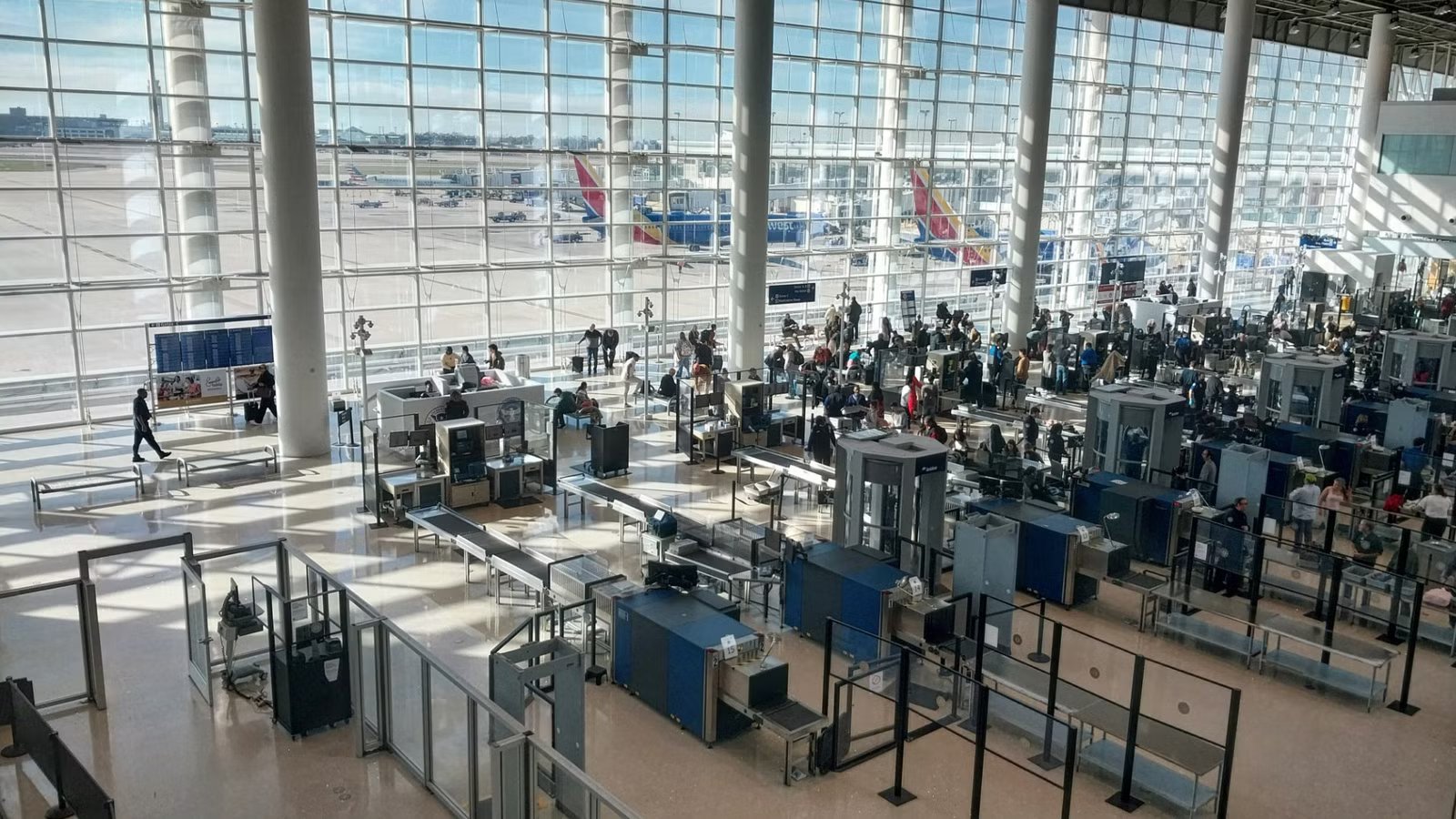
The Transportation Security Administration (TSA) has abruptly suspended a major expansion of its new Gateside by TSA PreCheck program, which allows eligible non-ticketed visitors to pass through airport security and meet friends and family at departure gates. Originally introduced as a pilot at 13 airports in September, the initiative expanded to a planned 314 airports on October 2, before the agency reversed course just days later. The original pilot remains operational, but the broader rollout has been placed on indefinite hold.
The decision has raised questions about the agency’s approach to airport access, particularly as Gateside was intended to restore an experience largely lost following the September 11 terrorist attacks. TSA has not publicly explained its sudden reversal, which comes amid significant changes to airport security involving biometric identification, new baggage scanners, and faster screening lanes.
TSA’s Nationwide Gateside Expansion Comes To An Abrupt Halt

Gateside allows TSA PreCheck members, and eligible members of other trusted traveler programs, to request secure terminal access without holding an airline ticket. Applications must be submitted online one to three days before visiting, using a valid Known Traveler Number and Login.gov account. Successful applicants undergo TSA PreCheck screening, with no additional fee beyond their existing membership. The program can be used to accompany departing passengers, greet arriving travelers, enjoy airport restaurants and shops beyond security, or do some planespotting.
The program was finally going live across the nation this month, so the scale and speed of the reversal is particularly striking. On October 1, Tulsa International Airport (TUL) announced that it would be launching Gateside, saying that the program was being rolled out to 301 additional airports the following day, increasing the national network to 314 locations. Kim Kuehler, communications manager at TUL, emphasized the reasoning behind the initiative:
We’re excited to offer another way for our community to enjoy more of our airport. Whether you’re welcoming someone home, seeing a loved one off, or spending a little extra time together beyond security, these options give our community more flexibility and make the airport experience even more welcoming.”
Multiple other airports followed in short order and began participating in the program. However, View From The Wing (VFTW)reports that by October 15, the application portal had reverted to just the original 13 airports, with the TSA telling airports “the Gateside by TSA PreCheck program is on hold indefinitely aside from the 13 airports in the pilot program.” The broader expansion therefore lasted less than two weeks, despite having been publicly promoted by both the TSA and participating airports.
The suspension has already caused confusion.  Denver International Airport (DEN) confirmed to CNN that TSA had returned Gateside to its original pilot airports, despite visitors successfully using the program there the previous week. News34 reports that at Norfolk International Airport (ORF), officials only discovered the airport had disappeared from the application system after receiving complaints. The airport reported that 31 people had used Gateside during its first four days. These experiences highlight the challenges created when a publicly promoted airport benefit is withdrawn without clear advance communication.
Why Did TSA Reverse Course — And What Alternatives Remain?

TSA has not identified the reason for the suspension, leaving several potential explanations unconfirmed. A rapid rollout across hundreds of airports would require coordination between checkpoint personnel, airport operators, and the national application system. VFTW suggests that inconsistent staff training or technical challenges could have contributed. It points towards examples of visitors being turned away at  Dallas/Fort Worth International Airport (DFW) despite having obtained approval, because checkpoint staff and supervisors said they hadn’t been trained on the program or couldn’t find the approval in their system.
Checkpoint capacity provides another possible consideration. Even approved visitors must undergo screening, potentially increasing workloads during busy periods. But unlike ticketed passengers, non-travelers can be managed through strict daily allocations. This is already happening at a number of US airports that have their own (non-TSA) airside visitor programs which were in operation before Gateside came along (see table below).  Seattle-Tacoma International Airport (SEA), for example, limits its visitor program to 300 people daily, while
  Philadelphia International Airport (PHL) permits just 100.
Airport | Visitor Program | Application Window | Daily Limit |
|---|---|---|---|
Tulsa (TUL) | TUL Visitor Pass | Same day–7 days | Limited |
Detroit (DTW) | DTW Destination Pass | Same-day kiosk | Not published |
San Diego (SAN) | SAN Pass | Same day–7 days | Limited |
San Francisco (SFO) | SFO Gate Explorer | Same day–30 days | Not published |
Philadelphia (PHL) | Wingmate Pass | 1–7 days | 100 |
Seattle (SEA) | SEA Visitor Pass | Same day–7 days | 300 |
Cleveland (CLE) | Hopkins Hangout Pass | 1–7 days | 100 |
Kansas City (MCI) | Guest Pass | Same day–7 days | Limited |
Seattle’s longstanding visitor-pass initiative has been running for years, and demonstrates how carefully controlled non-ticketed access can operate alongside normal passenger screening. The program recorded nearly 2,500 visitors a month last year, while at  San Francisco International Airport (SFO), the new Gate Explorer program launched in April has already increased daily visitor caps from 200 to 300 due to the strong interest. Even smaller airports like Tulsa attract more than 1,000 visitors a month, showing that there is plenty of demand for these airside visitor initiatives, yet at numbers that are still very manageable for airport security.
New Airport Scanners And Faster TSA PreCheck Lanes Are Coming

While Gateside’s nationwide rollout has stalled, TSA is moving ahead with other ambitious plans to modernize security screening. On October 6, TSA Administrator David Cummins announced plans to introduce upgraded PreCheck lanes at seven airports over the following six weeks. Combining several existing technologies could potentially double checkpoint throughput. With PreCheck participation currently around 50 million, the agency hopes faster processing will attract another 20 million participants over three years. These upgrades form part of its wider Horizon 25 modernization strategy.
The proposed systems combine electronic identity gates, advanced body scanners, and artificial intelligence-assisted baggage screening. New body scanners allow passengers to stand with their arms lowered rather than raised overhead, potentially making screening faster and more accessible. At  Charlotte Douglas International Airport (CLT), eight self-service eGates have already undergone testing, while Touchless ID continues expanding across the country.
  American Airlines confirmed in April that the biometric service was available at all its major hubs, alongside dozens of additional airports.
TSA Initiative | Latest Development | Impact |
|---|---|---|
PreCheck Mod Set | Seven-airport initial deployment planned | Up to double existing lane throughput |
CT Baggage Scanners | 1,162 units across 296 airports by July 2026 | Improved 3D baggage screening |
Touchless ID | Expanded to dozens of US airports | Faster biometric identity verification |
Automated eGates | Eight tested at Charlotte, with trials elsewhere | Reduced manual document checks |
Meanwhile, TSA’s nationwide CT scanner rollout continues to transform carry-on baggage screening. By July 2026, the agency had deployed 1,162 scanners across 296 airports, providing detailed three-dimensional baggage images. Although these machines can reduce the need to remove electronics and permitted liquids, the standard 3-1-1 liquids restrictions remain in force. TSA is considering further changes to what passengers may carry through security — such as not having to remove water bottles — but has not confirmed those changes.
Gateside’s suspension therefore presents an unusual contrast. While TSA is investing heavily in faster, more convenient airport processing, it has simultaneously withdrawn one of its newest and most exciting passenger-experience initiatives. Based on the demand shown by the thousands that already use airport-specific airside visitor programs each month, hopefully the suspension is just temporary.