dailynewsnblog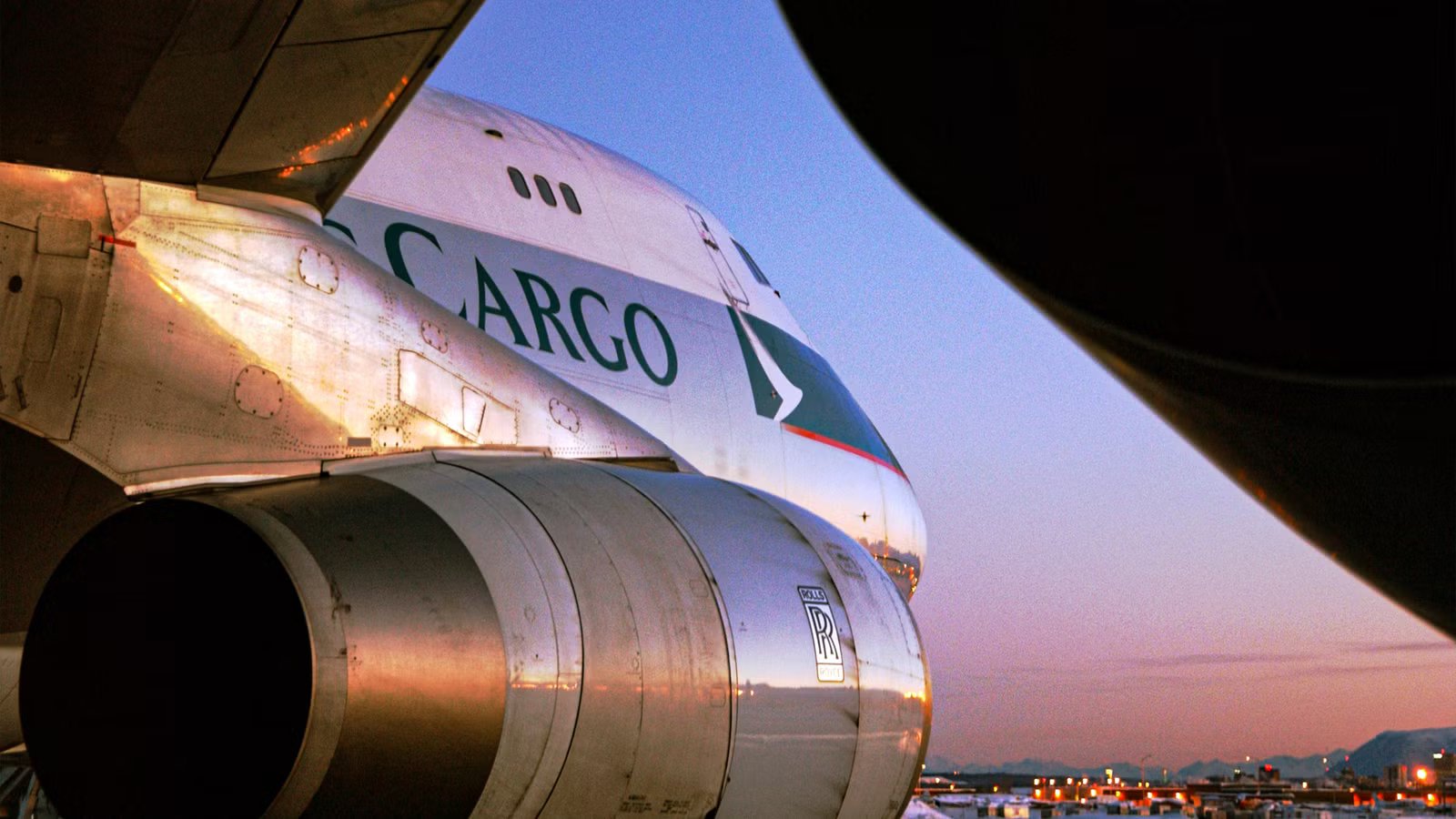
In the late 1950s, intercontinental air travel was a noisy, expensive, and fuel-thirsty endeavor. Early transatlantic jetliners used pure turbojet engines that forced every cubic foot of air through a white-hot combustion core, consuming massive quantities of kerosene while screaming across the skies at maximum power. The fundamental challenge of long-haul aviation was clear: to make global flight economically accessible, propulsion systems needed to generate far greater thrust and burn significantly less fuel per mile.
The story of modern intercontinental flight is inextricably linked to how Rolls-Royce answered that propulsion challenge across six decades. Instead of making incremental adjustments to existing designs, the British engine manufacturer repeatedly took radical technical gambles that greatly changed the trajectory of civil aviation. From introducing the world’s first operational turbofan to pioneering three-shaft architectures and composite fan technology, four pivotal engine generations reshaped airframe performance, airline economics, and the geographical reach of global commerce.
Rolls-Royce Conway

The dawn of the commercial jet age arrived with pure turbojets like the Pratt & Whitney JT3C and the Rolls-Royce Avon. These early engines propelled airliners above the weather at unprecedented speeds, though their thermodynamic design was inherently wasteful for long-range cruising, as noted by Safe Fly Aviation. Every pound of intake air passed directly through the compressor, burner, and turbine sections, creating an extremely high-velocity, high-temperature exhaust jet. Rolls-Royce engineer Sir Stanley Hooker recognized that propulsive efficiency could be dramatically improved by accelerating a larger volume of air at a lower velocity, laying the groundwork for the world’s first production turbofan.
Developed in the mid-1950s, the Rolls-Royce Conway introduced the bypass principle, a revolutionary idea for commercial aviation. The engine routed approximately 30% of cold intake air around the inner high-pressure core, mixing it with the hot exhaust stream before exiting the tailpipe, as per the Aircraft Engine Historical Society. This cooler, slower-moving outer envelope reduced overall exhaust velocity, which cut specific fuel consumption while noticeably lowering jet mixing noise on takeoff. When the Conway entered airline service in 1960, it delivered a step-change in range and payload capability for first-generation intercontinental airliners.
The commercial impact of the Conway was immediate and far-reaching. Major international carriers selected Conway-powered variants of the Boeing 707-420 and Douglas DC-8-40 to operate nonstop transatlantic routes with full passenger payloads without needing costly refueling stops. The engine reached its ultimate operational expression on the four-engine Vickers Super VC10, where four rear-mounted Conways provided 21,000 lbf (93.4 kN) of thrust each, according to VC10.net. The engine showed that bypass airflow was the key to unlocking long-range flight economics, and consequently rendered pure turbojets obsolete for commercial transports, establishing the template for all modern airliner engines.
Rolls-Royce RB211

By the late 1960s, the arrival of widebody airliners necessitated an exponential leap in engine thrust and operational efficiency. Lockheed selected Rolls-Royce as the exclusive powerplant provider for its flagship Lockheed L-1011 TriStar, prompting British engineers to propose the radical design of the RB211. Instead of traditional single or dual-shaft configurations, Rolls-Royce introduced a three-shaft layout containing low, intermediate, and high-pressure spools. By allowing each compressor and turbine stage to rotate independently at its optimal aerodynamic speed, the three-shaft design offered a significantly shorter, lighter engine core with higher pressure ratios and lower fuel consumption than competing twin-shaft engines.
To achieve unmatched efficiency, Rolls-Royce staked the entire RB211 program on a breakthrough material technology called Hyfil, a carbon-fiber composite developed for the massive front fan blades. As noted by the Royal Aeronautical Society, carbon fiber offered exceptional weight savings over titanium, but during simulated bird-strike testing, the rigid Hyfil blades shattered under high-velocity impacts. An emergency redesign back to solid titanium added weight, altered engine aerodynamics, and caused development costs to spiral out of control. By February 1971, the crippling financial losses pushed Rolls-Royce into receivership, prompting the British government under Prime Minister Edward Heath to nationalize the company to preserve the nation’s primary defense and aerospace manufacturing asset.
Once state backing stabilized the business, the RB211-22B entered commercial service on the Lockheed L-1011 TriStar in 1972, generating 42,000 lbf (187 kN) of thrust, as per Ready For Takeoff. The engine proved to be an aerodynamic masterpiece, delivering exceptional climb performance and outstanding fuel economy. Later on, with modified variants like the RB211-524 being developed, the engine family expanded onto the Boeing 747 and Boeing 757, earning a reputation among international airlines for durability and hot-and-high operational performance. By enduring the crisis of 1971, Rolls-Royce established the three-shaft architecture as its signature engineering philosophy, creating the technical foundation for its modern widebody powerplants.
Rolls-Royce Trent

In the early 1990s, twin-engine widebodies were transforming intercontinental routes that were previously dominated by trijets and four-engine heavies. The Airbus A330 came along and needed an engine that could combine massive takeoff thrust with long-range fuel efficiency. Building on the proven three-shaft foundation of the RB211, Rolls-Royce launched the Trent engine family, debuting with the Trent 700, as detailed in Simple Flying analysis. With the retention of the three-spool layout, engineers could scale the engine core and fan assembly without massive redesigns, giving the powerplant an inherent structural advantage over two-shaft rivals.
According to data from Rolls-Royce, the Trent 700 featured a 97.4 inches (2.47 meters) wide fan made from hollow titanium using superplastic forming and diffusion bonding. This lightweight, highly resilient blade construction allowed the engine to swallow vast quantities of air, increasing the bypass ratio to 5.0:1 and producing up to 72,000 lbf (320 kN) of thrust. Operational efficiency and exceptional high-temperature performance enabled the Trent 700 to capture over 60% of the market share on the A330, becoming the powerplant of choice for major international airlines.
The success of the Trent 700 validated the three-shaft scaling concept across the entire widebody market, spawning subsequent variants like the Trent 800 for the Boeing 777, the Trent 900 for the Airbus A380, and the Trent 1000 for the Boeing 787. Each iteration refined thermal barrier coatings, turbine blade cooling, and aerodynamic bypass profiles. Rolls-Royce established a direct evolutionary line leading straight to the ultimate expression of three-shaft technology, progressively improving and adding the latest technologies as they were developed.
Rolls-Royce XWB

When Airbus set out to design the all-composite A350 XWB to challenge existing twin-aisle dominance, it selected Rolls-Royce as the exclusive engine supplier. The resulting Trent XWB was built specifically for the airframe, optimizing the thermodynamic match between the wing design and the engine nacelle. Achieving commercial entry into service in January 2015, the Trent XWB became the pinnacle of three-shaft turbofan development, delivering a 15% reduction in fuel burn compared to the initial generation of Trent engines.
The core of the Trent XWB was developed with advanced materials and extreme operating pressures. Its 118 inches (3.00 meters) titanium wide fan sweeps air into an intermediate and high-pressure compressor system generating an overall pressure ratio of 50:1. Hot-section turbine blades feature advanced single-crystal superalloys coated with ceramic thermal barriers, allowing the engine to run at internal combustion temperatures well above the melting point of the metal itself. The exceptional thermal and aerodynamic refinement has made the Trent XWB the fastest-selling widebody engine in civil aviation history.
The performance of the Trent XWB transformed airline route planners’ capabilities, enabling non-stop flights spanning over 8,000 nautical miles (14,816 km) across polar and oceanic corridors with unprecedented dispatch reliability. Crucially, the engine allows long-haul twinjets to replace larger four-engine airliners that are no longer economically viable for most carriers, as well as allowing the aircraft to operate with far superior economics and lower emissions per passenger mile.
How Far Have We Come?

The evolution from the Conway’s modest 0.3:1 bypass ratio to the Trent XWB’s massive 9.6:1 bypass ratio demonstrates how Rolls-Royce has truly transformed long-haul economics over six decades. Refusing to follow the twin-shaft convention of major rivals like General Electric and Pratt & Whitney, British engineers established a distinct technical philosophy. The three-shaft concept allowed independent spool speed optimization, giving Rolls-Royce powerplants an inherent balance of core compactness, high pressure ratios, and exceptional structural rigidity across four generations of widebody airliners.
Rolls-Royce’s engineering commitment can never really be put into doubt, especially since it survived profound corporate turbulence as a result. The 1971 receivership and subsequent nationalization could have marked the end of British commercial aero-engine manufacturing. Instead, the government rescue preserved the intellectual property and industrial capability needed to refine the RB211, which directly spawned the Trent family. Today, three-shaft engines power a major share of the global widebody fleet, showing that the risk taken on the Lockheed L-1011 TriStar ultimately redefined the operational economics of international airline networks.
Looking beyond current Trent production, Rolls-Royce is applying the lessons of three-shaft architecture to its next-generation UltraFan technology program. Designed to incorporate a high-power gearbox that decouples the fan from the high-speed turbine core, the UltraFan program targets bypass ratios as high as 14:1 whilst delivering up to a 25% efficiency improvement over first-generation Trent engines. Designed for full compatibility with 100% sustainable aviation fuel (SAF), the geared system once again builds on the continuous design lineage laid by the Conway, RB211, and Trent families, to make it very clear that British propulsion innovation is still central to intercontinental flight.
Heading To A More Sustainable Future

Rolls-Royce’s six-decade propulsion journey is one of radical engineering choices and how those choices can reshape global transportation. From the Conway paving the way for the economic viability of bypass airflow on early 707 and DC-8 transatlantic flights to the Trent XWB enabling nonstop twin-engine journeys exceeding 8,000 nautical miles (14,816 km), each engine generation expanded what commercial airliners could achieve. The three-shaft design, once a risky choice that pushed the company to the brink of financial collapse, became the foundational cornerstone of modern long-haul civil aviation.
The next great transition is already on the way, with a road toward decarbonization and net-zero emissions. What is for certain is that the principles established across these four engine generations remain vital to propulsion development. Whether through extreme thermal efficiency, lightweight composite fan blades, or geared architectures optimized for sustainable fuels, Rolls-Royce’s technical heritage continues to drive global connectivity.