dailynewsnblog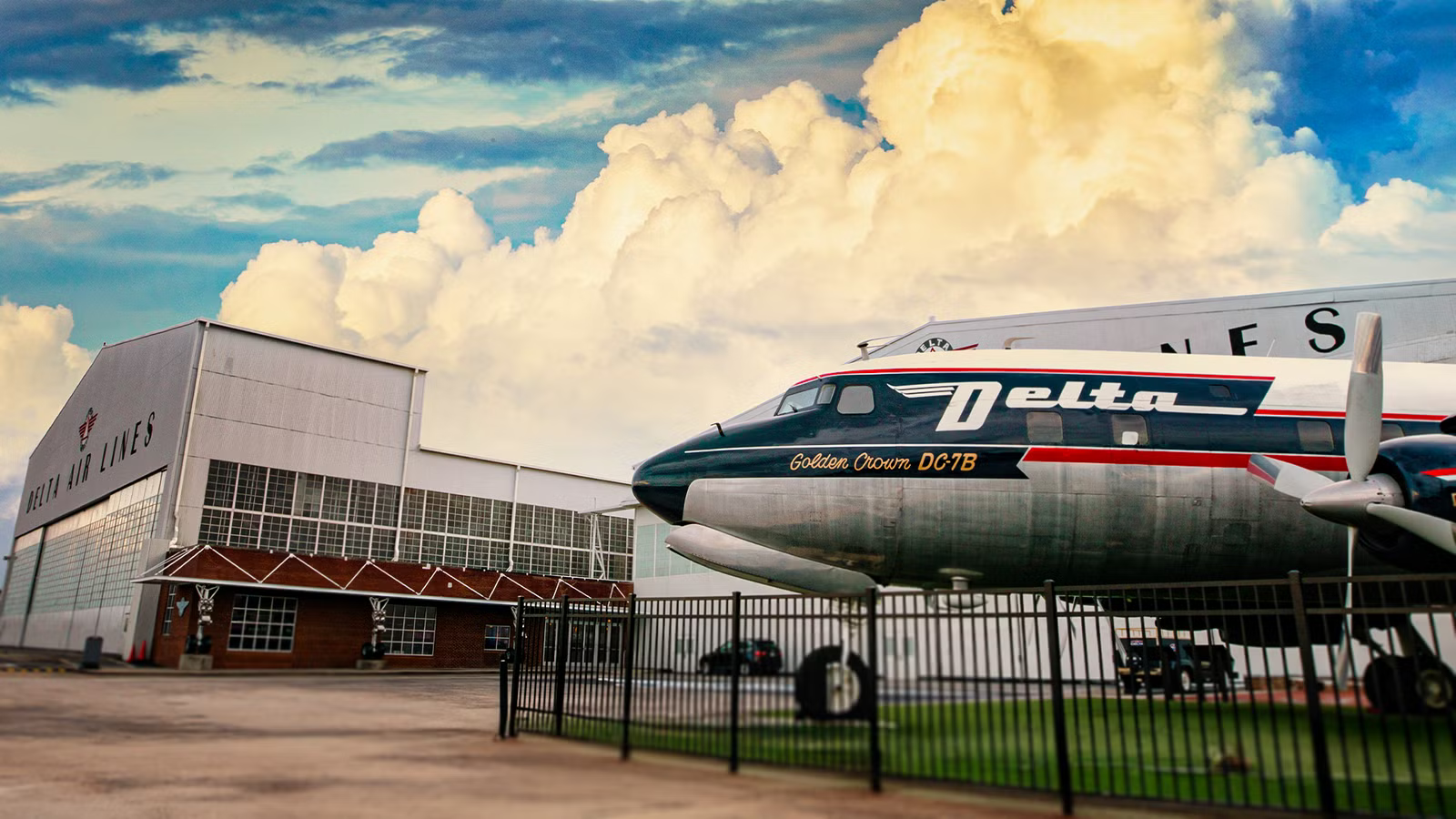
 Delta Air Lines celebrated its 100th anniversary in 2025. The carrier has operated a wide range of different aircraft types over the last century to serve various missions. Sometimes these were long-term but limited niche roles, while other types were used only briefly, mainly because they were acquired from other airlines.
Meanwhile, there were a few types that became staples of the Delta Air Lines fleet, defining the carrier’s operations for years or even decades until they were eventually replaced by a new aircraft type. Aviation has changed dramatically over the last century, and those who were involved with Delta’s first passenger flight in 1929 would have been shocked by the size and capabilities of even a Boeing 737, let alone Delta’s flagship Airbus A350s.
Over the years, Delta has merged with multiple other companies, modified its business strategy in accordance with industry changes, and grown until becoming one of the largest airlines in the world today. Let’s examine the five types that have been most important to the airline.
1
Travel Air S-6000-B
The very first passenger Delta aircraft

Delta Air Lines can trace its origins to a company founded in 1925 as Huff Daland Dusters, which was the world’s first aerial crop-dusting company. In 1928, a group of investors led by C.E. Woolman acquired the company’s assets and incorporated Delta Air Services, named after the Mississippi Delta region.
The new airline’s first flight operated from Dallas to Jackson, making stops in Shreveport and Monroe along the way. This service used a six-person Travel Air S-6000-B. The S-6000-B was promoted as essentially an airborne limousine, and the aircraft was positioned initially as a private plane.
With a fully enclosed cabin, a powerful 300-horsepower Wright Whirlwind engine, spacious interior, and dedicated lavatory, the S-6000-B was quite the opulent airliner for its day, and it became popular with early airlines due to its size. Delta would end up acquiring three Travel Air S-6000-Bs, although it would only operate the type until late 1930.
After a lucrative airmail contract was awarded to another airline, Delta ceased passenger operations and returned to crop dusting, incorporated as Delta Air Corporation. It would return to passenger flights in 1934, doing business as Delta Air Lines and using the Stinson Model T Trimotor monoplane, while the company’s name was officially changed in 1945. The Travel Air S-6000-B was only a brief blip in Delta’s history, but it was the aircraft that launched the airline’s passenger service.
2
Douglas DC-8
Bringing Delta into the Jet Age

By the mid-1950s, Delta had become a major player in the US domestic market, though it was never close to being the nation’s largest airline. Around this time, Boeing was selling its 707 jet airliner, a plane that promised to be far more capable and economical than prior jet models like the De Havilland Comet.
Catch what other flight trackers miss
Emergency squawks, holds, NOTAMs — live signals, no signup.
Open tracker
Catch what other flight trackers miss
Emergency squawks, holds, NOTAMs — live signals, no signup.
Open tracker
It was an impressive aircraft, but Boeing was also a new entrant in the commercial aircraft market, as its last commercial aircraft at the time was delivered in 1950 (a 377 Stratocruiser). Leading commercial aircraft manufacturer Douglas, however, also launched its own rival to the 707 named the DC-8, and this got several airlines interested, including Delta.
The Atlanta-based carrier had a long history of operating successful Douglas propeller airliners, and the DC-8 was a compelling aircraft. In addition, rival carrier Eastern Air Lines canceled its first delivery slots, and Delta was able to snatch them quickly. Alongside United Airlines, Delta was the worldwide launch operator of the DC-8, with both starting DC-8 operations on the same day. Delta acquired 22 examples of the original DC-8 line-up, which all had one fuselage length but with minor tweaks.
In 1967, meanwhile, the airline also began receiving the stretched and improved DC-8-61, part of the Super 60 series. The original DC-8s were retired by 1981, while the DC-8-61s were re-engined with the CFM56 to become DC-8-71s from 1982 to 1983. Although Delta never operated a giant fleet of DC-8s, the type stands as being its first jet airliner, and they remained durable workhorses until Delta retired them in 1989.
3
Lockheed L-1011 TriStar
The largest TriStar operator

The Boeing 747 is credited as being the airliner that revolutionized the world, as its widebody design enabled lower per-seat costs and, consequently, lower ticket prices that opened up air travel to the masses. However, while the 747 gets the credit (due to it being the first), it was hardly the only widebody of its day.
McDonnell Douglas released the widebody DC-10 shortly after the 747, while the Lockheed L-1011 TriStar was the third American widebody. Although Delta did buy a handful of 747-100s, it overwhelmingly favored the TriStar. In the 1970s and 1980s, US carriers regularly used widebodies on shorter domestic trips, and it was common for them to operate large fleets of aircraft like the DC-10.
1970s Western Widebodies | Entry Into Service | Production Years | Number Built |
|---|---|---|---|
Boeing 747 | 1970 | 1968-2023 | 1,574 aircraft |
McDonnell Douglas DC-10 | 1971 | 1969-1989 | 386 aircraft |
Lockheed L-1011 TriStar | 1972 | 1968-1984 | 250 aircraft |
Airbus A300 | 1974 | 1971-2007 | 561 aircraft |
Delta, however, was notable for being the largest TriStar customer, accumulating a total of 70 examples across the 28 years that it had operated the type. While it was never the largest fleet that Delta operated, the L-1011 was a mainstay within Delta’s operations, and no other customer operated so many TriStars. Delta retired the 747-100s in 1977, and it briefly operated DC-10s in the 1970s due to delays with the L-1011.
It also inherited nine DC-10s from its merger with Western Airlines in the mid-1980s (these planes were quickly discarded). The L-1011s, on the other hand, were Delta’s primary domestic widebody from the beginning, and they remained so for decades. Delta also acquired 17 long-range L-1011-500s (mostly secondhand), and the fleet as a whole valiantly served Delta until 2001.
4
Boeing 757
Practically synonymous with Delta

As Boeing’s successor to the legendary 727, which was then the best-selling jet airliner of all time, the 757 was incredibly appealing to many of the world’s airlines, Delta included. The 757 was originally launched with the Rolls-Royce RB211, the first time that a Boeing was launched with non-US engines.
Meanwhile, Pratt & Whitney offered the PW2000 on the 757 and promised ambitious fuel economy to Delta in particular, even agreeing to pay compensation if these targets were not met. Delta agreed to buy 60 757s and launched the PW2000. Delta grew a large fleet of 757s, as did carriers like American, Northwest, and United.
The 757s were mainly used for domestic services, as was their standard mission in the 1980s and early 1990s. When ETOPS became widespread, Delta joined others in deploying the 757 across the Atlantic, but this was never its primary use for the fleet. In 2008, Delta merged with Northwest Airlines and not only gained a huge number of 757-200s, but it also inherited a small fleet of 757-300s, while the total 757 fleet totaled nearly 200 aircraft.
Although the 757 fleet has been shrinking, Delta is notable for being the world’s largest 757 operator, and it still uses these aircraft mainly for short-range domestic trunk routes. These aircraft have remained in domestic service far longer than 757s flown by competitors in the past, and United Airlines is now the only other passenger 757 operator in the US. Still, the latter uses the type mainly for transcontinental and transatlantic routes, whereas Delta uses the 757 to serve destinations like Orlando and Las Vegas.
5
Airbus A350
Ushering in a new era of long-haul growth

This is by far the newest aircraft type on this list, and although it’s served with Delta for nearly a decade, it’s hard to argue that the Airbus A350 has been impactful enough to earn a spot on this list. However, more than any other aircraft in Delta’s fleet today, the A350 represents a new strategic focus for Delta as it finally begins to commit to organic long-haul growth.
Delta was historically a domestic airline, and much of its long-haul network today came from the acquisition of Pan Am’s transatlantic network in 1991. Since then, the carrier has leaned heavily on joint venture partners Air France, KLM, and Korean Air. However, recent market trends in the US and new terms within the airline’s pilot contract have seen Delta commit to operating more widebody flights, and it’s focusing on Asia in particular.
The Airbus A350 is the aircraft for this role, and it is being used for organic growth across the Pacific in particular. This represents the first time in decades that Delta has attempted organic network growth in this market on such a large scale.
It also represents Delta challenging United Airlines in this region, where it has been the undisputed market leader for decades. Whether this initiative will succeed or fail remains to be seen, but it’s undeniable that this reflects a significant change in strategy for Delta Air Lines, and the A350 is a crucial tool in this initiative.