dailynewsnblog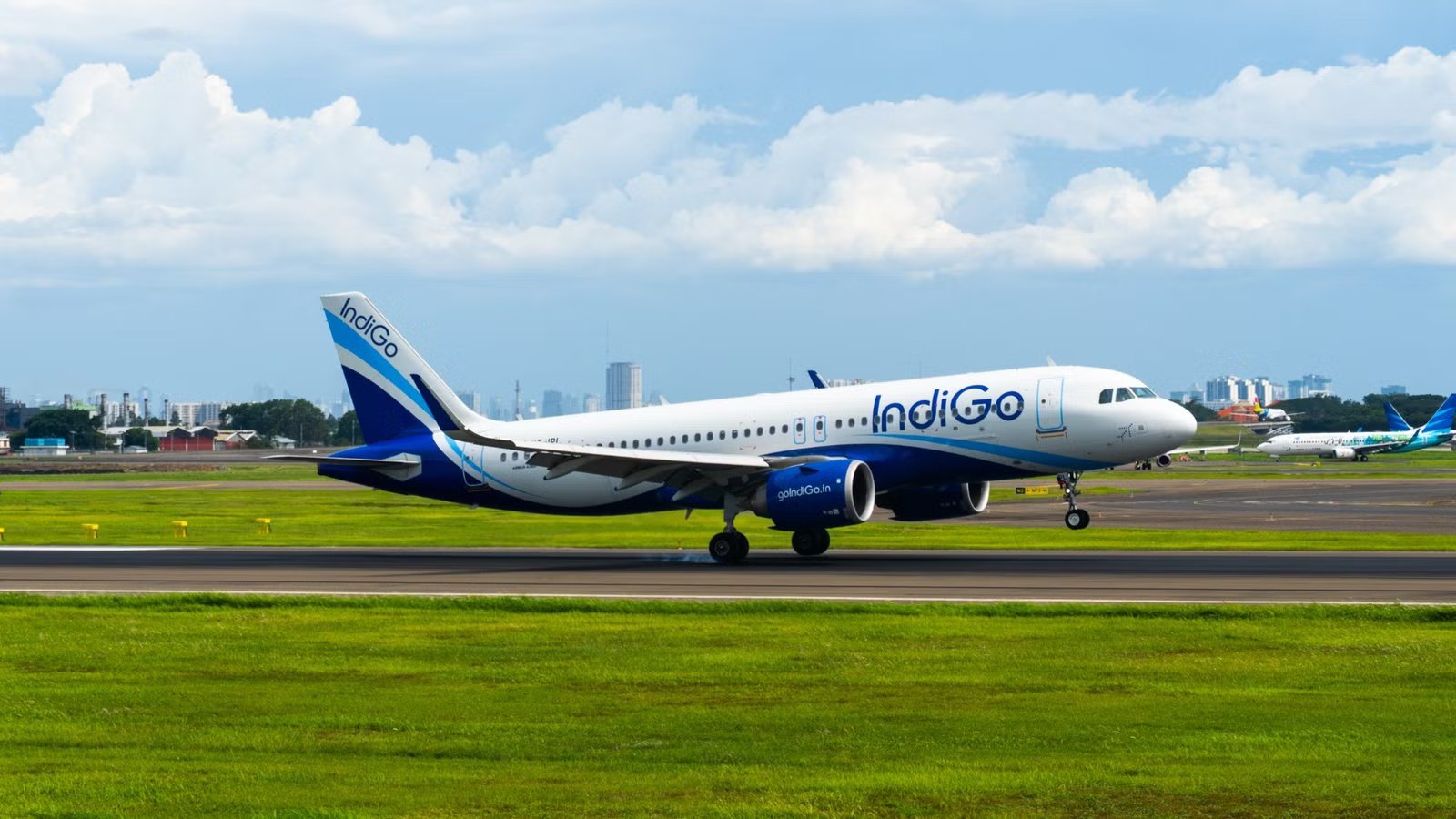
On Sunday,  IndiGo flight 6115 was forced to make an emergency landing when a passenger’s power bank caught fire in the overhead storage bins while the Airbus A321neo was in the air. A video has gone viral showing flyers struggling to contain the blaze and move passengers to a safe distance away from the danger in the cabin.
Flight 6115 had departed from  Delhi Indira Gandhi International Airport (DEL) near the northern border with Nepal and China to the Southern coastal airport of Chennai International Airport (MAA) before the jet had to divert, touching down at Rajiv Gandhi International Airport (HYD) in Hyderabad. Thankfully, the plane was able to safely land, and no injuries were reported.
A Terrifying Cross-Country For Flight 6115’s Flyers

A full investigation will be conducted into the exact causes and full scope of damage caused to tail number VT-NOE by the defective backup battery device. Fortunately for the passengers who emerged unscathed from the terrifying experience, they were able to be quickly transported to their final destination. Rajiv Gandhi International lies a short distance from Chennai and IndiGo arranged an alternative aircraft quickly in the aftermath.
A potentially catastrophic emergency was improperly stowed in violation of the airline’s policy. IndiGo specifically states that a backup battery device, including power banks and spare or loose lithium batteries are only allowed in hand baggage. The policy explicitly forbids keeping them in overhead compartments or checked luggage.
Loading map…
Drag to explore
WION reported this statement from the airline that was issued shortly after the mishap by an IndiGo spokesperson:
“IndiGo flight 6E 6115, operating from Delhi to Chennai on October 11, 2026, was diverted to Hyderabad after smoke was detected from a customer’s personal electronic device. The cabin crew responded promptly, and the situation was brought under control. An alternate aircraft has been arranged to continue the journey to Chennai.”
Catch what other flight trackers miss
Emergency squawks, holds, NOTAMs — live signals, no signup.
Open tracker
Catch what other flight trackers miss
Emergency squawks, holds, NOTAMs — live signals, no signup.
Open tracker
The Extreme Hazard Of A Lithium-ion Battery Thermal Runaway

The technical description of how a power bank fails and leads to a fire is known as thermal runaway; it is considered one of the most dangerous in-flight scenarios. In general, smoke and fumes in the cabin are one of the highest priority emergency procedures in aviation. As commercial off-the-shelf portable electronics become increasingly complex and powerful, the danger posed by improper customer usage has grown significantly in the past several years.
In the past, these mishaps were often related to onboard electrical systems or, in the worst case, an engine fire. The proliferation of larger and larger consumer-grade backup batteries has made the risk higher. A lithium-ion battery fire is not a normal fire; it is a chemical chain reaction that generates its own oxygen and intense heat, often exceeding 600°C (1,112°F).
This extreme heat causes neighboring cells inside the power bank to rupture and explode sequentially, creating a torch-like flame that acts as an immediate ignition source for surrounding passenger luggage, clothing, and nylon bags. These fires are incredibly difficult to extinguish completely. Even after visible flames are put out, the internal chemical reaction can continue, causing the device to suddenly reignite minutes later.
If a power bank is to fail and begin a thermal runaway sequence, being located in the cargo bay or overhead bin significantly increases the danger to the airplane and everyone aboard. In the cargo bay, the primary risk is the difficulty of detection, which can lead to a delayed response, allowing the fire to expand rapidly before the crew is aware of it. In the overhead, the danger posed is different but no less serious.
Why The Overhead Bin Magnifies The Danger Of A Battery Fire

An overhead bin acts like an enclosed oven. It concentrates heat and traps dense smoke, heavily accelerating the rate at which adjacent materials ignite. Because the bin is closed, a fire can smolder undetected for several critical minutes until it builds enough pressure to blow the door open, unleashing a massive flashover of fire directly into the cabin.
Directly above the ceiling panels of a modern commercial airliner like the A321neo lie critical electrical wiring looms, control lines, and composite materials. If a fire burns through the top of the luggage bin, it can damage the aircraft’s flight control and navigation systems. Still, in aviation disasters, smoke inhalation kills far faster than flames. A cabin fire produces a thick, black cocktail of carbon monoxide, hydrogen cyanide, and vaporized plastic.
Historically, aviation data shows that once an uncontained in-flight cabin fire takes hold, the flight crew typically has only 15 to 19 minutes to get the aircraft on the ground. Once the dense smoke quickly fills the cabin, flight attendants cannot see and the pilots may also be impaired to the point where they can no longer safely fly the plane. Flight 6115’s crew caught the fire early and the pilots executed an immediate emergency descent into Hyderabad.