dailynewsnblog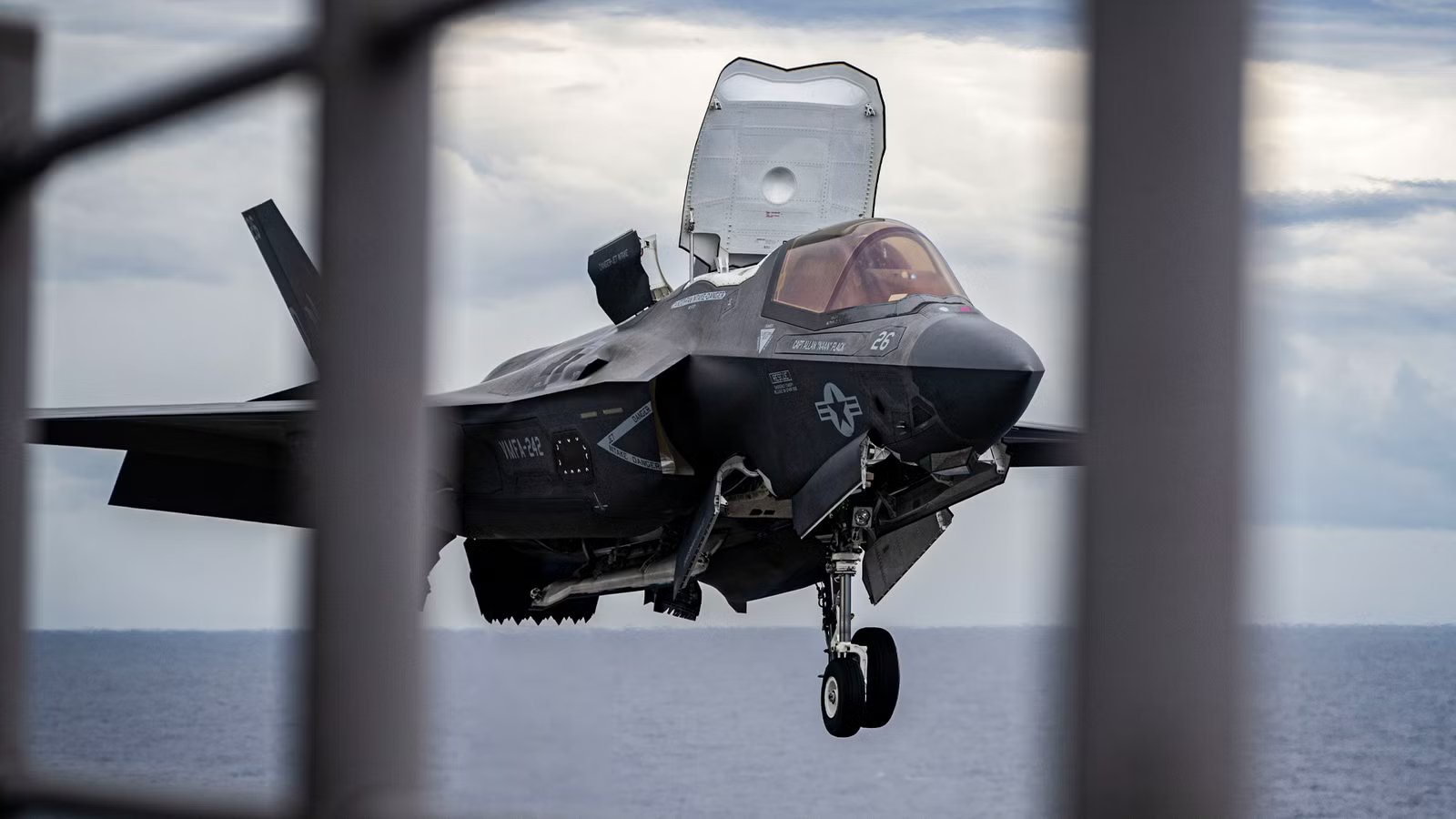
Despite chronic delivery problems in its defense division,  Boeing was officially awarded the contract for the US Navy’s first sixth-generation fighter, the F/A-XX. The Pentagon announced on September 29 that Boeing won the highly contested full-scale engineering and manufacturing development contract for the F/A-XX.
Beating out Northrop Grumman, the award is currently valued at more than $20 billion for the R&D phase. This selection leaves a single aerospace prime contractor holding the monopoly on both crewed next-gen fighters the US plans to field as the successor to the Lockheed Martin F-22 Raptor.
The question is, what will the world’s first sixth-generation ‘tailhook’ fighter jet look like? Boeing will likely create its all-aspect stealth carrier-borne ‘strike fighter of the future’ by building a naval-optimized derivative of its F-47 Next Generation Air Dominance in development for the US Air Force. That means that the plane will be specially modified in a few key areas to accommodate the unique demands of naval aviation.
Flaperons Versus Pitch Control
Wing area and the approach speed problem

Just as Lockheed Martin redesigned the F-35A into the carrier-suitable F-35C, Boeing will implement specific structural and aerodynamic modifications to satisfy the harsh demands of catapult launches and arrested landings. Similar to how the F-35C required a larger wing area than its land-based counterparts to generate extra lift at slow landing speeds, Boeing’s carrier adaptation will focus heavily on low-speed control.
To land safely on a carrier, a jet must fly exceptionally slowly during its final approach without stalling. Lockheed Martin solved this on the F-35C by increasing the wingspan by 8 feet (2.4 meters) [from 35 feet (10.66 meters) to 43 feet (13.1 meters)]. The increased surface area and lift aids provide the massive control authority required to bring a large stealth fighter down safely onto a pitching carrier deck.
Boeing’s F/A-XX design renders thus far indicates a blended, extra-wide fuselage coupled with retractable canards or leading-edge slats. The land-based F-47 achieves stealth by eliminating vertical stabilizers altogether. Instead, it relies heavily on thrust-vectoring and split-rudder elements for flight control.
The F/A-XX’s broad, flat body itself acts as a lifting surface, while the auxiliary forward canards inject vortex lift over the wings to keep the nose up during a high angle-of-attack carrier approach. For a carrier environment, a tail-less design is incredibly risky because thrust-vectoring is less effective when engines are throttled down during a landing approach.
A larger wing requires larger surfaces to control it. The F-35C features enlarged leading-edge flaps and trailing-edge flaperons. These giant control surfaces give the pilot highly precise, instantaneous pitch and roll responses. Boeing will be forced to introduce major modifications to achieve similar results, such as trailing-edge elevons and potentially active-flow control along the wing edges to simulate the stability of a physical tail.
Congress Rescues The F/A-XX From The Drawing Board
The Navy’s jet makes building two next-gen fighters affordable

Congress eventually overrode the Pentagon’s budget cuts to the F/A-XX program, implementing a massive legislative rescue package that injected $750 million in late 2025, followed by an additional $1.4 billion to $1.7 billion for fiscal 2026. This sudden resurgence in funding was explicitly designed to force the Department of Defense to issue an immediate full-scale development award, answering alarms over rapidly closing capability margins against progress by near-peer adversaries like the People’s Republic of China.
Beyond merely salvaging the carrier jet from termination, this injection of capital serves a vital macroeconomic function: it establishes the industrial scale necessary to build both sixth-generation fighters under a single prime contractor. By reversing the budget cuts and heavily funding the F/A-XX alongside the F-47, the military enables massive procurement economies of scale.
Boeing can now leverage unified software structures, common digital engineering protocols, and identical component suppliers across its 1.1-million-square-foot (102,193 square meters) St. Louis production footprint. Splitting the Air Force and Navy contracts across entirely separate manufacturers would make individual R&D and production cost-prohibitive for the taxpayer. The Pentagon also awarded Boeing the contract as a deliberate intervention to prevent a single defense ‘prime’ from dominating every major tactical aircraft platform currently being built for the US Armed Forces.
Breaking Up The Lockheed Monopoly
The Pentagon split the market, but Boeing is overstretched

With Lockheed Martin tightly controlling the massive, tri-service F-35 Lightning II program, defense officials faced an acute risk of industrial reliance. By steering both sixth-generation fighters, the F-47 and the F/A-XX, to Boeing, the military diversifies the suppliers of advanced combat aircraft.
This ensures that the nation’s high-tier stealth engineering capabilities are not entirely concentrated under one company’s roof, which would permanently stifle competitive pricing and industrial innovation. Still, using Boeing as an industrial counterweight introduces severe programmatic vulnerabilities.
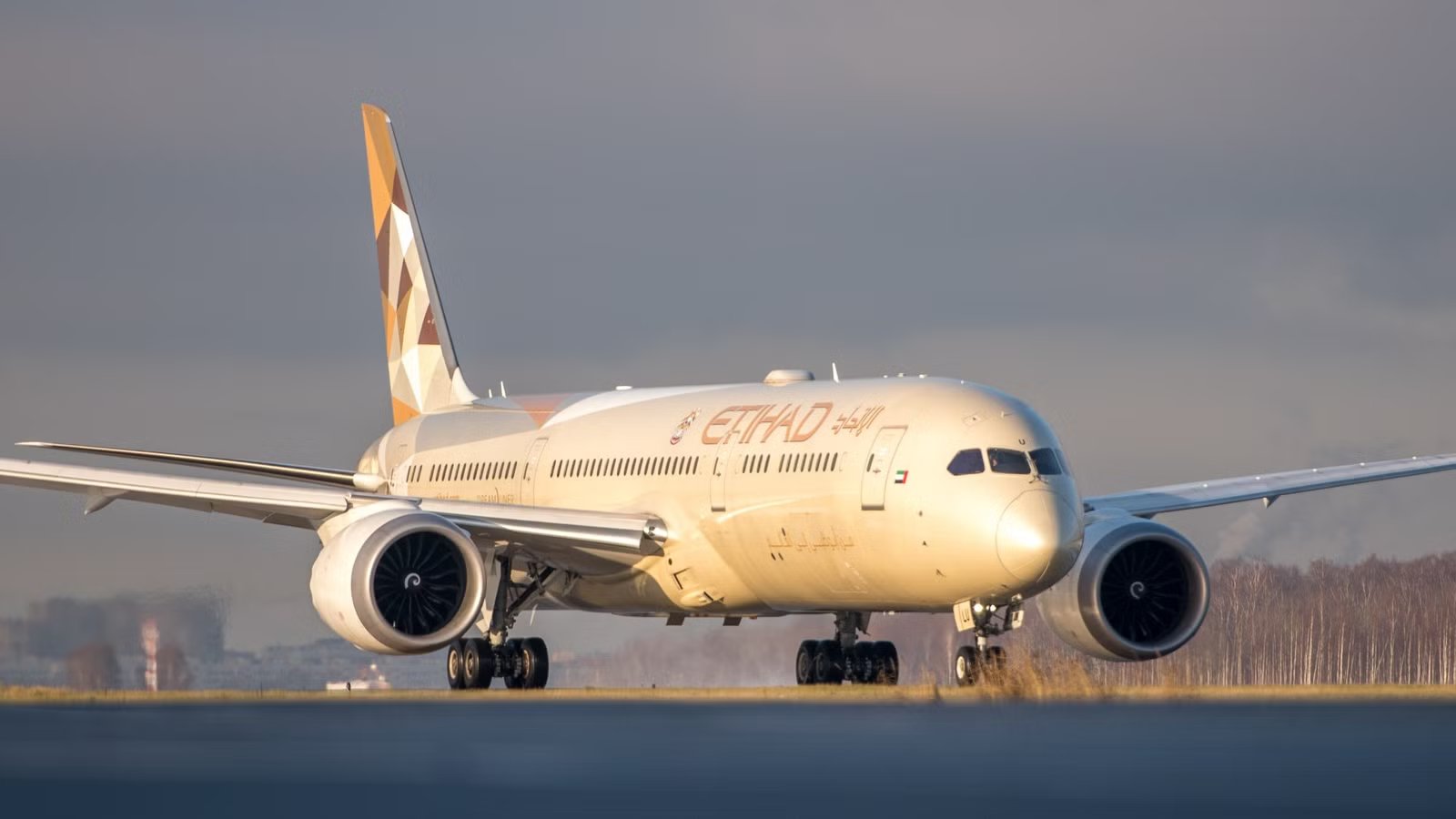
The company is wrestling with a notoriously poor recent track record, characterized by systemic delays and massive financial losses on high-visibility fixed-price defense programs like the KC-46 tanker and T-7A Red Hawk trainer. Furthermore, Boeing’s defense division is already choked with a massive, overextended portfolio that demands continuous engineering oversight.
Forcing a single company to simultaneously manage the highly classified F-47 and F/A-XX projects alongside active T-7A and F-15EX assembly lines stretches its technical workforce to a dangerous breaking point. While the Pentagon successfully avoided a total Lockheed monopoly, it did so by betting its future air dominance on a contractor plagued by historical execution failures.
The Strategy Behind The F/A-XX
Solving the Pacific range crisis

The F/A-XX will succeed the F/A-18E/F Super Hornet and the EA-18G Growlerafter they are retired in the 2030s. The F/A-XX’s mission includes strike and fleet air defense, but the top engineering priority guiding its design is unrefueled combat radius. That is a direct result of the USN’s Air Wing reach severely shrinking since the retirement of long-legged platforms like the Grumman F-14 Tomcat and A-6 Intruder.
In 2026, that lack of range presents a strategic crisis in the Pacific theater, where vast geographic distances dominate as the first operational factor of any mission.
This vulnerability is amplified by China’s deployment of long-range anti-ship ballistic and cruise missiles designed to force American supercarriers to operate far outside the First Island Chain. To project power safely, the Navy requires the F/A-XX to fly at least 25% farther than the F-35C or current strike fighters. However, engineering this extended range on a carrier-capable airframe is exceptionally difficult.
Unlike the Air Force’s land-based F-47, which can scale up its airframe to hold more fuel, the F/A-XX must strictly conform to the physical constraints of carrier elevators, catapult systems, and hangar decks. To balance these limitations with extreme range requirements, the fully crewed fighter will rely on an optimized derivative turbofan engine and advanced internal fuel capacity rather than complex adaptive-cycle powerplants.
The new stealth fighter will fly alongside the F-35C and uncrewed Collaborative Combat Aircraft wingmen. The jet will maximize its persistence over the Pacific by pairing with the MQ-25 Stingray aerial refueling tanker, taking over the Growler’s airborne electronic attack role while carrying heavy, next-generation stand-off weapons. That will allow it to become the Navy’s primary weapon to break through anti-access/area-denial tactics by advanced adversaries.
Guessing The Specs Of A Secret Jet
Strategy may make the Navy variant even longer-range

The Navy’s top stealth jet may fly by the end of the decade if the F/A-XX can replicate the F-47’s estimated three-year development cycle from contract award to first flight. The shift is already underway on the factory floor; on the day of the award, the Pentagon awarded a $16.7 million contract to oversee the formal closure of the F/A-18E/F Super Hornet and EA-18G Growler assembly lines in St. Louis.
The Air Force’s highly classified F-47 program offers the only real schedule benchmark for the Navy’s new jet, yet its tightly guarded, shadowy development status makes it virtually impossible to verify any concrete dimensional specifications or performance baselines. Because the public record contains almost no data on the F-47’s true size, weight, or aerodynamics, defense analysts are forced to extrapolate the future carrier fighter’s characteristics from historical programs like the F-35C.
This comparison dictates that a sea-going variant must be heavily modified from its land-based sibling, inevitably feature reinforced landing gear, a larger wingspan, a substantially heavier airframe, greater fuel capacity, and possibly more weapons payload to dominate the Pacific theater. Yet, with the F-47’s maiden flight delayed until at least 2028, Boeing’s ability to properly manage both highly classified, next-gen aircraft on time remains questionable.
The F/A-XX program narrowly survived a coordinated attempt to starve its development lines through severe, multi-billion-dollar Pentagon budget cuts. The White House and senior Pentagon leadership originally advocated for delaying the F/A-XX program by up to three years, attempting to funnel all available engineering resources and manufacturing capital into the Air Force’s F-47 program instead.
The aggressive consolidation was driven by fears that the domestic defense industrial base fundamentally lacked the supply chain bandwidth to mature two independent, radically advanced multispectral stealth fighters simultaneously. Prior to that, budget planning systematically slashed the aircraft’s multi-year projection by 67%, leaving a minor $74 million to $76 million allocation that defense officials intended to use merely to keep the F/A-XX alive.