dailynewsnblog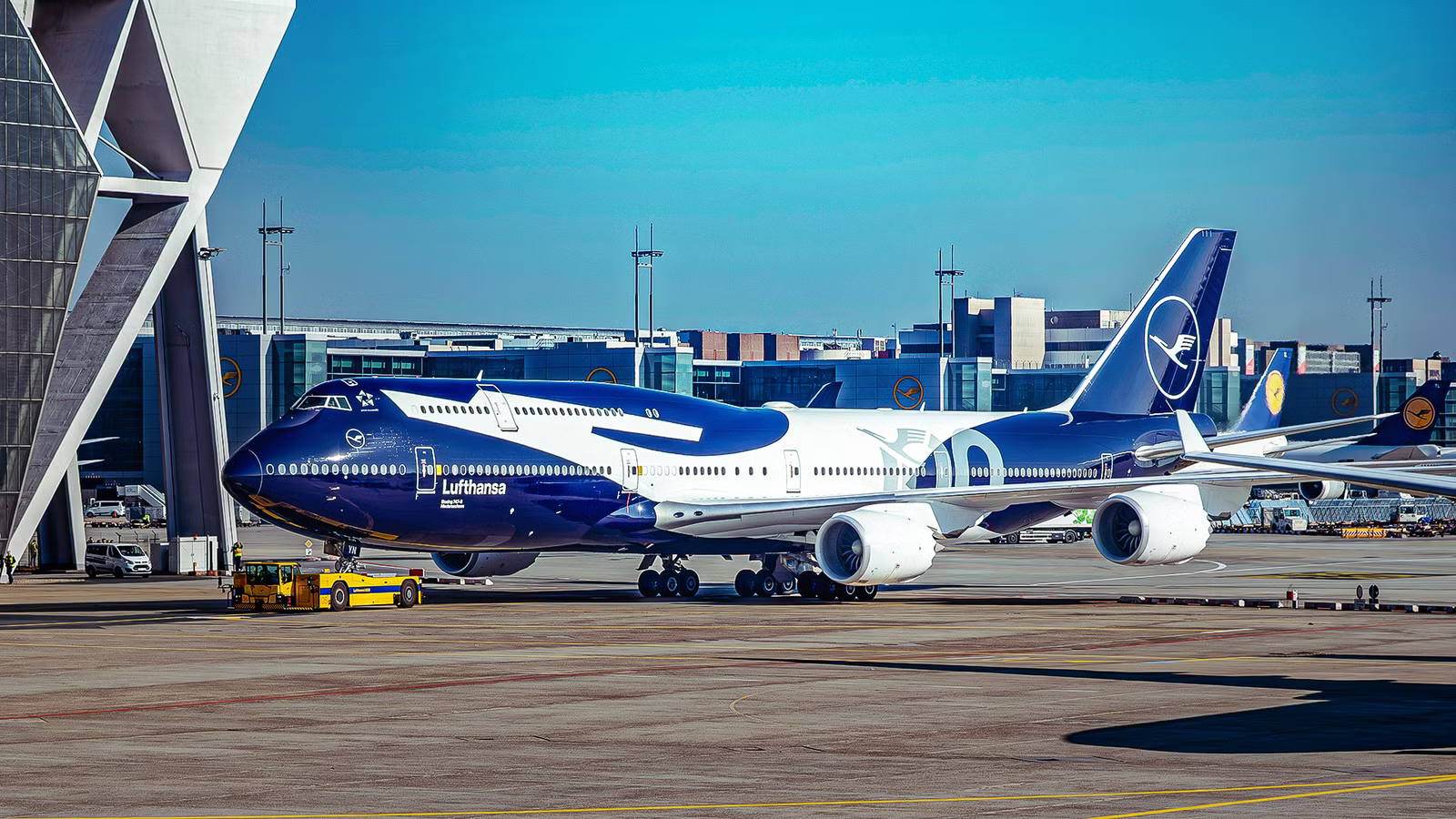
Plane spotting is an art form for some, and a lifestyle for many in the aviation world. Whether it is an objective photography mission or simple enjoyment, flight trackers and aviation communities on social media help enthusiasts celebrate rare and special liveried aircraft. These tools have made the hobby increasingly more straightforward and user-friendly.
Finding Boeing 747, McDonnell Douglas MD-80, and Airbus A310 aircraft used to be as easy as opening the eyes at  John F. Kennedy International Airport (JFK) or
  Paris Charles De Gaulle Airport (CDG). Yet, in today’s skies and airfields dominated by modern, more fuel-efficient aircraft like the Boeing 787 Dreamliner and Airbus A350, the 747 has slowly been disappearing from the skies, as per the fate of many other airframe product lines worldwide. Spotting a certain desired airframe that has been subject to increasing retirements requires preparation and a general understanding of where geographically it may be possible.
Why Has Seeing A Passenger 747 Become So Difficult?

1,574 total units were built during the 747 manufacturing period, which commenced in 1968 with a prototype, and ended in 2023 with the final Boeing 747-8I freighter. This figure encompasses all variants of the 747:
Despite carrying hundreds of millions of passengers over more than five decades, the current global fleet has been dramatically simplified to only four airlines:
-
 Lufthansa
— 25 in service -
 Air China
— 9 in service -
Korean Air
— 4 in service -
Rossiya Airlines
— 6 in service
 Lufthansa
 Air China
The main reason for the reduction in global 747 activity is due to the introduction of newer, more fuel-efficient aircraft. Airlines worldwide have pivoted to long- and thin-body operations thanks to jets such as the 787 and A350, which carry more passengers while operating at an unprecedented level of fuel efficiency. 747 production formally ended in 2023, leaving customers with no choice but to adopt newer models, as original equipment manufacturer (OEM) support for the 747 is quickly diminishing.
Which Airline Gives Spotters The Best Chance Of Finding One?

Statistically, Lufthansa gives plane spotters the best chance of finding a 747 by far. Not only is this the largest global passenger fleet in the program, but it is also the most diverse; the German carrier operates eight -400 variants and 17 -8 models, according to current data from Airfleets.
To be even more specific,  Frankfurt Airport (FRA) is the most probable geographic location to find these airframes. Lufthansa deploys the 747 on select routes from FRA to high-yield destinations and
  Star Alliance keystone routes:
To narrow it down further, Terminal 1 at FRA is the operating base for most Lufthansa flights, particularly the 747; you can see the type there multiple times per day.
Lufthansa has a unique and respectful relationship with the 747 program. Lufthansa reports that its first order for the type took place in 1970, with its inauguration from FRA-JFK. It was also the launch customer for the 747-8 program when it was announced in 2006. To commemorate the rich history of the fleet and its centennial anniversary, Lufthansa unveiled a special livery 747-8 for its centennial celebration.
Where Are The Most Unusual Passenger 747 Flights Today?

Frankfurt is not the only city where the 747 makes regular appearances. Central Asia offers some unique plane spotting opportunities for those after the 747, particularly from Rossiya Airlines, an  Aeroflot subsidiary. Rossiya is headquartered in St. Petersburg, Russia. However, it deploys its -400 aircraft primarily on high-demand domestic routes from its hub at
  Moscow Sheremetyevo International Airport (SVO). These destinations primarily consist of remote and high-capacity Russian destinations:
Among these services, the SVO-UUS route is arguably the most interesting for aviation enthusiasts. Stretching from western Russia to Sakhalin Island in the country’s Far East, the service gives Rossiya’s high-density 522-seat 747-400 a mission more commonly associated with international long-haul flying. Entering either SVO or UUS into the Simple Flying Flight Tracker can reliably reveal one of the world’s last scheduled passenger 747 operations.
Catch what other trackers miss
Emergency squawks, holds, NOTAMs — live signals, no signup.
Open tracker
Catch what other trackers miss
Emergency squawks, holds, NOTAMs — live signals, no signup.
Open tracker
Rossiya’s operations show the 747 remains relevant on certain high-capacity routes, but they also underscore how few passenger operators remain worldwide. With just four airlines still flying the type, each fleet now plays an outsized role in preserving the aircraft’s legacy. That is particularly true for Korean Air, whose 747-8 fleet continues to carry passengers across the Pacific on some of the most recognizable jumbo jet routes in service today.
Korean Air & Seoul: An Accessible Asian Option

For aviation enthusiasts in East Asia,  Incheon International Airport (ICN) remains one of the most dependable places to find a passenger Boeing 747 in scheduled service. Korean Air continues to operate the 747-8 on selected long-haul routes, most notably between Seoul-Incheon and L
  Los Angeles International Airport (LAX), while also deploying the aircraft on other high-demand services as scheduling requirements dictate.
Korean Air reportedly is projected to keep the 747 in its fleet until 2031. However, it has identified one key outlet to scale down its fleet by half. They have sold five units to the US Government to support a “doomsday plane” development. Historically, Korean Air has also converted previous passenger-configured aircraft into cargo equipment, as reported by Boeing. However, no current program to convert the active variant, the -8, has been announced.
In summary, Korean Air’s 747s are a given at ICN. Whereas the 747 was previously deployed to markets such as  London Heathrow Airport (LHR) and
  Hartsfield-Jackson Atlanta International Airport (ATL), the strategy has shifted to higher-yield routes in Asia such as Taipei Taoyuan International Airport (TPE) and Tokyo (NRT and HND). LAX is currently also seeing a regular, daily visit from the model.
How Much Time Do Aviation Enthusiasts Really Have Left?

Having ended production in 2023, Boeing does not currently provide OEM support for the 747. The four current operators of the passenger variant must rely on existing aftermarket supply chains. Vendors such as Pilot John International and Ontic MRO have solidified current parts offerings and teardown programs, as reported by Aerotime. This provides relief from 747 maintenance issues and Aircraft On Ground (AOG) events.
No airport currently sees regularly scheduled 747 passenger service from multiple airlines. Diversions and schedule changes can often arise and provide out-of-pocket plane-spotting opportunities, like during a recent (MAN) diversion event that brought two unscheduled Lufthansa 747s to the UK airport. However, there is currently no reliable airfield where one can expect to see multiple units each painted with a different flag.
While the true end of an aircraft’s lifespan can be hard to predict, monitoring key players in the global active fleet can help you understand the fleet’s state and its retirement timeline. Air Data News reported that Lufthansa will retire its 747-400s by 2028, but keep its -8s. Korean Air remains committed to the Boeing 747-8 for now, but its fleet is already shrinking. Five examples have been sold for military conversion, leaving just a handful of passenger aircraft flying from Seoul, as per One Mile at a Time.
The Next Exact Retirement May Depend

While Korean Air and Lufthansa have provided a somewhat clear picture of the 747 retirement timeline, Rossiya and Air China have not confirmed when they will end operations for their respective fleets. In Rossiya’s case, fleet planning has been influenced by sanctions, domestic capacity requirements, and the availability of replacement aircraft, creating a very different operating environment from that facing most global airlines. Aerospace Global News reports that the Russian subsidiary has reversed its decision to retire the fleet in 2024, allowing for an extended opportunity to locate the 747 in Rossiya colors.
For Air China, no publicly communicated retirement timeline appears to exist for its passenger 747 fleet, unlike Lufthansa’s stated 2028 target for its 747-400s. Air China continues to operate both the 747-400 and 747-8 in passenger service, with the aircraft still appearing on domestic and international routes from  Beijing Capital Airport (PEK).
For now, you can still find the aircraft every day on a handful of routes around the world. Whether that remains true five years from now is the question every Boeing 747 enthusiast is quietly watching. Frankfurt, Beijing, Moscow, and Seoul offer the best chance of finding one, given the model’s presence in their respective hub tenants’ fleets.