dailynewsnblog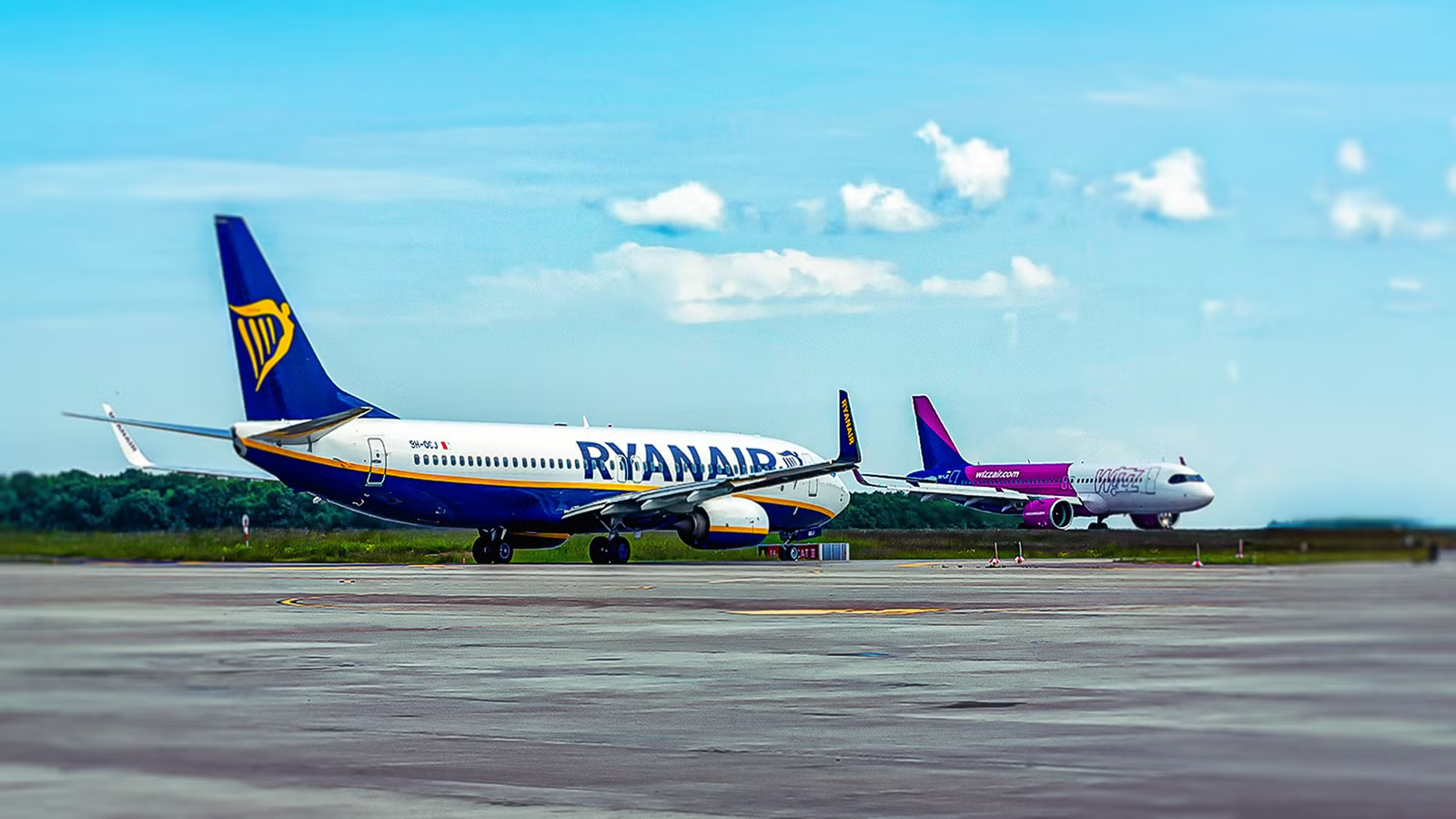
Last August, ultra-low-cost carrier Wizz Air transported 8.7 million passengers, an increase of 25.9% compared to the year before, while capacity increased by almost 25%. Only a few years ago, the airline had dozens of aircraft grounded due to Pratt & Whitney engine issues and was withdrawing from several more experimental markets.
However, Wizz Air is no longer chasing growth at almost any cost and in September the carrier announced that it would reduce planned winter capacity by 5% and presented a considerably more conservative long-term fleet plan. This creates an interesting question for Europe’s two leading ultra-low-cost carriers as Wizz Air’s growth has accelerated again: can the Hungarian carrier turn this growth into the same kind of consistently strong profitability as Ryanair?
Wizz Air Is Growing Again

Wizz Air’s recent passenger numbers leave little doubt that the airline is expanding again. In the quarter ending June 30, the carrier transported 21.2 million passengers, up 25.1% from the previous year. By August, monthly traffic reached a record 8.7 million passengers, up 26% from a year earlier, with a load factor of 95.6% across its network.
However, this growth is increasingly different from the strategy Wizz pursued before. While the carrier previously discussed operating around 500 aircraft by the end of the decade, Wizz reduced its own target to around 335 aircraft by the 2030 financial year, up from 276 aircraft as of writing.
Alongside this fleet growth, Wizz also targets €10 billion in annual revenue, an ex-fuel cost per available seat kilometer (CASK) of 3.00 euro cents, a 10% EBIT margin, and an investment-grade balance sheet by 2030. Reuters reported that the airline simultaneously aims to transport around 127 million passengers annually by that point.
This is still substantial growth considering Wizz transported only 69.7 million passengers during its last full financial year. Reaching 127 million passengers would therefore require the airline to almost double its traffic in only a few years. The difference is that aircraft deliveries and passenger growth are no longer the only metrics that matter. Wizz is increasingly talking about network maturity, revenue quality, aircraft utilization, and profitability.
The airline also has considerable unused capacity, giving it a unique opportunity. At the end of June, Wizz had 27 aircraft grounded because of Pratt & Whitney GTF engine inspections, down from 41 a year earlier. The airline expects this figure to fall to between 15 and 20 by the end of the current financial year and reach zero by the end of 2027.
As these aircraft return to service, Wizz can therefore continue increasing capacity without growing its fleet at the same pace as before. However, adding seats only helps if they generate enough revenue to cover the airline’s costs, and this is where Ryanair currently has a significant advantage.
How Did Wizz Air Hold Up Against Ryanair In Q2 2026?

In the second quarter of 2026, both Wizz Air and Ryanair reported a significant decline in profits. Although both carriers hedged a large share of their fuel for the period, the decline was still largely attributable to higher fuel prices combined with weaker yields. Wizz reported a net loss of €198.2 million, versus a net profit a year earlier. Ryanair’s after-tax profit fell 34% from the previous year to €537.7 million.
More interesting, however, is how the two airlines compare in their ability to generate revenue from each passenger. Ryanair transported 61.3 million passengers during the second quarter of 2026 and generated €4.38 billion in revenue, translating to approximately €71.52 in revenue per passenger. Wizz, by contrast, transported 21.2 million passengers and generated €1.51 billion, or about €71.10 per passenger.
Despite Ryanair’s much larger size, both airlines were therefore generating almost exactly the same amount of revenue from each passenger. Even more interesting, Wizz generated relatively more ancillary revenue per passenger than Ryanair. For Wizz, ancillaries accounted for roughly 46.5% of revenue, while this number was only 33.5% for Ryanair.
Wizz vs. Ryanair Q2 2026 | ||
|---|---|---|
Metric | Wizz Air | Ryanair |
Passengers | 21.2 million | 61.3 million |
Revenue | €1.51 billion | €4.38 billion |
Total revenue per passenger | €71.10 | €71.52 |
Ancillary revenue per passenger | €33.04 | €23.97 |
Operating expenses per passenger | €79.75 | €62.13 |
Operating result per passenger | -€8.65 | €9.39 |
Source: Ryanair. Wizz. | ||
The difference between Ryanair’s profits and Wizz Air’s losses therefore lies on the cost side. Wizz incurred an operating expense of €79.75 per passenger, translating into an operating loss of roughly €8.65 for every passenger carried. Meanwhile, Ryanair’s cost base was much lower, with operating expenses of only around €62.13 per passenger, resulting in approximately €9.39 of operating profit per passenger.
Wizz Air’s Problem Is Not Necessarily Weak Demand

When you combine Wizz’s strong traffic numbers, its losses, and its reliance on ancillary revenue, a clear pattern emerges. The Hungarian airline is clearly not struggling to fill its aircraft, but it is struggling to do so at fares high enough to cover its cost base. Revenue has thus not kept pace with the carrier’s rapid capacity growth and fails to cover its cost base.
Ticket revenue barely increased during the quarter despite the sharp rise in passenger numbers, while overall revenue per available seat kilometer (RASK) declined. This suggests that Wizz is not suffering from a lack of demand, but is instead struggling to monetize the enormous amount of new capacity it is adding quickly enough to cover its cost base.
At the same time, Wizz’s underlying cost base is moving in the right direction, as ex-fuel unit costs actually declined. The challenge therefore appears to be a combination of high fuel prices, aircraft still grounded because of Pratt & Whitney engine inspections, and newer markets that need time to mature.
Why Both Ryanair And Wizz Air Are Cutting Flights This Winter

Wizz Air announced in September that it would reduce planned second-half capacity by around 5% as higher fuel prices and geopolitical instability increased operating costs. Despite the reduction, the carrier actually improved its revenue outlook, suggesting the decision is more about protecting profitability than weakening demand.
Ryanair has taken a similar approach, lowering its full-year passenger target from 216 million to 214 million and leaving winter capacity broadly flat year-over-year. The airline estimates that these cuts could reduce winter losses by between €70 million and €100 million.
Neither carrier appears to be running out of growth opportunities. Instead, both are becoming more willing to remove marginal capacity when operating economics deteriorate. Ryanair has already shifted aircraft away from markets where taxes and airport charges have increased, while Wizz is increasingly concentrating growth on Central and Eastern Europe alongside a smaller number of strategically selected markets such as Italy, Spain, and London Luton Airport (LTN).
Why Ryanair Is Better Positioned For Growth

Earlier this year, Ryanair repaid its final €1.2 billion bond, leaving the airline essentially debt-free. At the end of June, it held €2.8 billion in gross cash and approximately €2.7 billion in net cash. For comparison, Wizz reported €2.21 billion in cash but €5.13 billion in net debt.
This balance-sheet difference gives Ryanair considerable freedom as it enters its next major growth phase. The airline currently operates 647 aircraft and has ordered up to 300 Boeing 737 MAX 10s. The MAX 10 will seat 228 passengers, compared with 189 on Ryanair’s older 737-800s. According to Ryanair, the larger aircraft will offer 20% more seats while using 20% less fuel than the aircraft it replaces, decreasing unit costs.
Important to note, however, is that the Boeing 737 MAX 10 has not yet been certified. A software issue briefly delayed certification in late September, although the FAA has since determined it does not pose a safety risk. Ryanair still expects its first 15 aircraft to arrive in spring 2027.
Over the longer term, the MAX 10 is central to Ryanair’s plan to grow towards 300 million annual passengers by the 2034 financial year. Around half of the aircraft are expected to replace older 737s, while the remainder will provide growth. However, the biggest question may not be whether Ryanair can find enough aircraft, but whether Europe still has enough markets where the airline can deploy more than 200 seats per flight while maintaining high load factors and its extremely low cost base.
Wizz Air Does Not Need To Become Another Ryanair

Wizz Air does not need to match Ryanair’s size to become a serious competitor. Its strongest position remains in Central and Eastern Europe, while selective expansion in markets such as Italy and Spain gives it opportunities to challenge Ryanair where attractive gaps emerge, including markets where the Irish carrier has withdrawn capacity, such as Santiago de Compostela (SCQ).
The more important test is whether Wizz can turn its renewed growth into consistently strong returns. Management’s target of a 10% EBIT margin by 2030 arguably matters more than any passenger or fleet size, particularly as grounded aircraft return and newer markets mature.
However, Ryanair will remain extremely difficult to catch, given its stronger balance sheet, enormous scale, and incoming fleet of larger aircraft. If Wizz can combine its existing low-cost model with greater financial discipline, it does not need to become another Ryanair to become a much better competitor.
Catch what other trackers miss
Emergency squawks, holds, NOTAMs — live signals, no signup.
Open tracker
Catch what other trackers miss
Emergency squawks, holds, NOTAMs — live signals, no signup.
Open tracker