dailynewsnblog
The federal government is launching a new heat-pump rebate program worth $2 billion over eight years to encourage households to make the switch to more efficient energy systems.
Ottawa estimates up to 820,000 households across the country could benefit from the heat-pump rebate program, set to launch in early 2027. Environment and Climate Change Canada (ECCC) is also looking at how the rebate could apply retroactively as early as this fall.
Under the program, the federal government would contribute $2,000 toward a new heat pump, which is estimated to cost about $15,000. Households with incomes below the median, as defined by Statistics Canada, could receive up to $10,000.
The initiative builds on several popular programs from earlier years, many of which ran out of money before their scheduled end dates because of high demand.
Aya Dufour reports.

Bill C-39, the Building Canada Strong Act, is heading to special committee for further study, after a second-reading vote Thursday which included support from the Conservatives. Those who were against included the Bloc, the NDP, and the Green Party.
Earlier Thursday the NDP, along with some labour and environmental groups, called on the federal government to scrap the major omnibus bill that seeks to fast-track development projects and change labour laws.
Parliamentary Leader Don Davies said the bill threatens fundamental rights and protections.
READ MORE: ‘Good for all parties’: Feds’ labour changes create more processes, delays intervention, says union head
“Together, we’re sending a clear message to the Liberal Government that you cannot build a stronger Canada, at the expense of workers’ rights, the rights of Indigenous communities, and crucial environmental protections,” Davies said.
The legislation seeks to accelerate major development projects while introducing changes to the Canada Labour Code, including new conditions governing federal intervention in labour disputes.
Sydney Ko has more.

Also, Treasury Board President Shafqat Ali says he’s unaware of the presence of pests in federal office buildings.
Responses to an order paper question revealed last month that dozens of federal buildings have reported the presence of pests such as mice, rats, bats and bedbugs since 2020.
Speaking to reporters Thursday, Ali said it was the first time he had heard about the issue and he’d be asking his team to look into it.
While the management of federal office buildings falls under Public Services and Procurement Canada, the presence of pests is an issue that has been raised by public servants and federal unions for years.
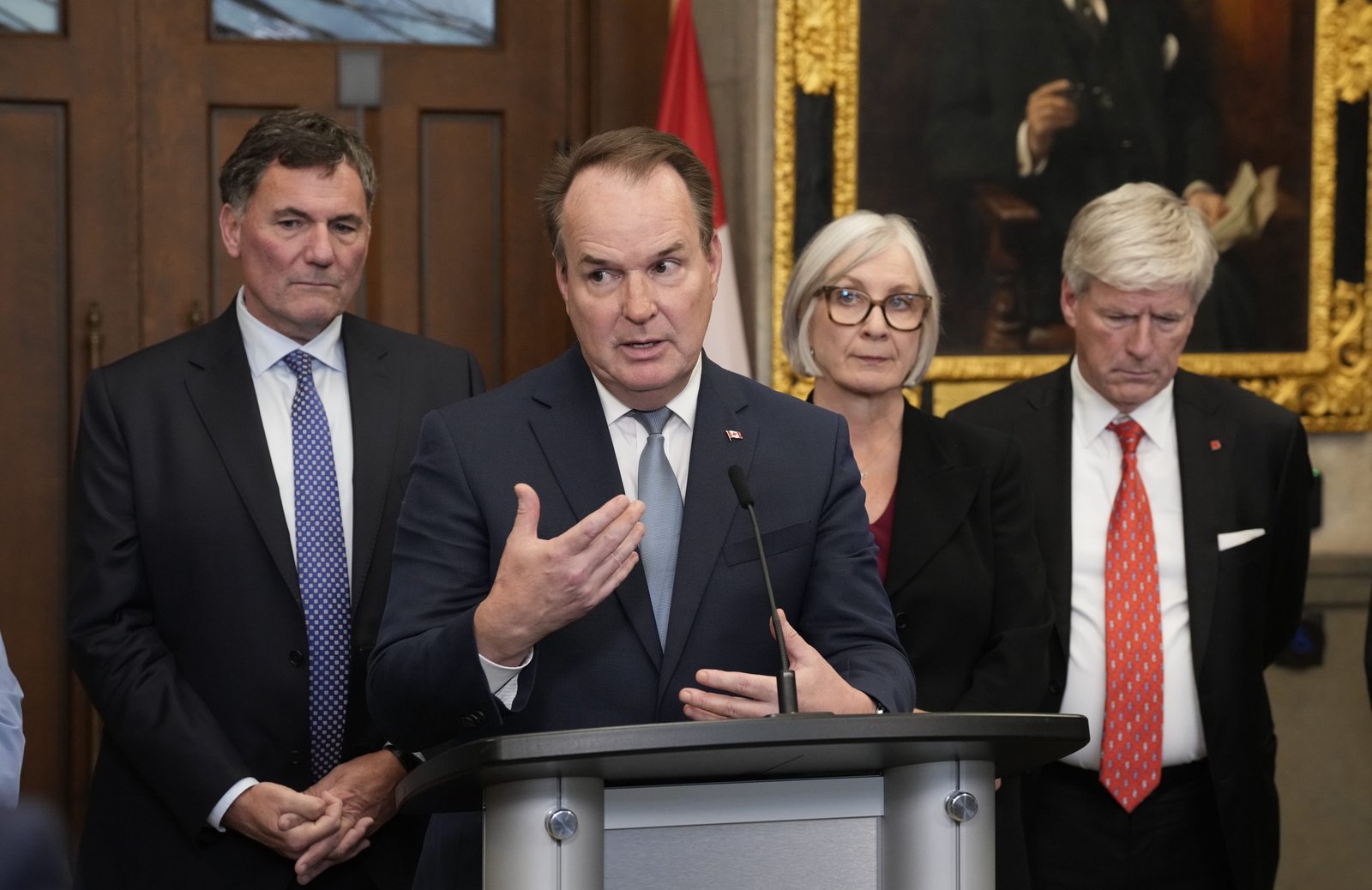
Ali made the comments while at a press conference to discuss the government’s recently tabled legislation to reduce red tape in the federal bureaucracy.
The Canadian Press has more.
In Other Headlines
Sponsored Content
Internationally
Elsewhere, a Russian missile strike on a bus in the eastern city of Kramatorsk has killed at least 30 people, officials have said, in one of the worst attacks by Moscow on Ukrainian civilians this year.
The regional prosecutor’s office in the Donetsk region said on Thursday the vehicle had been hit at 10am by an aerial bomb. “As of now, the death toll from this morning’s attack has risen to 30. Eighteen people were wounded,” it said, adding that all local public transport had been suspended.
Images posted by police showed bodies strewn across a street littered with debris, as well as a charred shell of what appeared to be a bus. A second bus had also caught fire, officials said. The strike targeted an area next to a dental clinic on the city’s Yuvileina Street.
Three people had also been killed by shelling in the village of Bilenke, outside Kramatorsk, they added. Volodymyr Zelenskyy said the Kremlin had deliberately targeted an “ordinary public transport stop.”
The Guardian has more.
A former Syrian general facing U.S. sanctions and wanted internationally for crimes against humanity is living quietly in Lebanon, bankrolled and protected by American and Lebanese authorities, a joint BBC and NPR investigation has found.
Bassam al-Hassan, who oversaw Syria’s chemical weapons program and was a senior advisor to former President Bashar al-Assad, moved to Beirut after fleeing Syria following the Assad regime’s collapse in 2024.
An investigation by the BBC and NPR has found that Hassan has been allowed to remain there under an arrangement involving the FBI and other U.S. and Lebanese authorities.
This is at least partly because of his willingness to provide information about the abduction of American journalist Austin Tice in Syria in 2012, as well as additional intelligence, according to four sources familiar with the arrangement who asked to remain anonymous because of threats to their livelihood and safety.
Read more from NPR.
In Other International Headlines
The Kicker
And finally, Anne Carson has a new addition to her book covers.
The Canadian poet won the Nobel Prize in Literature on Thursday, earning one of the literary world’s highest honours for a body of work that blends poetry, prose and classic Greek.
Have a great evening!