dailynewsnblog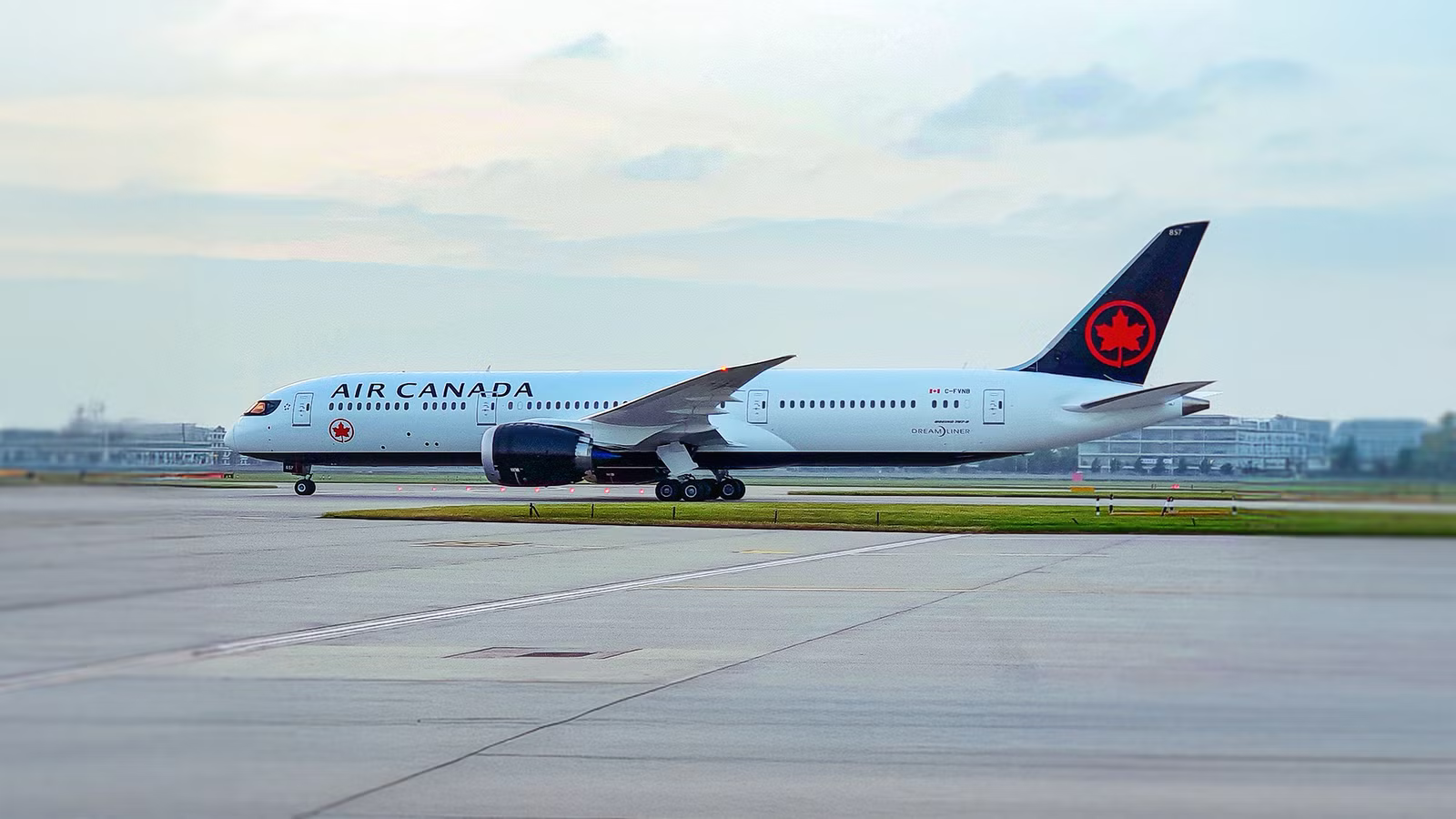
 Air Canada has announced the termination of its non-stop service between Vancouver International Airport(YVR) and Singapore Changi Airport(SIN), bringing an unexpected end to the carrier’s longest flight by distance. Launched in early 2024, the ultra-long-haul connection was intended to boost the airline’s transpacific expansion and establish Vancouver as an important gateway linking North America to Southeast Asia. However, less than three years into operation, the flagship route will cease flights in late January 2027, highlighting the mounting pressures facing ultra-long-haul network planning.
The decision to pull the plug stems from a confluence of operational and commercial challenges that rendered the service unsustainable. Despite initial optimism surrounding corporate traffic and transit demand, the route suffered from increased operational costs driven by global fuel price shifts and extended flight routing. Compounded by softer-than-expected premium cabin yields and low load factors during off-peak seasons, Air Canada opted to redeploy its widebody fleet toward higher-margin destinations across its network.
A Route That Had So Much Promise

Covering 7,967 miles (12,818 kilometers), the non-stop link between YVR and SIN represented the crown jewel of Air Canada’s long-haul network. Operated using the Boeing 787-9, which, as per Seat Maps, is configured with 30 lie-flat business class pods, 21 premium economy seats, and 247 economy seats, the flight carried a block time reaching up to 16 hours and 45 minutes. Commencing operations on April 3, 2024, the four-times-weekly service marked Air Canada’s return to Singapore after an absence of more than three decades, positioning the carrier at the absolute limit of modern commercial range.
The strategic timing of the launch was designed to capitalize on a major vacuum in the transpacific market. Months prior, in October 2023,  Singapore Airlines withdrew its own direct non-stop service between Changi and Vancouver, leaving Canada without a direct air link to the Southeast Asian financial hub, as reported by Simple Flying. Air Canada stepped in to capture displaced corporate travel and use its extensive domestic and transborder network out of Vancouver, funneling passengers from across Canada and the United States onward to Singapore and connecting
  Star Alliance partners.
Despite the compelling network narrative, the service struggled to maintain commercial viability amid shifting macroeconomic realities. Reported by The Straits Times, the planned final flight on January 26, 2027, will see an abrupt end to what was envisioned as a permanent cornerstone of Canada’s international connectivity. The short lifespan of the route shows just how quickly ultra-long-haul economics can deteriorate when high fixed operating costs clash with uneven passenger demand.
Ultra-Long Haul Flights Are Financially Risky

Operating an ultra-long-haul sector is something that is not without extreme financial risk, where jet fuel price volatility can cancel out route profitability overnight. On a flight lasting 16 hours and 45 minutes, fuel accounts for the vast majority of direct operating costs. Aircraft must carry fuel simply to burn fuel over such extreme distances, so every additional barrel of Jet A-1 purchased during global price spikes inflicts a compounding penalty on ultra-long-haul sectors compared to medium-haul transpacific routes.
In addition to volatile fuel prices, payload penalties restrict how much revenue an aircraft can actually carry over such a long distance, as reported by Monroe Aerospace. To fly non-stop across the Pacific while maintaining mandatory reserves for weather diversions and high-altitude headwinds, Air Canada’s 787-9 frequently operates near maximum takeoff weight limits. Capping passenger counts or leaving lower-deck cargo holds virtually empty becomes unavoidable in these circumstances. Removing belly freight deprives the airline of lucrative high-yield cargo revenue that typically acts as a financial buffer during low-season passenger demand.
Without a steady flow of belly cargo to subsidize the immense fuel burn, an ultra-long-haul route becomes entirely dependent on premium passenger yields. For Air Canada, operating a 787-9 configured with only 30 premium seats meant that every unsold business class ticket directly threatened the flight’s bottom line, exposing a vulnerability that competing carriers managed to avoid.
The Bangkok Success

Ultra-long-haul network profitability varies drastically depending on the underlying passenger mix. Reporting from The Business Times shows how flights to Singapore rely heavily on high-margin corporate travel, a market that failed to generate the sustained yields needed out of Vancouver to justify a 16-hour-plus flight. When corporate budgets tighten, or corporate travel managers favor direct competitors with larger premium cabins, ultra-long-haul routes built around business travel quickly become unsustainable.
The dynamic becomes clear when comparing YVR–SIN with Air Canada’s parallel service to Thailand. Originally launched as a seasonal experiment, the carrier’s non-stop service between Vancouver and  Bangkok Suvarnabhumi Airport(BKK) performed so strongly that Air Canada expanded it to year-round operation using the same 787-9 model. According to One Mile at a Time, the SIN flight suffered from load factors dipping toward 60% in off-peak months, whereas the BKK route consistently fills premium economy and economy cabins with leisure travelers and visiting-friends-and-relatives traffic.
The stark contrast between the success of SIN and BKK is what is forming a broader strategic realignment across Air Canada’s transpacific network. As operating an under-specced cabin on a 16-hour corporate route proves financially untenable, the airline is moving toward redeploying widebody capacity where organic demand matches its cabin layout, while returning its Singapore connections to partner networks.
Turning To Its Partners

Facing elevated jet fuel expenses and softening demand across secondary long-haul corridors, Air Canada has paused or cut 13 international routes to protect operating margins, as reported by Simple Flying. Rather than tying up valuable widebody airframes on 17-hour sectors with marginal returns, Air Canada is redeploying its 787 fleet toward shorter transpacific markets and seasonal leisure hubs where seat capacity aligns more naturally with passenger traffic.
Star Alliance partnerships will really be pushed to preserve passenger connectivity without risking carrier capital. Air Canada will continue serving the Singapore market through expanded codeshare agreements with Singapore Airlines, routing transit passengers via intermediate hubs in Tokyo, Seoul, and Osaka. Meanwhile, the airline is reallocating widebody capacity to alternative Asian destinations with stronger traffic dynamics, introducing seasonal service to Sapporo Chitose (CTS) and adding non-stop flights to  Guangzhou Baiyun International Airport(CAN).
Through the use of codeshare partners to maintain a footprint in Southeast Asia, Air Canada avoids the immense capital exposure of operating its own fleet into SIN. However, as next-generation long-range aircraft enter service over the coming decade, the structural limits of the carrier’s current widebody fleet raise questions about what hardware would actually be required to make ultra-long-haul flying profitable.
The Aircraft To Bring Ultra-Long Haul Flying Under Control

The 787-9 proved economically mismatched for the route, though Air Canada’s long-term fleet roadmap leaves the door open for a future return to extreme transpacific flying. The airline’s order for eight Airbus A350-1000 widebodies, scheduled for delivery beginning in 2030, introduces an airframe built specifically to remove the operational compromises that crippled the Singapore flight. Featuring a maximum range of 9,000 nautical miles (16,668 kilometers), the A350-1000 provides substantially higher payload thresholds and superior engine fuel efficiency. The additional operational margin allows the aircraft to carry a full hold of high-yield belly cargo without imposing passenger caps or weight restrictions.
Making a return to 16-plus-hour sectors like YVR–SIN will ultimately depend on how Air Canada chooses to cabin-configure its incoming flagship widebodies. To avoid repeating the yield deficits of its 30-seat 787-9 layout, the carrier would need to adopt a premium-dense seating profile, similar to the dedicated ultra-long-haul sub-fleets operated by global competitors, or make use of the A350-1000’s larger floor space to balance 40 or more business class pods with full freight holds.
Whether Air Canada eventually reconsiders non-stop Singapore service at the turn of the decade will depend on how aggressively it deploys its incoming A350-1000 fleet. There is still some time before those airframes arrive, so for now, the airline has some planning to do, but the decision to suspend the Vancouver link highlights a very real and immediate operational reality: no amount of hub connectivity or route prestige can overcome an unforgiving mismatch between aircraft capability and route economics.
Ultra-Long-Haul Is For The Strongest Airlines?

The cancellation of Air Canada’s Vancouver–Singapore route is a case study in how ultra-long-haul flying remains the most unforgiving segment of commercial aviation. Volatile fuel markets and elevated operational costs are now far too normal, and network managers are increasingly unwilling to subsidize prestigious ultra-long-distance links that fail to generate strong premium yields. Connecting global financial centers cannot be achieved without a continuous flow of high-yield business travelers willing to pay top-tier fares, a market profile that Vancouver’s leisure-leaning origin-and-destination demand could not supply in sufficient volume to offset a 30-seat business cabin.
Air Canada’s withdrawal is a decisive shift toward network discipline over geographic reach. The ultimate test for Air Canada and competing transpacific carriers over the next decade will be whether next-generation widebodies like the Airbus A350-1000 can truly alter the cost equation for 16-plus hour routes, or whether non-stop links over 7,500 miles (12,070 kilometers) will only be achieved by the mega-hub carriers.
Catch what other trackers miss
Emergency squawks, holds, NOTAMs — live signals, no signup.
Open tracker
Catch what other trackers miss
Emergency squawks, holds, NOTAMs — live signals, no signup.
Open tracker