dailynewsnblog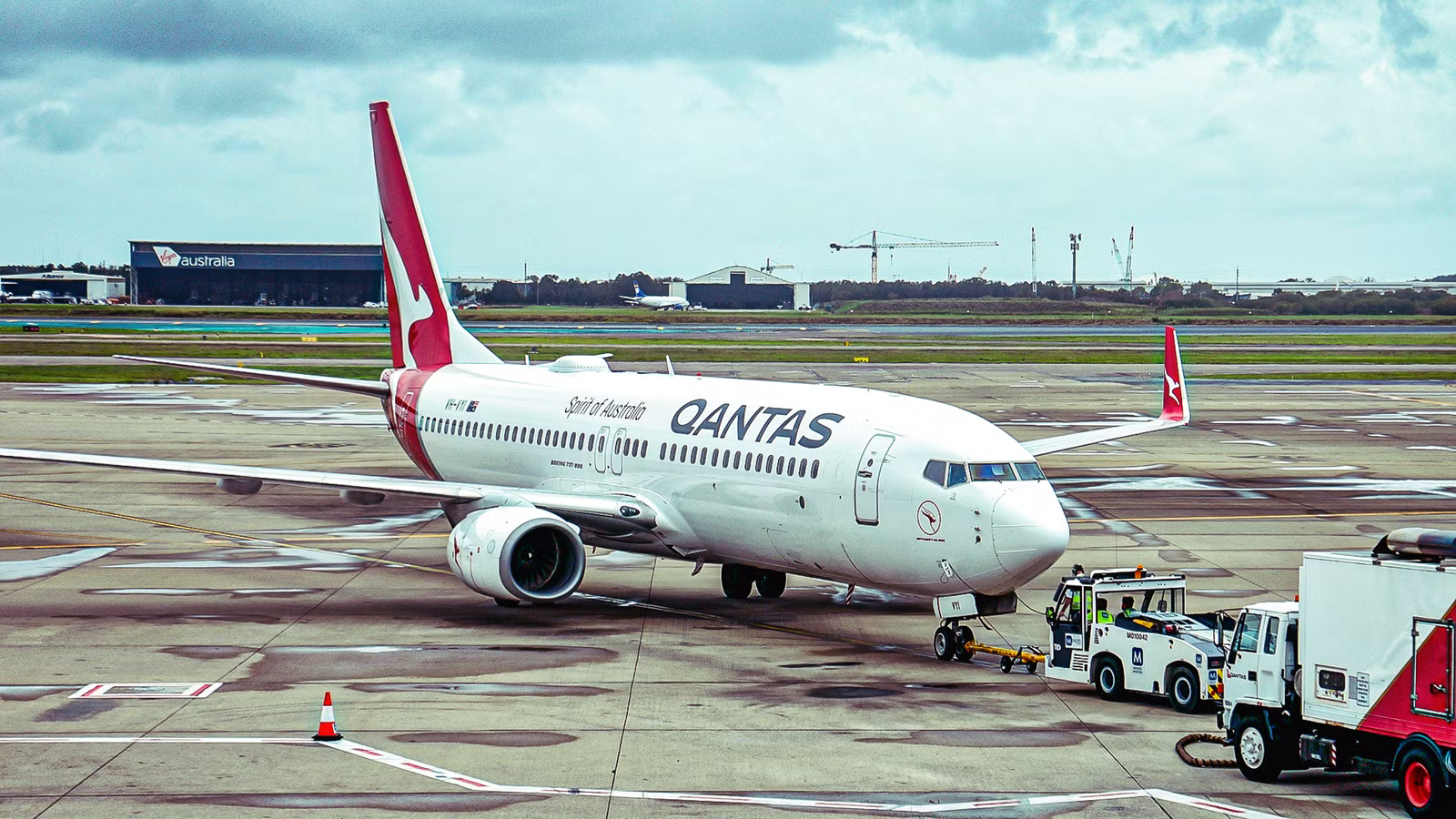
Spending AUD 12.8 billion on a fleet overhaul is Qantas‘ way of making sure it is ready to take on the next generation of flight. In the meantime, the Australian flag carrier expects to find itself in an unusual operational position: possessing a temporary surplus of mainline Boeing 737 captains and first officers even as the group’s total aircraft count grows. As older narrowbody jets exit the domestic network, flying hours for the 737 fleet are set to contract faster than line pilots can complete conversion training for replacement Airbus airframes.
How does an airline choreograph the retirement of such a critical aircraft without stranding highly compensated aircrews on the ground or disrupting daily domestic schedules? It is no easy task, but Qantas is prepared for what is to come. Dealing with this temporary crew imbalance will depend heavily on natural workforce turnover, with roughly 300 pilot retirements anticipated over the next five years.
A Challenging Crossroads

Qantas is in the midst of a timing mismatch between aircraft departures and pilot retraining cycles. The airline has confirmed that the phased retirement of its 737 fleet begins in late 2026, driven by the arrival of next-generation Airbus narrowbodies. The problem is that a commercial pilot rated on a 737 cannot simply step into the flight deck of an Airbus A321XLR without extensive ground school, simulator sessions, and line checks, so active 737 block hours will fall before a corresponding number of pilots are fully cleared to fly the incoming Airbus fleet.
Financial disclosures compiled by Yahoo Finance show that Qantas took delivery of 29 aircraft in FY26, including six A321XLRs for mainline operations and five A220-300s for regional subsidiary Qantaslink, expanding the group fleet to 372 aircraft. However, as these new arrivals assume key domestic frequencies, 737 flight schedules must be dialed back. The resulting reduction in 737 flying hours during the first quarter of 2027 means the airline will temporarily require fewer active 737 rosters than it has type-rated pilots on the payroll.
Holding excess pilot capacity carries short-term labor cost overhead, though Qantas views this operational friction as a necessary path toward a significantly more efficient domestic network. With 737 flight legs continuing to shrink, the next crucial layer of this fleet transformation turns on how the airline deploys its new Airbus fleet to overhaul regional and transcontinental routes.
Upgrading The Fleet Capabilities

Project Winton, Qantas’ multi-billion-dollar domestic fleet renewal strategy, replaces the airline’s aging single-aisle fleet through a targeted two-pronged Airbus deployment. As detailed in Simple Flying coverage, the airline is introducing the smaller Airbus A220-300 to take over regional and thin domestic routes formerly operated by Boeing 717s and older 737s, offering 25% more seat capacity while burning 20% less fuel per seat. On dense capital city trunk routes between  Sydney Kingsford Smith Airport (SYD), Melbourne Airport (MEL), and Brisbane Airport (BNE), the larger A321XLR is stepping in as the key aircraft, offering a substantial boost in seat capacity and belly cargo volume over the outgoing 737-800.
The main operational advantage of the A321XLR is really its capability and not just its seat count. Performance specifications from Qantas confirm that the A321XLR boasts a maximum range of 4,700 nautical miles (8,700 km). The extended reach allows the Australian carrier to deploy narrowbody aircraft on direct international routes to Southeast Asia and the Pacific Islands, sectors that were previously out of reach for its 737-800 fleet without payload restrictions or technical fuel stops.
Actually reaping the rewards of these route efficiencies means transitioning hundreds of mainline pilots from traditional Boeing control columns to Airbus Fly-By-Wire side-sticks. With simulator availability strictly capped and line training capacity limited by the speed of new airframe deliveries, Qantas faces a mounting logistical issue in converting its flight deck workforce without triggering widespread flight cancellations.
300 Pilots Needed?

Getting a pilot ready to move from a 737 to an A321XLR means far more than a routine refresher course. The two airframes feature fundamentally different flight control philosophies, moving from Boeing’s traditional control columns and hydromechanical feedback to Airbus’ fly-by-wire side-sticks and flight envelope protection systems, as noted in Simple Flying analysis. As a result, pilots must complete a full type-rating endorsement. The training pipeline involves extensive ground school instruction, fixed-base simulator sessions, full-flight simulator checks, and mandatory line training under supervision during active passenger services, strictly limiting how many crews can convert each month.
To manage the Q1 2027 surplus without resorting to costly forced redundancies, Qantas is using structured crew buffers and natural workforce turnover. Documentation from the Australian Federation of Air Pilots (AFAP) highlights that the airline expects approximately 300 pilot retirements across the group over the next five years. Having a steady stream of natural attrition provides a critical release valve, allowing Qantas to place displaced 737 pilots into temporary reserve rosters or schedule them into dedicated Airbus transition slots without inflating long-term payroll headcount.
Carrying excess flight crew capacity while still funding thousands of simulator hours is a substantial short-term expense on the airline’s balance sheet. However, Qantas leadership sees this temporary training friction as a manageable operational cost when weighed against the long-term financial returns of its fleet modernization.
Strong Finances Provide Some Protection

Qantas’ strong balance sheet provides the capital cushion needed to fend off short-term training expenses and temporary crew overstaffing. Financial results highlighted by Yahoo Finance show that the airline delivered an underlying profit before tax of AUD 2.064 billion in FY26. The buffer allows executive leadership to prioritize seamless operational integration over aggressive payroll reductions, avoiding the crew shortages and flight cancellations that often accompany rushed fleet transitions.
So why is this multi-billion-dollar investment occurring? For Qantas, the aim is to make great strides in fuel efficiency optimization and unit cost reduction. As detailed in Simple Flying coverage, replacing 737-800s with A321XLR and A220-300 airframes is projected to deliver an annual earnings boost of AUD 150 million to AUD 200 million by 2027. The 20% to 30% reduction in fuel burn per seat across core domestic trunk routes is what is expected to spearhead the earnings boost, which will be especially apparent on the competitive transcontinental corridor linking Sydney Kingsford Smith Airport (SYD) and Perth International Airport (PER).
The retirement of the 737 from the Qantas fleet is not an isolated domestic project and is deeply intertwined with the carrier’s overarching international long-haul roadmap. At the very top of the airline’s priority list is the impending arrival of custom ultra-long-haul widebodies that are set to completely change the face of the airline forever.
Leading Pilots Through To The A350-1000ULR

The replacement of the 737-800 network under Project Winton is designed to address domestic efficiency, and so does not exist in isolation from the broader long-haul ambitions of Qantas. The carrier expects up to 31 additional aircraft deliveries across the group in FY27, and headlining these arrivals is the scheduled April 2027 delivery of the initial Airbus A350-1000ULR for Project Sunrise. Managing the dual arrival of regional narrowbodies alongside ultra-long-haul widebodies in itself is one unified focus for the airline. Rather than viewing domestic narrowbody modernization as an independent project, Qantas relies on the operational cash flows generated by high-density domestic routes to fund its multi-billion-dollar international capital expenditure program.
The synchronization between Project Winton and Project Sunrise extends directly into flight crew career progression. As single-aisle pilots move from 737 platforms to the A321XLR, they enter a common operational philosophy that is combined with the experience of widebody international flying. Command experience on the A321XLR will be a natural feeder pipeline for senior flight crew transitioning to the A350-1000ULR for 22-hour nonstop flights to London and New York. The commonality across the Airbus family streamlines long-term training pathways, allowing flight operations to cross-qualify flight crew with significantly lower conversion friction than jumping from Boeing flight decks directly into ultra-long-haul widebody commands.
Despite the strategic alignment, long-term performance is naturally exposed to macro supply chain vulnerabilities. Both Airbus and Boeing continue to grapple with component shortages, engine delivery bottlenecks, and aerospace manufacturing delays that have repeatedly shifted delivery timelines industry-wide, as reported by Aviation Week. If Airbus encounters further assembly delays with the custom rear-center fuel tanks on the A350-1000ULR, Qantas may face crew scheduling imbalances, where pilots trained for ultra-long-haul sectors are temporarily left without active airframes.
No Worries For Qantas?

The story of the 737-800 at Qantas is coming to an end. It is Australia’s equivalent of the monumental fleet retirements seen among major US carriers, such as  Delta Air Lines retiring its MD-88 fleet or
  United Airlines phasing out its 757 inventory. With this, many of its pilots will be without an aircraft to fly for a period of time. The temporary pilot surplus projected for early 2027 is not an operational failure, but rather the unavoidable friction point of a legacy airline swapping its most demanded-upon asset while maintaining a 24-hour network schedule.
The airline is scheduled to begin phasing out its ten Airbus A380 superjumbos four years ahead of initial expectations, the next stage of its fleet retirement plan. As those four-engine double-deckers exit international service and widebody deliveries accelerate, natural pilot attrition, estimated by the Australian Federation of Air Pilots at approximately 300 retirements over five years, will progressively aid the temporary surplus. If flight crew ground training schedules stay aligned with Airbus factory delivery slots, Qantas will successfully complete one of the most complex fleet and crew restructurings in modern commercial aviation without sacrificing operating margins or network stability.