dailynewsnblog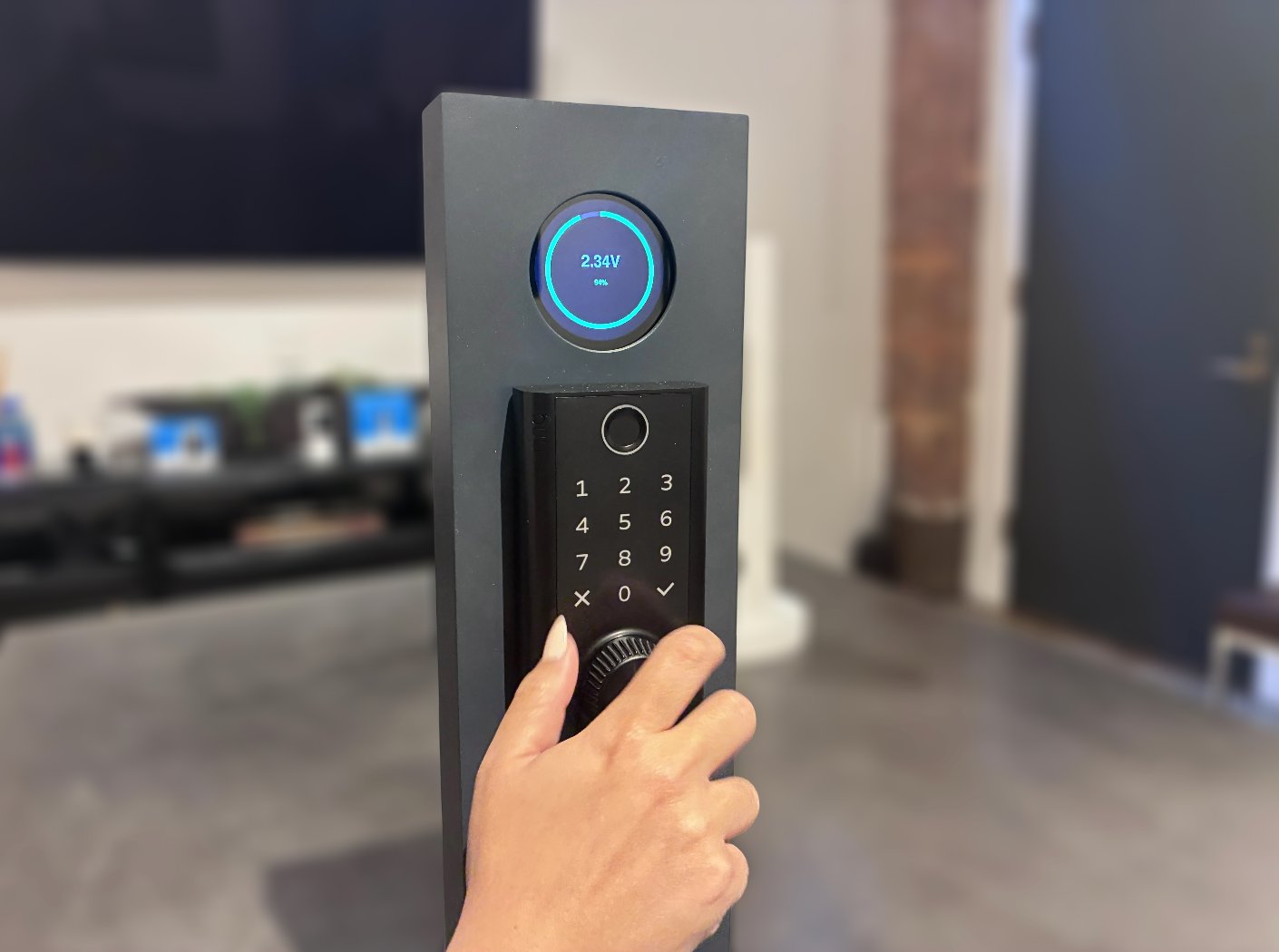
Smart locks are becoming the norm, not the exception, for homeowners who value security. They’re mostly straightforward, affordable and user-friendly, but because smart locks are rarely hardwired, they rely on standard replaceable or rechargeable batteries. Therein lies the biggest smart lock pain point: keeping the battery charged so you don’t inadvertently lock yourself out.
Until now, most smart locks have relied on an old-fashioned key as a backup if the lock dies, along with some experiments with solar panels. Ring’s first entry into the smart lock category, announced today and dubbed The Ring Smart Lock, uses a supercapacitor, a first-of-its-kind energy crank built into the thumbturn.

The small knob fixed below the backlit touchscreen keypad charges the smart lock with just a few turns, giving it roughly 20 seconds of operation – enough time to get in the house and, hopefully, throw your battery on the charger. We got a first look at the lock during a private demonstration by Ring Founder, CEO and brains behind the debut smart lock, Jamie Siminoff.
A small display screen (not included with the lock) showed how quickly the lock could be temporarily charged—roughly four or five spins. The crank operates no matter how dead the battery is. In fact, it’ll work even with the battery completely removed, Siminoff said.

When developing the lock, Siminoff couldn’t believe most were still relying on keys as backup, a tool he refers to as “medieval” in its simplicity and fallibility. Other emergency backup entry systems, including portable power banks with USB-C ports hidden in the lock or 9-volt battery chargers, present their own complications and duly require the user to carry a physical piece of equipment or hide it somewhere accessible.

Most smart locks include a traditional physical keyhole for emergencies.
John Carlsen/CNET
Supercapacitors store electrical energy electrostatically rather than through chemical reactions. They store energy quickly, in this case through the physical cranking, but for only a short period. As Siminoff explained, a smart lock is the perfect use case for this short-burst energy-storage technology.

The Best Smart Locks, Tested by CNET
Ring’s crowning innovation is the energy crank, but the sleek smart lock also includes many industry-standard features, including remote locking and unlocking via app, an onboard fingerprint reader, and integration with the Ring and Amazon device ecosystem, including Alexa.

The Ring Smart Lock stays connected through Amazon Sidewalk, a shared network powered by Amazon devices in the area. That means it doesn’t need Wi-Fi for remote locking and status updates.
Ring will sell the Smart Lock for $249 starting in 2027.

See full bio