dailynewsnblog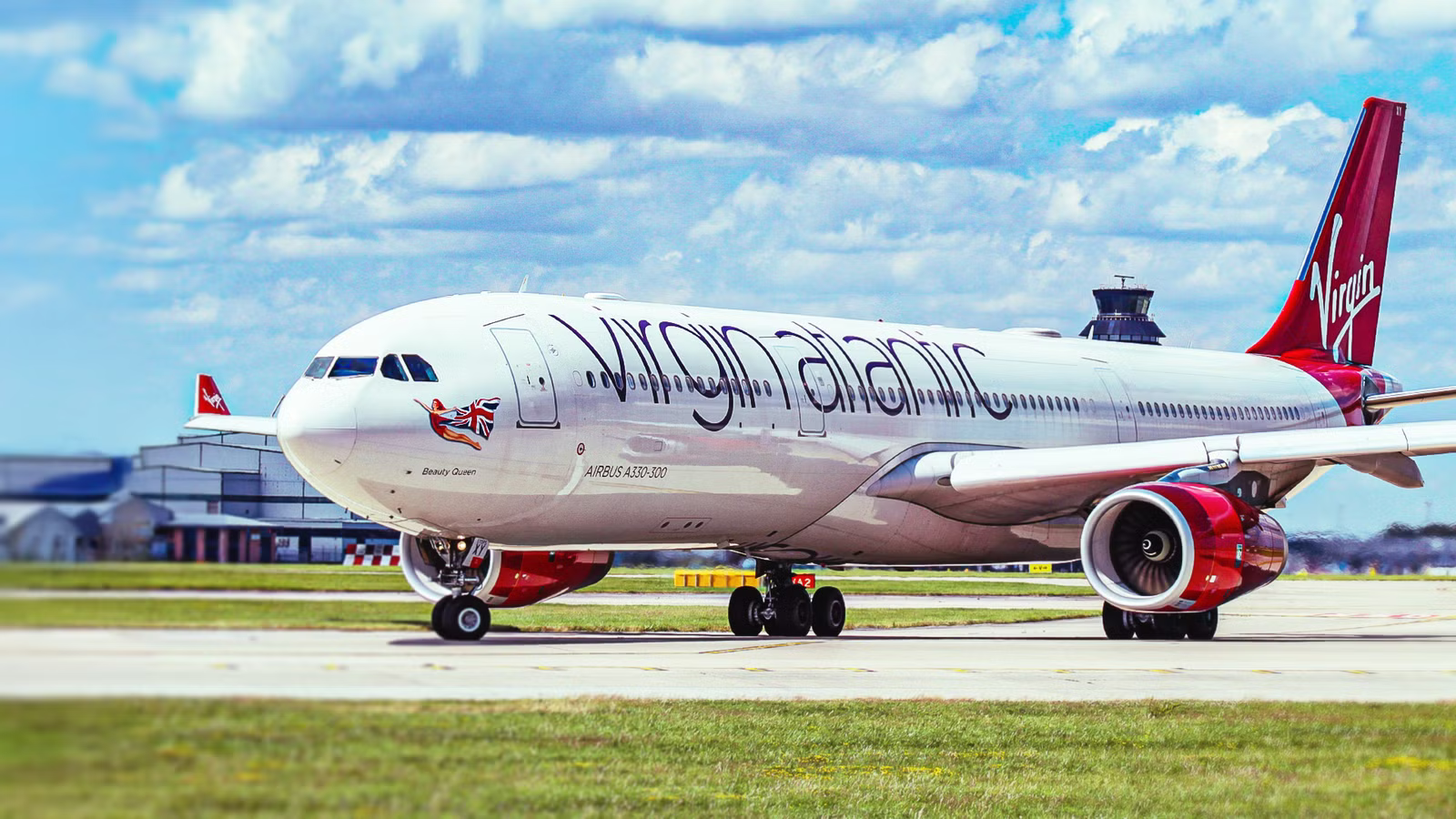
Virgin Atlantic pioneered transatlantic competition from  London Heathrow Airport(LHR) and
  London Gatwick Airport(LGW) by positioning its own red-tailed aircraft directly against legacy carriers. When looking across key US gateways such as
  Chicago O’Hare International Airport(ORD),
  Newark Liberty International Airport(EWR), and
  Detroit Metropolitan Wayne County Airport(DTW), travellers boarding transatlantic flights more often step onto
  Delta Air Lines aircraft than Virgin Atlantic widebodies. Handing over high-profile US destinations to a joint venture partner seems entirely counterintuitive for an airline built on visual brand distinction.
The decision was not an admission of defeat or a retreat from the American market, but a deliberate operational calculation. Getting more out of its transatlantic joint venture with Delta Air Lines, Virgin Atlantic has changed its commercial strategy from defending individual point-to-point routes to maximizing joint network revenue. Despite this, why exactly would a premium long-haul carrier deliberately pull its own flying from major financial hubs to let a partner operate the route instead?
A Cross-Ocean Partnership

Virgin Atlantic’s willingness to surrender aircraft operations on key routes has a lot to do with the principle of its transatlantic joint venture with Delta Air Lines, established in 2013. Under an antitrust-immunized, metal-neutral agreement, both carriers pool costs and revenue across all non-stop flights between the UK and North America regardless of which airline actually operates the flight. Net profits are shared according to agreed commercial ratios instead of individual ticket sales on a single aircraft, meaning Virgin Atlantic generates income from a Delta-operated flight between LHR and DTW or ORD just as effectively as if its own crew and aircraft were running the service.
When Virgin Atlantic launched its inaugural service from LGW to EWR in 1984, success relied strictly on filling its own Boeing 747 seats. Decades later, as slot constraints at LHR intensified and jet fuel prices fluctuated, operating three daily or four daily flights to hubs dominated by competitor alliance feeds became economically inefficient. Flying a 258-seat Boeing 787-9 or Airbus A330 into DTW, a fortress hub for Delta where Virgin Atlantic lacked domestic feed, meant relying almost entirely on point-to-point London traffic.
Now, handing the flying over to Delta, the joint venture has access to massive feed from over 100 domestic US connections while allowing Virgin Atlantic to redeploy its long-haul aircraft to higher-yielding leisure and point-to-point markets like Los Angeles, Miami, or Mumbai. Relinquishing flights to Delta allows Virgin Atlantic to maintain a presence in essential US corporate centers without locking up scarce widebody aircraft and costly Heathrow slots. However, financial revenue sharing alone does not fully explain why specific cities like Newark and Chicago were relinquished while others retained service.
Delta Has The Better-Configured Aircraft

At hub airports like DTW, Delta commands vast domestic feed networks that Virgin Atlantic just cannot match on its own. Operating a long-haul widebody into a partner’s primary hub means a steady stream of connecting passengers is needed to fill 250 to 300 seats every single day. While Virgin Atlantic can reliably fill an aircraft on pure point-to-point traffic to major financial or leisure destinations, markets like DTW, ORD, and EWR need beyond-hub connectivity.
Delta can easily funnel passengers from dozens of feeder cities onto its own flights, whereas a Virgin Atlantic aircraft sitting at a Delta hub depends almost entirely on local origin-and-destination demand unless domestic transfers are seamlessly synchronized. Virgin Atlantic operates a fleet of 43 widebodies, according to Planespotters.net, including Airbus A350-1000s, Boeing 787-9s, and Airbus A330neos, configured with heavy premium seating, including large Upper Class cabins. These premium-dense layouts naturally feed on high yields to cover operating costs.
Delta, by contrast, operates a vast widebody fleet including Boeing 767-300ERs and Airbus A330s that feature flexible, lower-density premium cabins better suited for mixed corporate and domestic transfer flows. Deploying a 44-seat Upper Class A350-1000 to DTW or EWR risks leaving high-margin seats empty, whereas Delta can operate a 26-seat or 34-seat Delta One aircraft that balances domestic connecting passengers with lower-yielding business fares.
Virgin Atlantic has now freed up widebody aircraft to focus on routes where high-yield premium demand pays off without relying on domestic feed. However, relying on joint venture benefits and corporate demand assumes that point-to-point markets will remain stable over time, which, as time has shown, they do not. When a route lacks a massive domestic hub feed and corporate business travel suddenly contracts, even direct point-to-point services can collapse rapidly.
Keeping An Eye Out For Competition

When a route lacks a fortress hub feed, profitability hinges entirely on high-yield point-to-point corporate travelers paying top-tier fares. Nowhere was this operational vulnerability clearer than in Virgin Atlantic’s expansion into Austin-Bergstrom International Airport (AUS). Launched in May 2022 with four weekly flights using the 787-9, the route was envisioned as a flagship connection linking LHR with Texas’s booming ‘Silicon Hills’ tech sector, as noted by Simple Flying reporting.
On paper, high-margin corporate travel combined with plenty of belly cargo capacity per flight promised a lucrative niche. However, as reported by BTN, when tech-sector travel budgets contracted post-pandemic, hovering at roughly 70% of historical levels, the thin margin between profitability and unsustainable loss vanished. Without Delta hub connections at AUS to backfill empty seats, Virgin Atlantic found itself outmatched by  British Airways, which held a dominant 58% booking share on the AUS to LHR city pair with a daily 787 service, according to momondo.
Operating an aircraft with 31 Upper Class seats into a market where corporate travel was stagnating left Virgin Atlantic with heavy operational losses. By January 2024, less than two years after its celebrated launch, Virgin Atlantic pulled its aircraft off the route. Today, the carrier retains only a 5% residual booking share on the route through partner connections, showing that pure point-to-point corporate routes without deep hub connectivity cannot justify dedicated widebody services.
The collapse of the AUS service reinforced a core tenet of Virgin Atlantic’s fleet allocation strategy. For Virgin, widebody aircraft are far too capital-intensive to deploy on speculative corporate markets. Instead of keeping widebodies trapped on underperforming point-to-point routes or low-yield feeder cities, the carrier aggressively reclaims this capacity to double down on high-yielding, high-density gateways where demand is guaranteed.
Choosing The Right Destinations

Withdrawing widebody capacity from secondary point-to-point markets and low-yielding feeder gateways is just a small part of Virgin’s capital-focused fleet concentration strategy. Operating a tight long-haul fleet leaves Virgin with zero tolerance for sub-optimal asset deployment. Every long-haul aircraft tied up on a thin 16-hour or secondary sector carries a massive opportunity cost compared to deploying that same airframe on a high-density hub where Upper Class pods and Premium seats list at peak fares.
The deliberate fleet consolidation is visible across the carrier’s 2026 flight schedules. Despite pulling out of five North American cities over the last decade, Virgin Atlantic maintains a robust transatlantic presence, operating over 8,000 scheduled flights across 13 core gateways in the region, as per Simple Flying coverage. Rather than spreading airframes thin, capital is concentrated on dominant leisure and trunk routes.
At Manchester Airport(MAN), the carrier is boosting  Orlando International Airport(MCO) peak summer capacity by 12% before upgauging winter services to the 397-seat A350-1000, a 17% overall capacity increase. Meanwhile, flagship routes out of LHR to JFK and MCO continue to see high-density A350-1000 deployments, with a view that every seat on the airline’s premium-heavy aircraft can pay a maximum yield.
The relentless focus on high-yield hubs is what Virgin Atlantic believes can achieve maximum profitability per available seat mile from its relatively small widebody fleet when compared with its competitors. However, leaving secondary US gateways exclusively to partner aircraft has a massive impact on the carrier’s long-term competitive profile across North America.
Opening Up To A World Of Opportunity

Abandoning secondary US gateways does not weaken Virgin Atlantic’s overall brand footprint in North America and actually solidifies its position as a unique, hyper-focused UK long-haul operator. Combining its four-carrier transatlantic joint venture with its entry into the SkyTeam Alliance, the airline provides seamless connectivity to over 200 cities across North America without taking on the operational risk of flying its own aircraft into lower-yielding markets.
Passengers booking through Virgin Atlantic can still access destinations like ORD, EWR, DTW, or Vancouver International Airport (YVR) via single-ticket codeshare itineraries on Delta Air Lines,  Air France, or KLM, while the Virgin fleet remains focused on high-margin trunk lines. A partner-reliant strategy like this is actually quite common to see across the North Atlantic with other major carriers, demonstrating that joint venture code-sharing has replaced traditional flag-carrier expansion.
For example, Air France and KLM rely extensively on Delta to cover interior US markets while focusing their own widebodies on high-volume hubs. Virgin Atlantic’s strategy ensures that whether a traveler flies from LHR to ORD on a Delta Boeing 767-300ER or from LHR to JFK on a Virgin Atlantic A350-1000, the revenue feeds the same $13 billion joint venture pool; critical whenever there are regional economic slowdowns.
What could be argued is that this trajectory that Virgin Atlantic is on could well turn the airline into a boutique brand restricted to a handful of premium London routes. That potential reality is further strengthened by the airline’s move toward a higher percentage of premium seating on its aircraft, as detailed by Simple Flying analysis.
A Fresh Look For The Future

In modern long-haul aviation, national prestige and geographic reach no longer determine route success. The withdrawal of Virgin Atlantic aircraft from ORD, EWR, DTW, AUS, and YVR shows that profit-sharing alliances have greatly changed the rules of transatlantic flying.
When an airline can capture its share of passenger revenue through a partner’s flight, sending a 300-seat widebody across the ocean purely to fly its own flag is a luxury that modern fleet economics simply will not allow. With seven additional A330-900neos joining the fleet between 2027 and 2028 and 14 787-9s undergoing retrofits to expand Upper Class capacity from 31 to 44 seats, the carrier will be in possession of an exceptionally young, premium-heavy fleet.
Whether those upgraded airframes stay strictly confined to flagship hubs or tempt management back into secondary American markets will be the deciding factor as to whether the joint venture discipline is permanent or merely a function of widebody fleet limits.