dailynewsnblog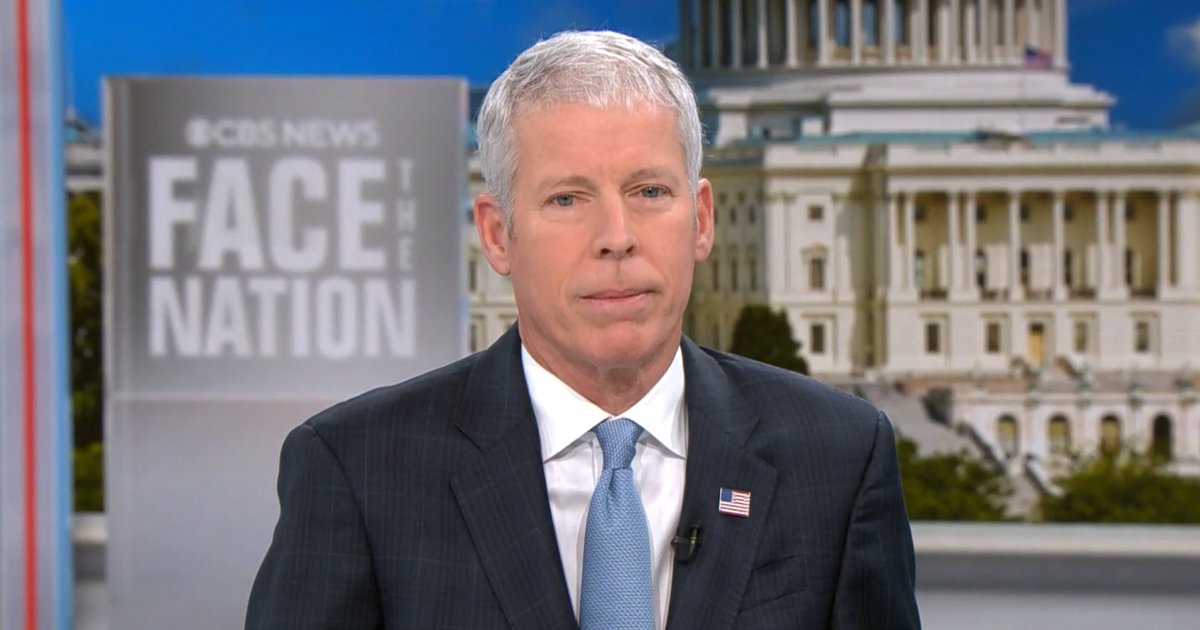
Washington — Energy Secretary Chris Wright said Sunday that President Trump was “well aware of the risks to energy flows” before launching the war in Iran earlier this year, but argued “the world cannot sustain a nuclear-armed Iran.”
“He knew it was going to elevate energy prices in the short run, he said, ‘I’m going to take a hit there, but I got to do the right thing,'” Wright said on “Face the Nation with Margaret Brennan.”
Americans have been feeling the financial squeeze of soaring gas and diesel prices in recent months. But the Trump administration has pointed to the potential threat a nuclear-armed Iran could pose, and how it could represent a long-term threat to energy prices. Wright defended the president on Sunday, arguing that Mr. Trump has taken a “strong stand that Iran, the world’s greatest terrorist regime, cannot and will not have nuclear weapons.”
Wright expressed confidence that prices will fall, pointing to increasing supplies coming out of the Strait of Hormuz, U.S. gasoline production, the summer driving season slowing, among other factors. Asked whether he expects prices to go down over the next four weeks — as Republicans eye a tough environment in the lead up to the midterm elections — Wright said, “absolutely.”
“Diesel prices have been going down, gasoline prices have been going down,” Wright said. “I expect that to continue.”
Diesel prices soared of above $6.50 a gallon in recent weeks, squeezing farmers, who rely on diesel to run agricultural machinery, along with industries from construction firms to food banks, which rely on diesel to fuel their vehicles and delivery trucks. Wright noted that diesel prices are down a little over 20 cents so far in recent days, adding that he expects the prices to continue to go down.
“You should see it below $6 before too long,” he said. “But exactly when, I certainly don’t know that.”
Wright said “everything we’re doing is to grow the supply of diesel, to grow the supply of gasoline, and frankly, again, to reverse years of policies that have been directed exactly the opposite-to shrink our ability to produce, refine, and deliver hydrocarbons.”
Wright wouldn’t weigh in on the president’s plans and whether things would escalate militarily after the midterm elections. But he said Mr. Trump is “always planning for contingencies and he’s always negotiating,” and both diplomatic and military tracks remain open.
The energy secretary said securing the agreement from the Group of Seven countries last week to release 100 million barrels of fuel over four months is a “big deal.” He called it “common sense” and said it will drive diesel prices down in the U.S. and around the world through the winter.
“Europe has very large diesel stores. They don’t refine enough diesel to supply their own economies, so naturally they store a lot of diesel. They’re very keen to see American diesel continue to flow to Europe. They’ve got a lot of diesel in stores. Why not release some of that?” Wright said. “This is what you store diesel for when all the Russian exports of diesel are shut down, when the Chinese have said we’re not going to deliver any more diesel, and you still have a reduction of diesel flows coming out of the Gulf. But we’re restoring those, but that takes time.”
Asked whether the president has ruled out an export ban on diesel, which Wright has opposed, Wright said “every day” Mr. Trump has been “throwing out ideas,” and the president remains engaged in discussions.
“There’s different ways to look at it. He’s always looking, ‘How do I lower energy prices? How do I lower heating prices, electricity prices, gasoline prices, diesel prices?’ In fact, I would say his constant communication of that may have been quite helpful in achieving the deal we just got,” he said.
Wright added, “It’s just a constant dialogue about the many levers we have, how can we drive down diesel prices and drive down gasoline and other prices along with it?”