dailynewsnblog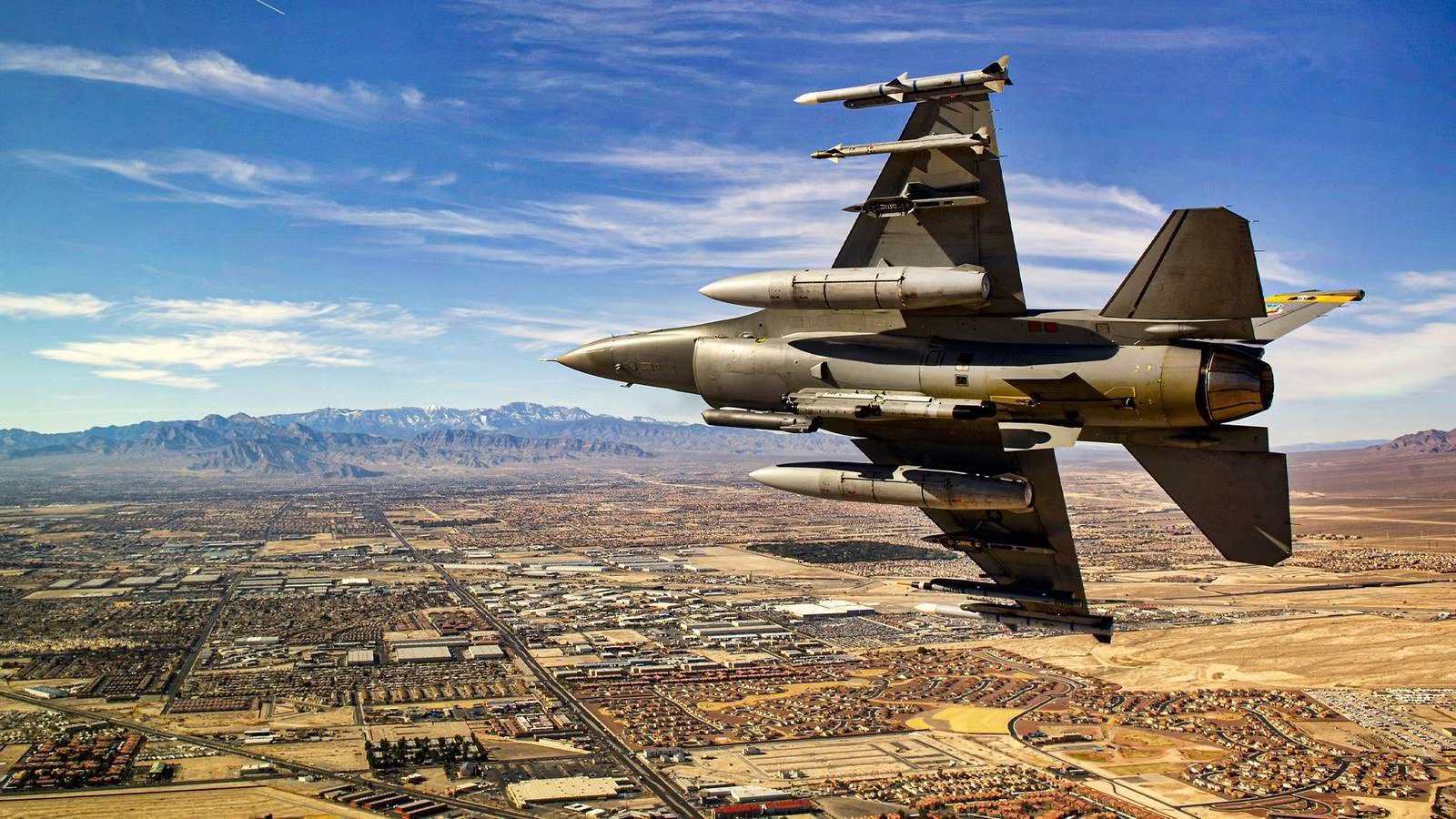
New Zealand is a country that prides itself on being a nuclear-free zone, and it has operated a comparably meager defense budget of as low as 1% of GDP for years. It dispensed with its fighter jet fleet and focused on sustaining efforts in Antarctica, monitoring its vast exclusive economic zone (with emphasis on fishing), and maintaining a small but highly professional army able to contribute meaningfully to allied peacekeeping and training efforts as well as its Five Eyes commitments.
Now defense spending is rising to 2% of GDP and could rise further. Currently, this is only enough to recapitalize New Zealand’s existing aircraft and ships, but the tone of the government is also changing. It is looking increasingly possible that New Zealand could regain a long-range strike capability through munitions for its Boeing P-8 Poseidons and the acquisition of some sort of autonomous aircraft capability. Reintroducing fighter jets is always possible, but is not on the table in today’s climate.
The Offer For 28 F-16s

In 2001, in the wake of the ‘peace dividend’ following the end of the Cold War, New Zealand disbanded its air combat force, made up of A-4K Skyhawks and Aermacchi MB-339 trainers, without replacement. New Zealand maintained a combat fleet through the Cold War, although it always had a low military budget. The geographic isolation of the country means it has not felt particularly vulnerable since the Japanese blitz across the Pacific in WWII.
In the late 1990s, New Zealand was looking to replace its aging fleet of A-4K Skyhawk light fighters. The United States offered to lease New Zealand F-16A/B Fighting Falcons that had been built for Pakistan. These were made up of 13 single-seat and 15 two-seat aircraft. At the time, they were in storage at the boneyard at Davis-Monthan, having been built for Pakistan, but then an arms embargo by the US on Pakistan at the time prevented their delivery due to the country acquiring nuclear weapons.
Under the deal, New Zealand would lease them for a period of ten years and purchase them at the end for $120 million. The cost would also be partly offset by the sale of the existing A-4 Skyhawk fleet to the Philippines. Two squadrons would have operated them, the No. 2 Squadron RNZAF and No. 75 Squadron RNZAF. The deal was negotiated by the National-led Coalition Government, but was opposed by the then-opposition Labour Party.
The Canceled Plan To Lease F-16 Fighter Jets

In March 2000, the New Zealand government announced in a statement, “The Government announced today that it would not proceed with the arrangements to lease and purchase 28 F-16 fighter aircraft entered into by the previous government.” This followed the Labour government winning the election and fulfilling its election pledge to cancel the deal arranged under the previous National government.
The statement added, “[Prime Minister] Helen Clark said that the arrangements offered by the United States for the F16s were good ones, provided that expenditure now on upgrading the air combat force was a priority and that the Defence Force’s other priorities were also affordable. Unfortunately, she said, neither of those assumptions could be sustained.” An independent defense review examined alternatives including a smaller F-16 fleet, but the Labour government ultimately chose to cancel the program entirely.
The government said that the A-4 Skyhawks would remain capable for some years to come, although that proved to be a shallow promise as they were retired the following year. At the time, the decision to cancel the F-16 order and disband the combat fleet was controversial in New Zealand. But it was also accepted, and no major party has ever seriously revisited the topic since.
No Plans To Restore Fighter Jets

As of 2026, there are no official plans or even any significant debates on either side of the aisle to restore such a capability. The current view within serious literature is that New Zealand would only rebuild a fighter jet capability under a fundamentally different strategic environment than exists today. Today, it is not possible to understand New Zealand’s defense planning without understanding its close relationship with Australia and its extraordinary geographic isolation.
The 2025 Defense Policy Review states, “New Zealand and Australia have committed to modernise our alliance and further strengthen our bilateral defence relationship, including the development of an increasingly integrated ‘Anzac’ force.” Restoring a fighter jet capability would be an enormous challenge, as New Zealand would be working from practically nothing. The entire training pipeline would have to be started from scratch.
Royal New Zealand Air Force | Current inventory (per RNZAF) | Planned inventory |
|---|---|---|
Boeing P-8 | 4 | 4 |
Boeing 757 (transport) | 2 | 0 (retiring from 2028) |
Airbus A321XLR | 2 (replacing 757) | |
C-130J Super Hercules | 5 | 5 |
NHIndustries NH90 | 8 | 8 |
AgustaWestland AW109 | 5 | 5 |
SH-2G Super Seasprite | 5 | 0 (to be replaced) |
MH-60R Seahawk | 5 (replacing Seasprites) | |
T-6 Texan II | 11 | 11 |
Super King Air | 2 | 2 |
Still, it should be emphasized that there is no reason, in principle, from a budgetary or demographic perspective, that New Zealand couldn’t do it. With a population of around 5.5 million and a GDP of $265 billion, New Zealand is broadly comparable to Finland. Finland is purchasing a fleet of 64 F-35As, although its context is considerably different from New Zealand. Establishing a fighter jet fleet from almost nothing has precedent, as the Philippines is currently doing. Ireland (also broadly comparable to New Zealand) is currently considering it.
Would New Zealand Select F-35A?

The lack of any serious government research into restoring a fighter jet fleet means that there is little solid information to analyze about what would cause New Zealand to change its mind and what fighter jets it would procure. And then how many. A plausible scenario would be a sharp collapse in security in the Asia-Pacific, perhaps following a successful invasion of Taiwan and a significant defeat by the US, Japan, and Australia.
Under this extreme scenario, the US-led alliance continues, but the nations are racing to rearm and counter further Chinese expansion. Countering China would require high-end assets, like the F-35. Japan could be fortifying its Ryukyu Islands. New Zealand would likely work as a junior partner closely with Australia and the US. Australian and US support in rebuilding its fighter jet capability from nothing would be critical. Interoperability could be the overriding concern.
Australia operates two types of fighter jets, the F-35A and the F/A-18 Super Hornet. The Super Hornet is expected to go out of production in 2027, likely meaning that only second-hand examples would be available. New Zealand’s realistic choice could be between modernized F-16 Block 70 fighter jets and F-35As. Given the requirement for interoperability and high-end systems, perhaps two or three squadrons of the F-35A would be the logical choice. It must be stressed that this section is mostly speculation, although Australian F-35s visited New Zealand for the first time in 2026.
What Could Make More Sense

Exactly what would make sense in a dire security scenario is unclear, but New Zealand would likely focus on protecting its maritime routes and shipping. This could mean that the Navy could become a priority. It would be reasonable to assume that practically everything New Zealand does, or at least complicated, big-ticket items, would be in close cooperation with Australia and the US.
There would likely be an intense debate about increasing the size of the Navy and maritime assets, including debates about purchasing more frigates, more maritime patrol aircraft (e.g., more P-8 Poseidons), and other assets. There could be some debate about a submarine capability. Part of the debate will be influenced by what time frame New Zealand is working with. If it thinks it needs to be ready in five years, then that might not be enough time to order and stand up new frigates and fighter jets.
If the timeframe is ten years, then that takes much of the pressure off and allows for long-term orders and force redesign. In reality, much of the effort will likely go to hybrid and unmanned systems. New Zealand would likely invest heavily in various drones ranging from sea-going drones to unmanned combat aircraft. These are much faster and easier to acquire and stand up.
What New Zealand Is Actually Doing

As stated, New Zealand is not seriously considering restoring its fighter jet fleet. However, it has completed its purchase of four new P-8 Poseidon maritime patrol aircraft and its five C-130J Super Hercules airlifters. It has placed orders for two Airbus A321XLRs to replace its Boeing 757s and is ordering five MH-60R Seahawk maritime helicopters to replace its fleet of SH-2G Super Seasprites (deliveries start in 2027).
In July 2026, New Zealand announced that its P-8 Poseidon had fired two AGM-84 Harpoon guided missiles at a decommissioned target ship for the first time during a multinational exercise. This demonstrates the RNZAF’s ability to employ Harpoon missiles from the P-8A during a multinational exercise. The missiles were loaned by Australia, and New Zealand has not yet ordered any missiles for the aircraft.
Also in July 2026, Reuters reported, “New Zealand plans to purchase long-range one-way strike drones with a preference for local suppliers.” This signals a policy shift to acquiring long-range strike and autonomous systems. The 2025 Defence Capability Plan deliberately avoids mentioning fighter jets, but it introduced new language like “enhanced strike capabilities,” “greater lethality and deterrent effect,” “long-range aerospace effects,” and “autonomous and uncrewed systems.“