dailynewsnblog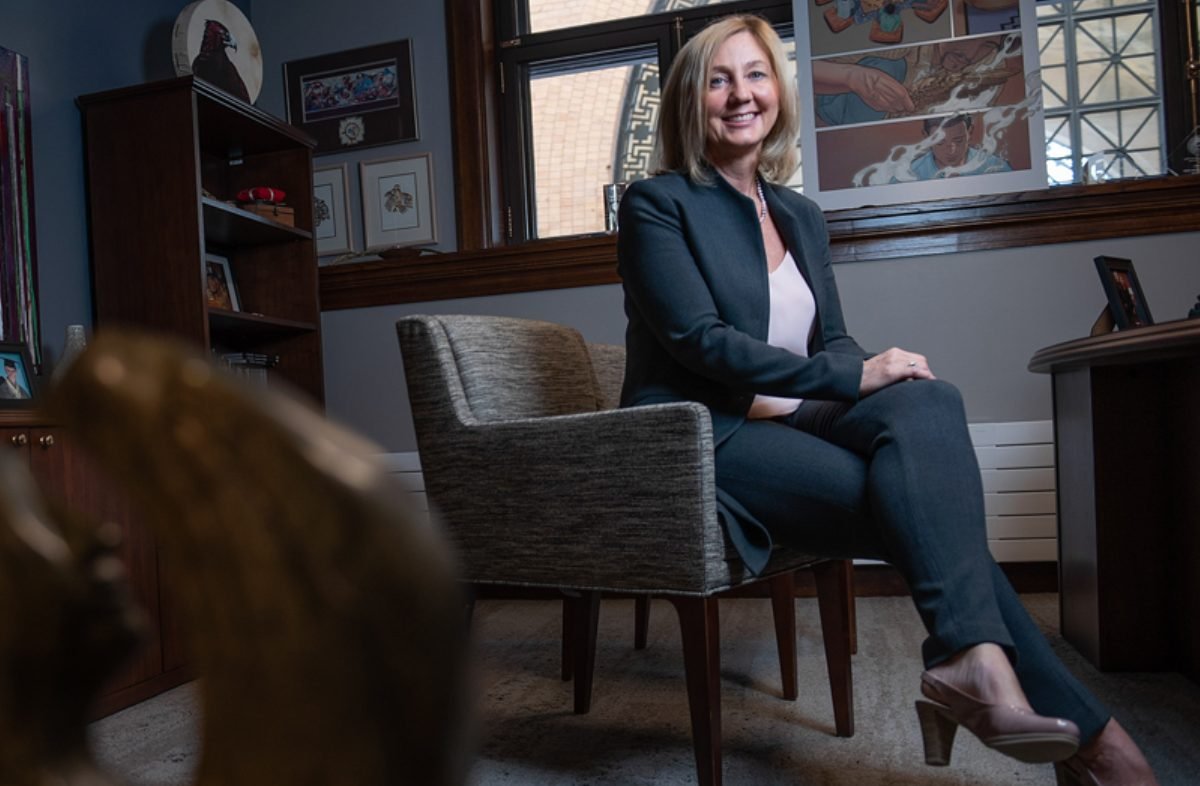
Sen. Patti LaBoucane-Benson opened the inquiry in the Senate on Thursday with a speech in which she called for dialogue on the best options to address denialism, while also acknowledging debate over potentially criminalizing that sort of speech.
The government’s legislative deputy in the Senate has launched an inquiry into residential school denialism, urging her colleagues to find “meaningful consequences for retraumatizing Survivors, families and communities that have already suffered so much.”
Sen. Patti LaBoucane-Benson opened the inquiry in the Senate on Thursday with a speech in which she called for dialogue on the best options to address denialism, while also acknowledging debate over potentially criminalizing that sort of speech.
“As a country, we are beginning to consider real courses of action to address the issue of denialism. Many Indigenous communities and organizations have said that residential school denialism should be criminalized to address harmful denialist conduct and protect Survivors,” she said.
“Some legal scholars and civil libertarian organizations oppose criminalization. They argue that education, public engagement and evidence-based discussion are preferable responses. They caution that criminalization may inappropriately target some Survivors and create difficulties in distinguishing denialism from legitimate inquiry.”
Speaking to iPolitics shortly after the speech, LaBoucane-Benson said the purpose of the inquiry is to “open up an opportunity for dialogue and for senators to contribute to the the debate.”
“It’s an opportunity for collaboration to hear other people’s opinions, but we are just doing speeches. It doesn’t extend further than speeches in the chamber,” she explained.
“It’s an important topic to senators. I know that in speaking with my colleagues, and by opening this inquiry, it’s an opportunity for us to dig a little deeper, to have an opportunity to listen to each other, and I’m hoping my colleagues take different parts of denialism and kind of dig in to different things.”
READ MORE: Senate passes anti-hate bill but rejects proposal to criminalize residential school denialism
The inquiry comes only days after a group of 20 masked individuals linked to a white nationalist group gathered near the Tk’emlúps te Secwépemc reserve in B.C. to unravel a banner reading “Got Bones,” publicly mocking claims of unmarked graves at the site of a nearby residential school.
The demonstration was widely denounced and comes amidst a provincial election campaign in B.C. in which the scope of Aboriginal title remains a major topic of debate.
At the onset of the current Parliament, New Democrat MP Leah Gazan proposed a private member’s bill to criminalize residential school denialism, using language that largely mimics the existing law against Holocaust denial.
While Gazan opted to prioritize a separate bill instead, Sen. Nancy Karetak-Lindell moved an amendment to the government’s anti-hate bill last spring that included the near identical language.
That amendment passed at the human rights committee, but was voted down when Bill C-9 returned to the Senate floor.
The quick turnaround on that vote — it happened only two days after the committee report was finalized — and the large number of absences prompted some claims that senators weren’t prepared to discuss the issue. Only 73 votes were cast and two abstentions were noted. There are 94 senators currently in the Chamber and 11 vacancies.
Asked if her colleagues felt blindsided by the rapid pace of the C-9 debate, LaBoucane-Benson said it was unclear why the chamber voted down the amendment.
“That’s a good question. I really don’t know why individual senators decided to vote against that report. I really don’t,” she said.
LaBoucane-Benson, a member of the small government caucus in the Senate, was the lone vote against the amendment at committee. She later voted against the amended bill when it returned to the Senate floor.
Her office clarified to iPolitics that the senator was stating that she couldn’t speak for her colleagues on why they voted how they did.
Sen. Pierre Moreau, the government representative in the Senate, said in the Upper Chamber that he opposed the amendment because he felt there hadn’t been proper engagement with Indigenous Peoples.
“Proceeding without such consultation risks privileging some voices over others or, worse, silencing them altogether,” he said during the debate over the amendment in June.
“It is First Nations and Inuit Peoples who are retraumatized by the denial of their harms who have a better understanding of the issue.”
BACKGROUND: Senate committee amends C-9 to criminalize residential school denialism
Conservative Sen. Mary Jane McCallum, a residential school survivor, said she voted down the amendment because she was concerned it would “prevent conversations that need to happen, conversations that are already difficult to generate.”
“As young people told me, they were afraid to ask questions because they were afraid to be seen as racist, even though the questions came from wanting to understand the history of First Nations and residential schools. This came up when I went to one of the law schools,” she explained last spring.
Justice Minister Sean Fraser told iPolitics last spring that he was disappointed Gazan wasn’t bringing forward her bill because he welcomed a debate on the issue in the House of Commons.
After the amendment, Fraser said that it was outside the scope of Bill C-9.
His office didn’t immediately return a request for comment on Friday on if the government would support standalone legislation.