dailynewsnblog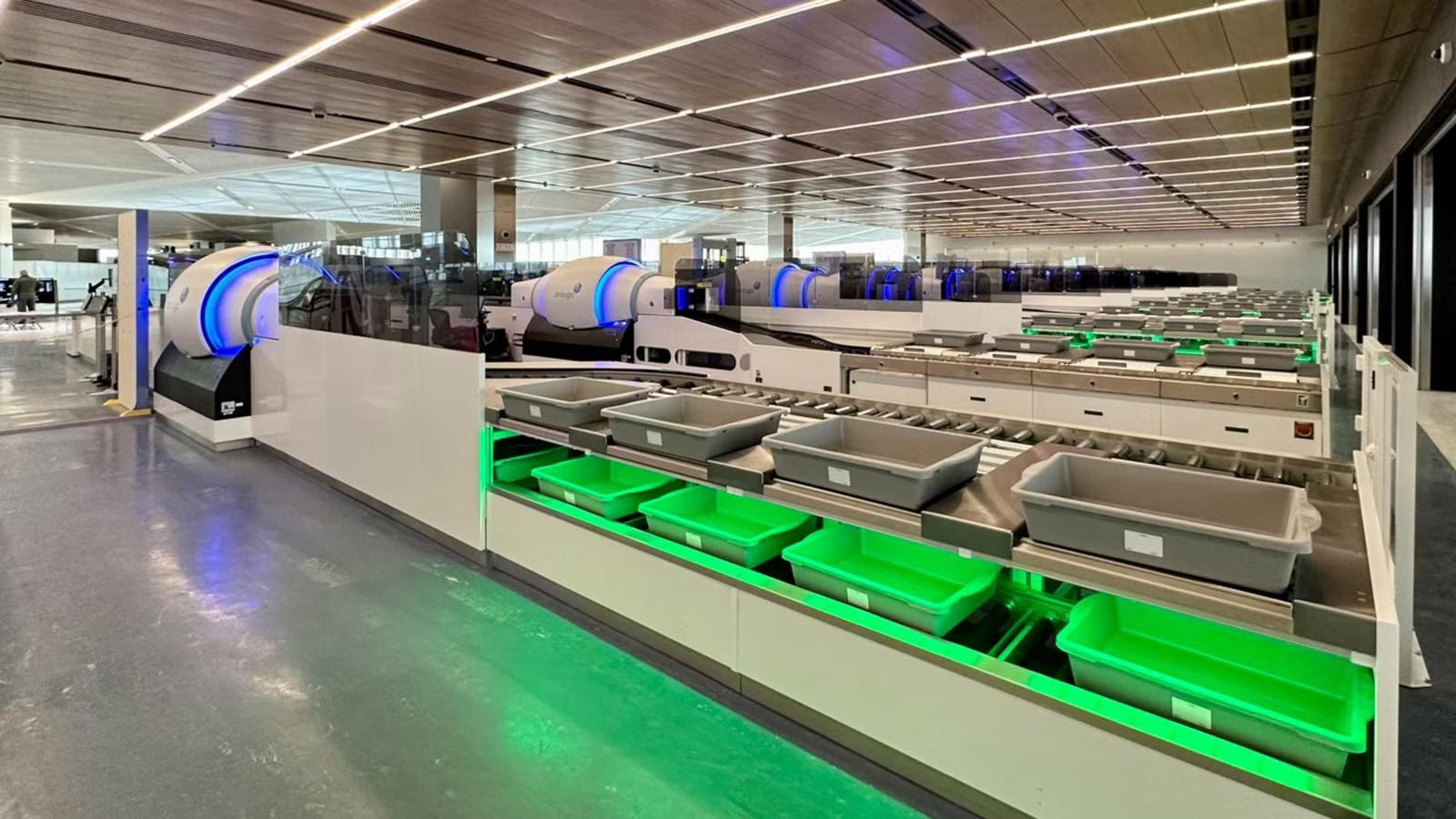
This month marks 25 years since the September 11 attacks in the United States, which killed nearly 3,000 people. The tragedy led to major changes in the way airport security was handled across the country. On November 19, 2001, President George W. Bush signed the Aviation and Transportation Security Act into law and established the Transportation Security Administration (TSA). The agency took over airport security from private companies and placed passenger screening under federal control.
TSA has changed considerably since then. The agency has introduced new screening technologies and processes such as facial comparison and artificial intelligence in its security operations. Its main responsibility, however, has remained the same: keeping the transportation system safe so that people and goods can continue to move across the country. The agency is now investing hundreds of millions of dollars to further modernize airport checkpoints and prepare them for the years ahead.
TSA Took Over Airport Security After 9/11

Before the September 11 attacks, airport security in the US looked very different from what we see today. It may be difficult to imagine now, but passengers could arrive at airports only minutes before their flights and pass through relatively simple screening while keeping their shoes and coats on. Access to the gate areas was also far less restricted, and passengers did not face the same level of identification and security checks that are now part of air travel.
At the time, countless private security companies managed airport security across the country. Individual airports and airlines were responsible for hiring their own security firms to screen passengers, which led to inconsistencies in the way security was handled. These contracts often went to the lowest bidder, meaning standards could vary depending on the company providing the service. The September 11 attacks exposed the weaknesses of this fragmented system.
The Aviation and Transportation Security Act created the TSA and placed passenger screening under federal control. The agency was initially overseen by the Department of Transportation and later, in 2003, responsibility moved to the Department of Homeland Security. The new system introduced the requirement for all checked baggage to be screened before flights, using aviation security personnel and specialized screening X-ray machines.
This created a consistent national standard for screening passengers and their bags. Today, TSA handles the vast majority of airport screening in the US. Its responsibilities have also expanded beyond passenger and baggage screening to include other security functions at airports, such as controlling entry and exit points. What began as a newly created federal screening workforce has therefore developed into a much broader transportation security agency over the past 25 years.
TSA Sets Out Its Priorities For The Next 25 Years

The agency has now started looking beyond its first quarter-century. In August, TSA Administrator David P. Cummins announced the multi-million-dollar (around $781 million) Horizon 25 Strategy, setting out what TSA wants to focus on over the next couple of decades. The strategy centers on three areas: modernizing airport checkpoints, improving the passenger experience, and strengthening security across different modes of transportation.
The plan comes as air travel demand continues to grow. TSA handles over 900 million screened flyers per year, along with 2 billion pieces of carry-on luggage across the US. The agency therefore needs to find ways to process more travelers while maintaining effective security at airports. Horizon 25 is intended to guide how TSA approaches that challenge.
Cummins said the aim is to build a TSA that is “agile, resilient and ready” for the challenges ahead. He said, “In its first 25 years, this agency has performed its critical Homeland Security mission with dedication and excellence. As we look forward to the next 25 years, we must constantly work to stay ahead of evolving threats and deliver a Golden Age of Travel. Through the Horizon 25 Strategy, we will build a TSA that is agile, resilient, and ready for tomorrow’s challenges.”
TSA Plans To Expand Technology At Airport Checkpoints

Indeed, technology is a major part of this multi-billion-dollar strategy. TSA has spent years introducing new systems at airport checkpoints to improve how passengers and their bags are screened. One example is Computed Tomography (CT) scanners. The technology produces detailed 3D images of carry-on and checked baggage, which allows screening officers to examine bags from different angles and identify potential explosives. TSA has deployed around 1,162 CT scanners across 296 US airports through its Checkpoint Property Screening System (CPSS) program.
According to industry reports, for the fiscal year 2026, the program has $215 million in baseline funding. TSA expects its modernization work to require between $500 million and $700 million over five years. Furthermore, another example is Advanced Imaging Technology (AIT). These are millimeter-wave scanners that are designed to detect both metallic and non-metallic threats on passengers. TSA has around 1,200 AIT units at nearly 400 airports. In addition, the agency has also been introducing newer technology to verify passenger identities.
It is using facial comparison technology at select airports. The technology compares a traveler’s face against the photograph on their identity document. TSA has also introduced the second generation of its Credential Authentication Technology, known as CAT-2, which helps Transportation Security Officers verify the authenticity of a traveler’s identity document and check their flight and vetting status.
The agency has deployed CAT-2 units at approximately 350 airports across the country. Looking ahead, it plans to continue expanding the adoption of such technologies. Besides, as reported by WTOP, TSA is preparing to roll out e-gates equipped with facial comparison technology and a new lane configuration across all 400 TSA PreCheck lanes in the coming months.
TSA Moves From Gold+ Toward An Expanded SPP

Another part of Horizon 25 is the agency’s plan to expand its use of public-private partnerships at airport security checkpoints. TSA is now looking to build on its existing Screening Partnership Program (SPP), rather than move forward with the newer Gold+ program that was introduced earlier this year. Gold+ was introduced as a way for airports to use private companies to manage screening staff and checkpoint equipment.
The idea was to give participating airports more flexibility and allow them to introduce new technology without being tied to the federal procurement process. However, the program received multiple instances of skepticism over how it would work in practice, including concerns about oversight, workforce protections, and the role of federal employees. Tampa International Airport (TPA) was one of the first airports to consider the program, but in August, it decided to continue using federal TSA screeners after reviewing the proposal.
With that being said, TSA has not abandoned the idea of using private companies for screening. The agency already has the SPP, under which private screening companies operate at participating airports while remaining under TSA’s security standards and oversight. There are currently 20 commercial airports using private screeners through the program, including  San Francisco International Airport (SFO) and Kansas City International Airport (MCI). The existing program has also given TSA a reason to consider expanding it.
During the federal government shutdowns in October 2025 and March 2026, TSA faced staffing shortages that contributed to longer waits at security checkpoints. Airports operating under the SPP model were not affected in the same way because their screening workforce was not dependent on federal TSA employees. Horizon 25 therefore calls for an evolved SPP that would allow TSA to expand this model to more airports.
TSA Is Also Expanding Its Counter-Drone Capabilities

Furthermore, when we think about airport security, we usually think about the checks passengers go through before they reach the gate. But that is only one part of the security challenge at an airport. Drones have become another concern, specifically when they are flown without authorization near airports. Even a small drone can disrupt airport operations if it gets too close to a runway.
We have seen this happen recently at Ronald Reagan Washington National Airport (DCA). Flights were stopped for around 20 minutes after two pilots reported seeing a drone over an active runway. The incident is far from isolated. The Federal Aviation Administration (FAA) receives more than 100 reports of drone activity near airports every month. This is one reason TSA is looking at technology that can help airports detect and respond to unauthorized drones.
Horizon 25 includes counter-unmanned aircraft systems (C-UAS) as part of the agency’s wider security plans. TSA is already testing this technology through its C-UAS Test Bed Program, which is run by the agency’s Requirements and Capabilities Analysis Office. The program allows TSA to test commercially available systems in real airport environments.
The agency currently has two test beds, at  Miami International Airport (MIA) and
  Los Angeles International Airport (LAX). TSA uses them to assess how well different systems can detect drones and how they perform in an airport setting. The tests look at factors such as detection range and false alarms, as well as how effective the systems are overall.
TSA Looks Ahead After 25 Years Of Airport Security

To conclude, TSA is now entering its next phase at a very different point in the history of US aviation. The agency was created in response to a specific set of security failures, but the challenges facing airports have continued to change over the past 25 years. Passenger numbers have grown, technology has developed, and security threats now extend beyond what travelers carry through a checkpoint.
Horizon 25 reflects that change. TSA wants to make greater use of technology at checkpoints, expand its work with private screening companies, and develop new ways to deal with threats such as unauthorized drones. Some of these changes are already taking place, while others will take several years to develop.
Indeed, the plan shows that airport security is becoming increasingly dependent on technology and the way different parts of the system work together. Screening equipment, identity verification, private screening operations, and counter-drone systems all have different roles, but they are becoming part of the same wider security operation.