dailynewsnblog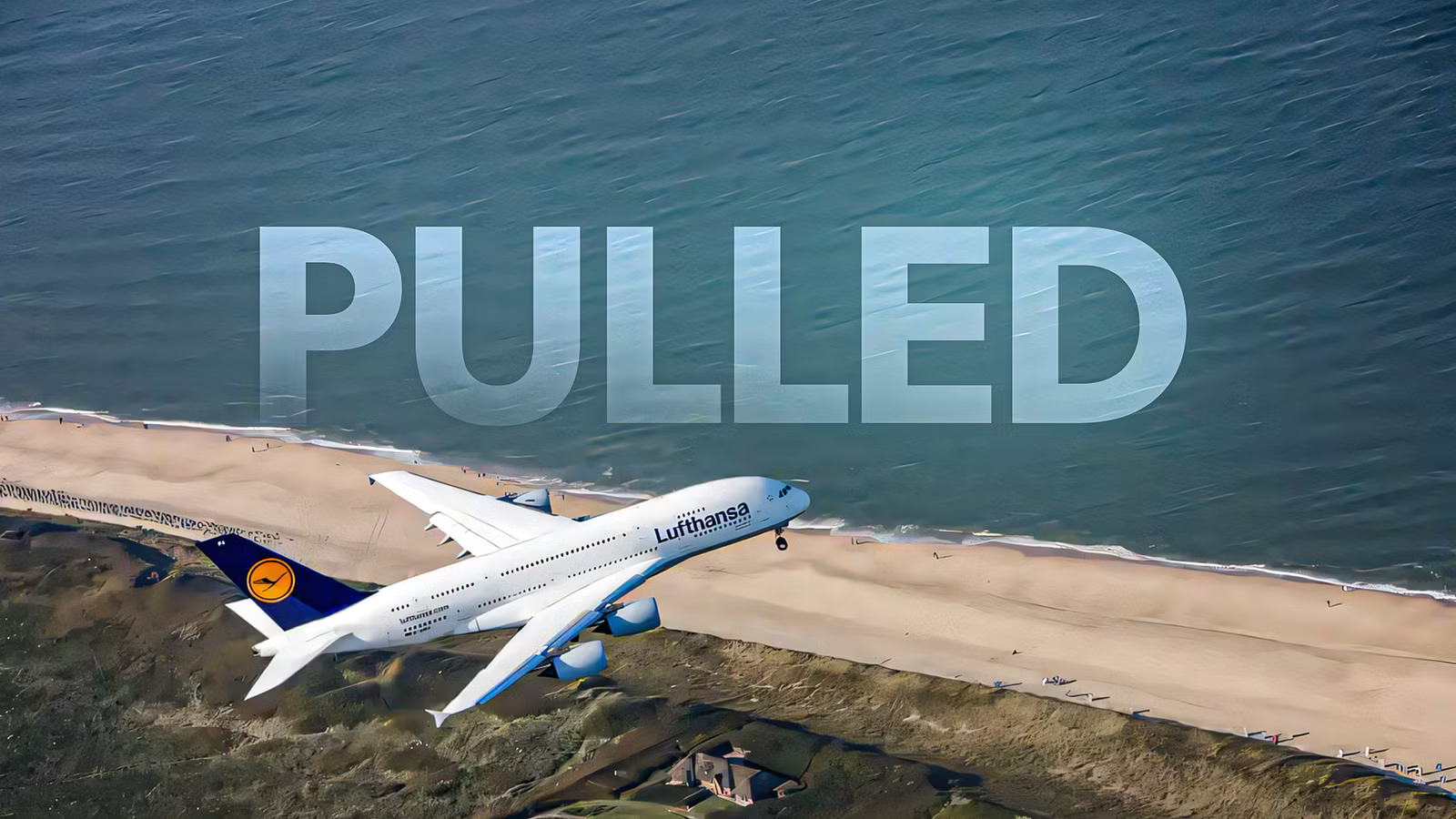
If you’re a planespotter visiting California hoping to shoot a Lufthansa Airbus A380 with your Canon, the period of January and February 2027 is not the time to visit. The German flag carrier, which usually flies the A380 from Munich Airport (MUC) to Los Angeles International Airport (LAX) and San Francisco International Airport (SFO), will instead switch to flying the Airbus A350-900 daily on both routes. The switch will occur around mid-January and will last for about six weeks, until the end of February, after which the A380 will return to the US West Coast.
During this same period, the carrier is increasing A380 capacity to Asia, boosting service to Bangkok Suvarnabhumi Airport (BKK) and Mumbai Chhatrapati Shivaji Maharaj International Airport (BOM). The change mirrors the US schedule, and it actually makes the situation more interesting than if Lufthansa were simply cutting capacity to the US for a few weeks. The A380, while it works well during the busy season, becomes a liability when travel demand is lower, and Lufthansa has seemingly found a way to keep making money with the plane when US demand is at its lowest.
Lufthansa’s A380 West Coast Schedules

As of the time of writing,  Lufthansa operates daily A380s from MUC to LAX and thrice-weekly A380s to SFO. On October 29, the airline will start flying the A350 instead of the A380 between MUC and LAX once a week on Thursdays, while Lufthansa will actually replace the A350 with the A380 on most days beginning on October 28, with the A350 only operating this route on Wednesdays. From these dates, the carrier will therefore operate the A380 six times per week while the A350 serves these destinations once a week, and this schedule persists until mid-January.
On January 11, 2027, the A350 begins operating from MUC to LAX daily, fully displacing the A380 on this route. This change will last until February 26, after which the schedule returns to six A380s and one A350 per week on Thursdays. Meanwhile, the A350 fully takes over the route between MUC and SFO daily on January 16, 2027, fully displacing the A380. This will last until February 27, after which the A380 will begin serving SFO six times per week, while the A350 will still fly between MUC and SFO on Wednesdays.
Meanwhile, on January 11, 2027, Lufthansa will begin deploying the A380 five times per week between MUC and BOM, while the A350 (which currently serves this route daily) will fly to BOM twice per week. This schedule change will last until February 27, after which the route will start seeing the A350 every day. In addition, Lufthansa will fly two daily A380s starting on January 16, 2027, up from just one daily A380, and this change will last until February 26, after which the schedule will return to a single daily A380.
The Reason For The Change

First, it’s important to note that aircraft assignments aren’t solely dictated by factors like overall demand and operating cost. In general, but especially with a small fleet like Lufthansa’s eight-strong A380 fleet, the carrier has to assign the planes to routes where they’ll make the most amount of money, rather than just where they could be profitable. When demand is generally down across the network, the airline has to determine whether it makes more money/costs less money to redeploy the aircraft on another route, or to reduce aircraft utilization.
It’s well known that demand between the US and Europe generally declines during the winter and bottoms out after New Year’s, so it’s logical that Lufthansa is pulling its largest aircraft from these two routes. With the switch, the carrier is cutting over 200 seats per flight, which is appropriate for the market during this time. What’s more interesting is that Lufthansa is redeploying the cut capacity on other routes. This isn’t uncommon on its own, but it’s noteworthy because the changes are occurring for only six weeks.
It’s generally more common for airlines to simply reduce utilization when these schedule changes are in effect for a relatively short period. It does show, however, that there is strong demand on the Mumbai and Bangkok routes that Lufthansa might not be fully capturing. For the rest of the year, it’s more profitable to send the A380s to California, but when US demand is at its lowest, the airline still has enough demand to significantly increase capacity on the Mumbai route and double it on the Bangkok route. After February, however, the A380s will make more money flying to the US.
Lufthansa’s A380 Schedule

Lufthansa has eight A380s, all of which are based out of MUC. During the summer season, the A380 is flying to LAX, BOM, Delhi Indira Gandhi International Airport (DEL), Boston Logan International Airport (BOS), Denver International Airport (DEN), Washington Dulles International Airport (IAD), and SFO thrice weekly. The fleet is overwhelmingly deployed to the US, as this is the peak period for travel between Europe and the US. The BOM route was new for the 2026 summer season, while this is the second season that the DEN route is operating.
The A380 will stop flying to DEN on September 27, while it will cease operating to BOS and IAD on October 23. It is leaving the BOM route on October 24, which is also when it will begin operating daily to BKK. In addition, you have the A380 flying six times per week to LAX and to SFO starting in late October. Leading to the end of the year, the A380s will therefore be flying daily to BKK and DEL, as well as six times per week to LAX and SFO, which is a slightly less busy schedule than during the summer season.
From mid-January to the end of February, the double-deckers won’t fly to the United States at all, instead operating twice daily to BKK, daily to DEL, and five times per week to BOM. They’ll subsequently return to LAX and SFO at the end of February, while leaving BOM. The second BKK frequency will also cease to operate at this time. The A380 will leave the BKK route entirely in late March, which is also when it will return to the IAD and BOS routes, while it will begin operating the DEN route again on May 1 and the BOM route on July 1, as it currently stands.
Lufthansa’s Future With The A380

Although the A380 is Lufthansa’s largest aircraft, it treats the Boeing 747-8 as its flagship aircraft. The 747-8s are intended to remain within the airline’s fleet long-term and are scheduled to be retrofitted with the airline’s new Allegris cabins (in an unusual two-stage process). The A380s, on the other hand, were removed during the COVID-19 pandemic and returned primarily due to the unexpected rise in travel demand post-pandemic, along with delays in new widebody aircraft deliveries.
Lufthansa only brought back eight out of the 14 A380s that it originally operated, and these planes are now exclusively based out of MUC, whereas they formerly also operated out of Frankfurt Airport (FRA). Although the A380s aren’t nearly as important to Lufthansa as the 747-8s, they will remain in the fleet until the early 2030s, likely to be replaced by more Boeing 777-9 or Airbus A350-1000 orders. Lufthansa is also investing in upgrading the interiors of its superjumbos, but they won’t receive the Allegris interiors.
Lufthansa Long-Term Widebody Fleet | Cabins |
|---|---|
Airbus A350-900 | Allegris |
Airbus A350-1000 | Allegris |
Airbus A380-800 | Thompson Vantage business class |
Boeing 747-8 | Allegris |
Boeing 777-9 | Allegris |
Boeing 787-9 | Allegris |
The carrier is instead installing the Thompson Vantage XL seat for business class, an off-the-shelf business class seat, and this will cut business class capacity by ten seats. Lufthansa also uses the Vantage XL on its ex-Philippine Airlines A350s, but those planes will be transferred to Discover Airlines in 2027, leaving the A380 as the only aircraft in Lufthansa’s fleet with this product long-term. Notably, the carrier is not updating the other cabins on the A380. Three aircraft have already received the updated interiors.
The Challenges With Flying The A380

The A380 was a market failure, and one of the most commonly cited reasons as to why was that the plane was simply too big. However, this isn’t really the main problem, because if the A380 had the same operating costs as a Boeing 787, then almost every international carrier would have ordered it. However, its operating costs are roughly twice as much as the 787’s, yet it doesn’t always earn twice as much revenue. Airlines need to spend a lot to sell those extra seats, and if the seats aren’t filled, then the math doesn’t work out.
Of course, load factors don’t tell the full story. The carrier’s A380s have large premium cabins, including first class, and even if the economy cabin might be largely empty, the revenue earned from offering more premium seats can often make the math work. For Lufthansa, meanwhile, it’s elected to try out serving different markets during the low point of transatlantic travel demand with the A380, tapping into markets that it may be underserving during that same period.
Ultimately, for airlines, the A380 is an aircraft that can generate huge profits, but it’s not a flexible plane. The BOS or IAD routes may justify the A380 during the summer months, but during the winter, Lufthansa has to find other routes where the type can make money, and if this cannot be accomplished consistently, the A380 then becomes an expensive liability.