dailynewsnblog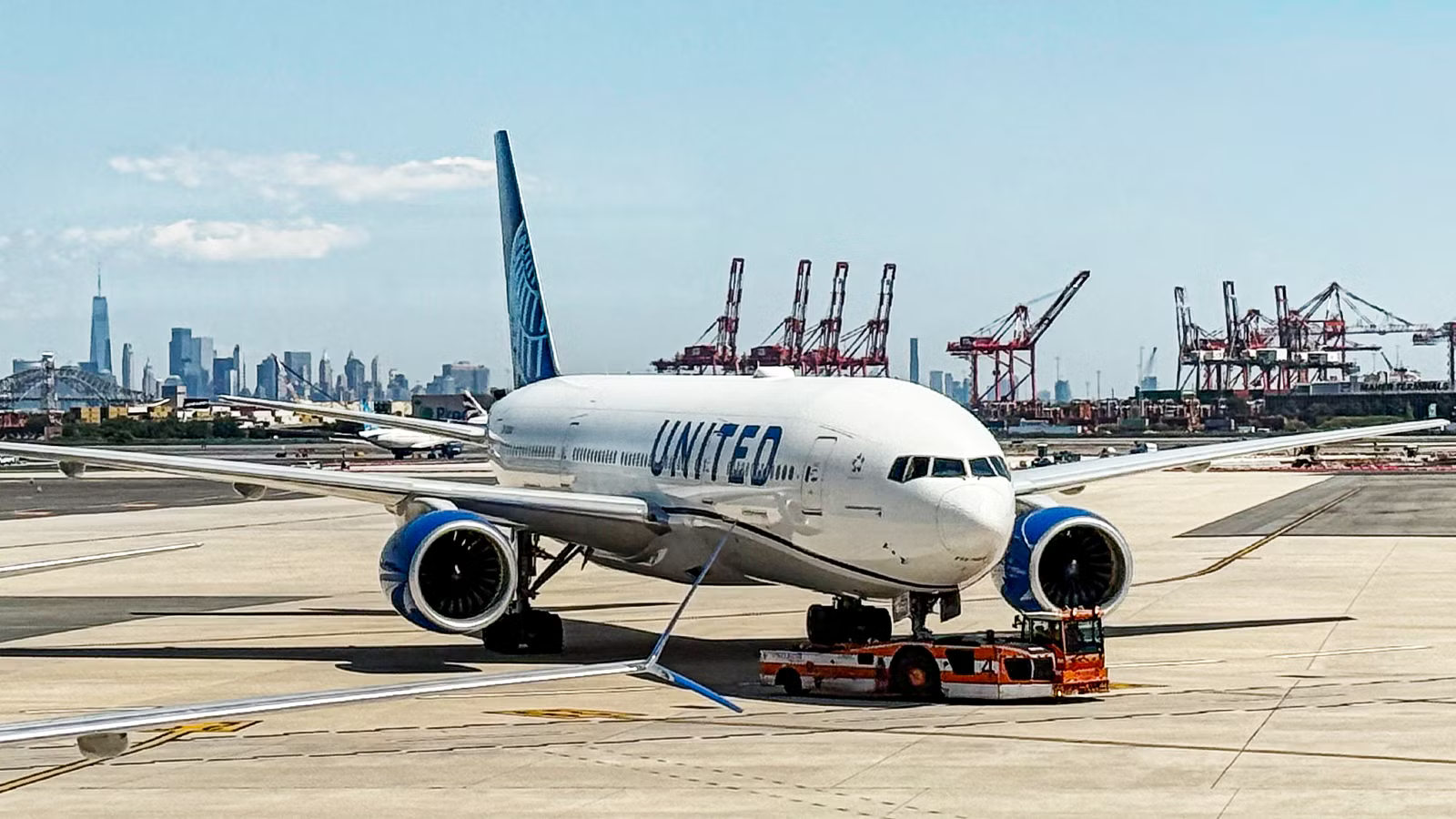
A new left-wing/advocacy organization report has shed light on  United Airlines transporting military components to Israel on board its commercial passenger flights. Components include parts for Israel’s US-supplied F-35s. It should be stressed that United is part of the greater US Civilian Reserve Air Fleet, which includes practically all of the United States’ passenger and cargo airlines. These routinely deliver military components to US bases and US customers around the world.
The transportation of weapons on commercial passenger aircraft is above board with no attempt to hide it. The focus on Israel now is related to human rights concerns regarding the current conflicts there. But the report also serves to shine a light on a widespread practice across US airlines and around the world where commercial airlines transport military components on behalf of their respective governments. Many countries have laws that require national airlines to serve military missions in the event of a national emergency.
The Group Behind The Report

According to an investigative article entitled “The Role of United Airlines in Military Cargo Shipments to Israel” by the Movement Research Unit (MRU), United has used commercial airliners to transport military components to Israel. The MRU is an open-source investigative research group, and the report was produced in cooperation with the Palestinian Youth Movement, the People’s Embargo for Palestine, and the Democratic Socialists of America (DSA).
While the political motivations don’t necessarily infer anything about the accuracy of reports, it’s useful to note why this report was compiled and why this route specifically was scrutinized. For example, the Ukrainian group, Dallas Analytics, has reported that Russia is increasingly using commercial airliners to transport troops within Russia and to export military components abroad. This is reportedly due to both a collapse of the Russian Air Force’s transport capacity and an effort to avoid international red tape.
The MRU group analyzed publicly available cargo descriptions, waybills, and shipping records. The group said that a spokesperson from United declined to comment, while representatives of Lockheed Martin, Elbit Systems, and the Israeli Ministry of Defense did not respond to requests for comment. Having said that, the shipments can be publicly tracked, and they are not hidden. The MRU group’s report has the effect of discussing something frequently overlooked in aviation reporting.
United Resumes Military Deliveries To Israel

According to the report, United Airlines has resumed the shipment of military hardware to Israel with its passenger flights, while noting that United has suspended the shipments over the last six months amid the outbreak of conflict with Iran. The group said that the flight resuming shipments was scheduled for September 9th on United Airlines Flight 90 from  Newark Liberty International Airport (EWR) to Tel Aviv Ben Gurion International Airport (TLV). It said that the shipments include electro-optics to Israel’s Elbit Systems defense contractor.
Another shipment was bound for Elbit Systems Land in Israel. One of the shipments was explicitly labeled as ‘FMS’ for foreign military sales. The report claims, “Between 24 July 2025 and 27 February 2026, United Airlines was involved in the transport of at least 2761 shipments that were explicitly carrying military cargo to Israel and/or were destined for Elbit Systems, Israel’s largest weapons manufacturer.”
The vast majority of the shipments, 2,565, were from Newark to Tel Aviv with flights UA84 and UA90. There were also limited shipments from Chicago and Washington Dulles. It’s worth noting that there are strict limits on what types of weapons airlines can carry on passenger flights. They are able to carry passengers’ sporting ammunition as dangerous cargo, including commercial shipments of small-arms ammunition. Military explosives (e.g., bombs, rockets, detonators) are often classed as ‘cargo aircraft only’ and can’t be carried by passenger flights.

The report says that of the 2,761 Israel-bound shipments, at least 549 shipments were ultimately delivered to Israeli Air Force bases, including Nevatim and Hatzor air bases. Hatzor Airbase saw 414 deliveries, and Nevatim Airbase had 135 shipments. Other non-F-35 aircraft parts constituted 67 shipments, while helmet-mounted display systems were 10 shipments. It is unclear how many of the other shipments were aviation-related.
Of the tracked 2,761 shipments, 2,070 shipments went to Elbit Systems (and subsidiaries), 414 to Hatzor Air Base, 78 to Lockheed Martin Israel, and 64 to the Government of Israel’s Ministry of Defense. All of Israel’s fighter jets are US-built with some domestic Israeli modifications. Israel remains dependent on US supplies to keep these aircraft maintained and operational.
Non-stop US-Israel flights (to Tel Aviv) | Airlines (per Reuters, FlightRadar24, etc.) | Typical frequency |
|---|---|---|
New York JFK | El Al, Delta, Arkia, Israir, American (seasonal in 2027) | Multiple daily |
New York Newark | El AI, United | Multiple daily |
Boston | EI AI | 3x weekly |
Miami | EI AI | 6x weekly |
Los Angeles | EI AI | 6x weekly |
Chicago | United (seasonal) | 4x weekly |
San Francisco | EI AI, United (from October 2026) | 3x weekly |
Washington Dulles | United (seasonal) | 3x weekly |
Israel bases its F-35 fleet at Nevatim. Among the shipments were F-35 fighter jet components, including parts used to release munitions and power surveillance systems. Regarding F-35 parts deliveries, the report says, “Notably, shipments of the BRU-68—a bomb release unit specifically fitted for the F-35 and capable of ejecting up to 2000-pound bombs from the aircraft—departed from Newark on United flights.”
United Is Part Of The Civilian Reserve Air Fleet

The report notes that the Civilian Reserve Air Fleet provides personnel and cargo movements by air to the Department of Defense, in wartime and peacetime. There is an award under that program with ID HTC711-24-R-CC01 for “International Charter Airlift Services for the Civilian Reserve Air Fleet“. United Airlines is one of the awardees under this contract (with the contract number HTC711-25-D-CC17).
The award is to “all personnel, training, supervision, fully operational equipment, facilities, supplies and any items and services necessary to perform international long-range and short-range airlift services during peacetime and both international and domestic airlift services during CRAF activation in support of the DoD.” United’s contract award dollar amount is estimated at $278,000.
Other awardees listed include FedEx, Atlas Airlines, National Airlines, Western Global Airlines, Kalitta Air, and Delta Air Lines. Some or all of these have also transported military cargo to Israel. Airlines voluntarily commit aircraft to the program in return for preferential consideration for certain peacetime DOD passenger and cargo business. The Civil Reserve Air Fleet (CRAF) program dates back to 1951 and was specifically created to provide additional airlift during a national-security crisis.
The Gray Zone Of Commercial Aircraft Deliveries

The point at which a commercial aircraft is deemed to become a participant in a conflict is complicated and beyond the scope of this article. That said, the IHL Databases International Humanitarian Law Databases Article 62 says “Enemy civil aircraft may only be attacked if they meet the definition of a military objective in paragraph 40.” While Article 62 (b) says, “acting as an auxiliary aircraft to an enemy’s armed forces, e.g., transporting troops or military cargo, or refuelling military aircraft.“
Even so, it is common for commercial aircraft to transport military equipment around the world during peacetime. Generally, this isn’t an issue. But it can be. The infamous sinking of the RMS Lusitania ocean liner by a German U-boat in May 1915 was justified by Germany on the grounds that it was carrying weapons to Britain. It was also a major factor that eventually led to the US entering WWI.
During Operation Roaring Lion ( Israel’s counterpart to Operation Epic Fury), the Israeli Air Force appears to have destroyed dozens of Iranian commercial-type aircraft on the ground. In the first wave of attacks, the Israeli Air Force posted, “STRUCK: 16 IRGC Quds Force aircraft used to transfer weapons to Hezbollah.” It has long been documented that Iran has used commercial flights to transport weapons to proxies across the Middle East and to Russia.
A Global Practice

As stated, the report of United Airlines delivering weapons to Israel is focused on that specific route for political reasons linked to the ongoing conflict there. But the underlying practice is not unique to Israel. The US contracts commercial airlines to move military cargo, including spare parts, ammunition, and even complete weapons systems across tens of thousands of international routes worldwide (although not necessarily passenger airliners). Israel is just one destination of many.
The report does not uncover anything shocking or previously unknown in terms of how the US dispatches military components around the world. USTRANSCOM openly operates commercial cargo programs covering roughly 48,000 international shipping lanes. Within the Western world, the US is notable for having a formalized system with its Civil Reserve Air Fleet, but others like the UK and Australia also rely heavily on civilian airlines and charter operations.
Famously, commercial airliners built by the USSR were designed with a secondary military airlift role in mind. This differs from the US, as even though the US can task commercial airliners in a national emergency for military efforts, Boeing, Airbus, etc., are not required to design those aircraft with that in mind. In China, under its legal and strategic framework of Civil-Military Fusion (MCF), many newer commercial ferries are designed with secondary military missions in mind.