dailynewsnblog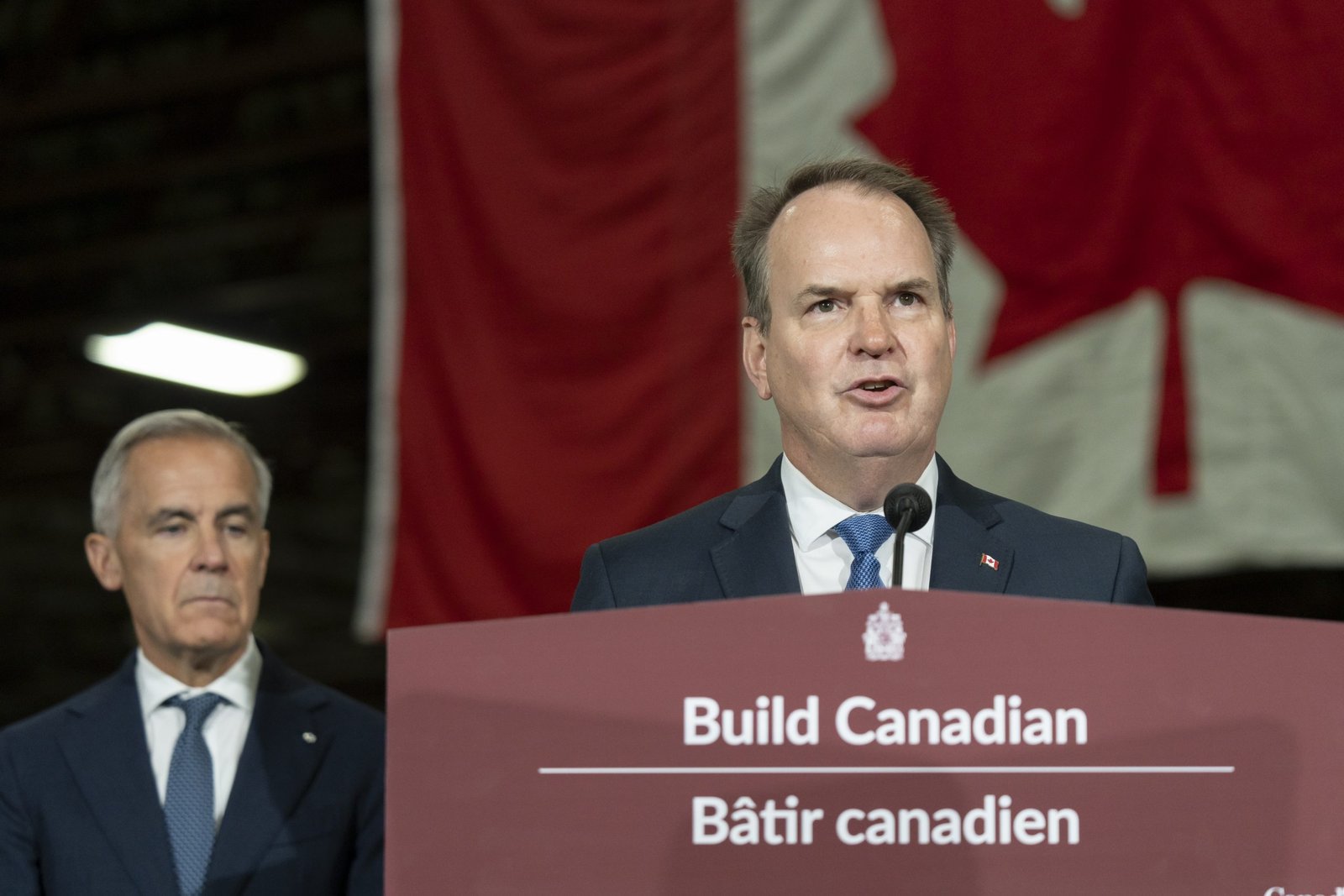
A timely deep dive into parliamentary procedure.
As yet, the government hasn’t attempted to impose a deadline on the opening round of debate on Transport Minister Steven MacKinnon’s omnibus bid to further streamline — and accelerate — the project approval process, as well as overhaul the federal labour laws.
Dubbed the Building Canada Strong Act by its ministerial sponsor, the 246-page bill — which Prime Minister Mark Carney described as “one of, if not the most consequential bills” that his government plans to put forward this fall — made its debut appearance on the floor of the House of Commons on the very first day of the sitting.
Along with the legislation, MacKinnon served notice that he would be proposing that, if and when it secures the preliminary approval of the House, the bill won’t simply be added to the rolling queue at one — or more — of the standing committees that might otherwise be assigned to go through the fine print.
Instead, the bill will be sent to a yet-to-be-struck legislative committee, which, as CBC News notes, will be the first time that a government has opted to do so since 2012.
When questioned as to why he wants to bypass the existing standing committee system, MacKinnon, who also serves as Government House Leader, downplayed the significance.
“The motivation for doing it this particular way was to have a committee that would devote itself exclusively to this entire bill,” he told reporters outside the House of Commons last week.
So, how, exactly, will this rarely-used process work?
As per the Standing Orders, as soon as the House begins debating a motion to send a bill to a legislative committee — which, in this case, would be Sept. 23 — the Standing Committee on Procedure and House Affairs must meet within the next five sitting days to “prepare … a list of members of such a legislative committee,” which, as per the standing orders, “shall consist of not more than 15 members,” and is due to be reported back to the House “not later than the following Thursday,” although the committee won’t be formally established until the motion passes.
A quick check of the current calendar shows that the committee will have to hold that meeting no later than Oct. 6, and report its conclusions back to the chamber on Oct. 8, although it’s too early to predict whether the bill will have gone to a vote by that point, or will still be working its way through second reading.
Barring a surge of cross-aisle support, the Liberals may have to invoke time allocation to wrap up the debate, which requires one days’ notice, although with a narrow-but-functioning working majority, would be virtually guaranteed to succeed.
At that point, the legislative committee will officially come into being, with a pre-selected chair chosen by the speaker from a list of eligible MPs, which, as per the standing orders, serves as the ‘Panel of Chairs,’ and is determined at the start of every new session, but only comes into play when a legislative committee is struck.
Currently, that list includes Liberal MPs Terry Beech, James Maloney and Iqra Khalid, Conservative MPs Dean Allison, Kurt Holman and Glen Motz and lone Bloc Québécois MP Gabriel Ste-Marie, with the chair almost certain to be a Liberal, as the committee structure will likely follow the same formula as the rejigged standing committees, which now gives the Liberals a majority at the table.
As for what to expect from the committee itself, the most significant difference will be the comparatively narrow scope versus a standing committee, which is fully empowered to review legislation, but can also initiate investigations into a wide range of other issues that fall within its mandate.
In contrast, a legislative committee can only examine the bill that triggered its creation — no tangents, fact-finding missions or opposition-initiated investigations, although members can put forward amendments.
It also operates under more restrictive parameters in calling witnesses, which, as per the standing orders, must be “officials from government departments and agencies and Crown corporations,” although they’re also permitted to hear from “other persons whom the committee deems to be competent to appear as witnesses on technical matters,” which, depending on how the committee chooses to interpret the rule, could limit testimony from advocacy groups, including Indigenous, environmental advocacy and labour organizations.
The committee can also establish its own timeline for conducting its review — which, given the rejigged seat allotment, would ultimately be determined by the Liberals at the table, who, as is the case at standing committees, will hold a one-vote majority.
The committee also comes with a built-in expiration date: as soon as it reports the bill back to the House, it ceases to exist.
Taking all that into consideration, does the legislative committee model provide the government with an alternate route to get the bill on the procedural fast track?
In theory, no: as noted above, there’s no automatic time limit to report it back to the House of Commons, although the committee could set its own deadline.
In practice, however, it would make it much more difficult for opposition members to delay the proceedings by putting forward a steady stream of motions proposing that the committee hit pause on the bill to focus on other business, either by circling back to a study already in progress or launching an entirely new investigation.
Even in a majority setting, that can put an ongoing legislative review on hold for days or even weeks — which, it’s worth noting, has happened several times during the current parliament, including during clause-by-clause review of proposed changes to the current hate crime laws.
With just eight sitting weeks left on the clock until the chamber powers down for the holidays, it’s not hard to see why MacKinnon might want to give himself — or, at least, his bill — a little preemptive procedural protection to boost its chances of clearing the House of Commons before the sitting wraps up on Dec. 11.