dailynewsnblog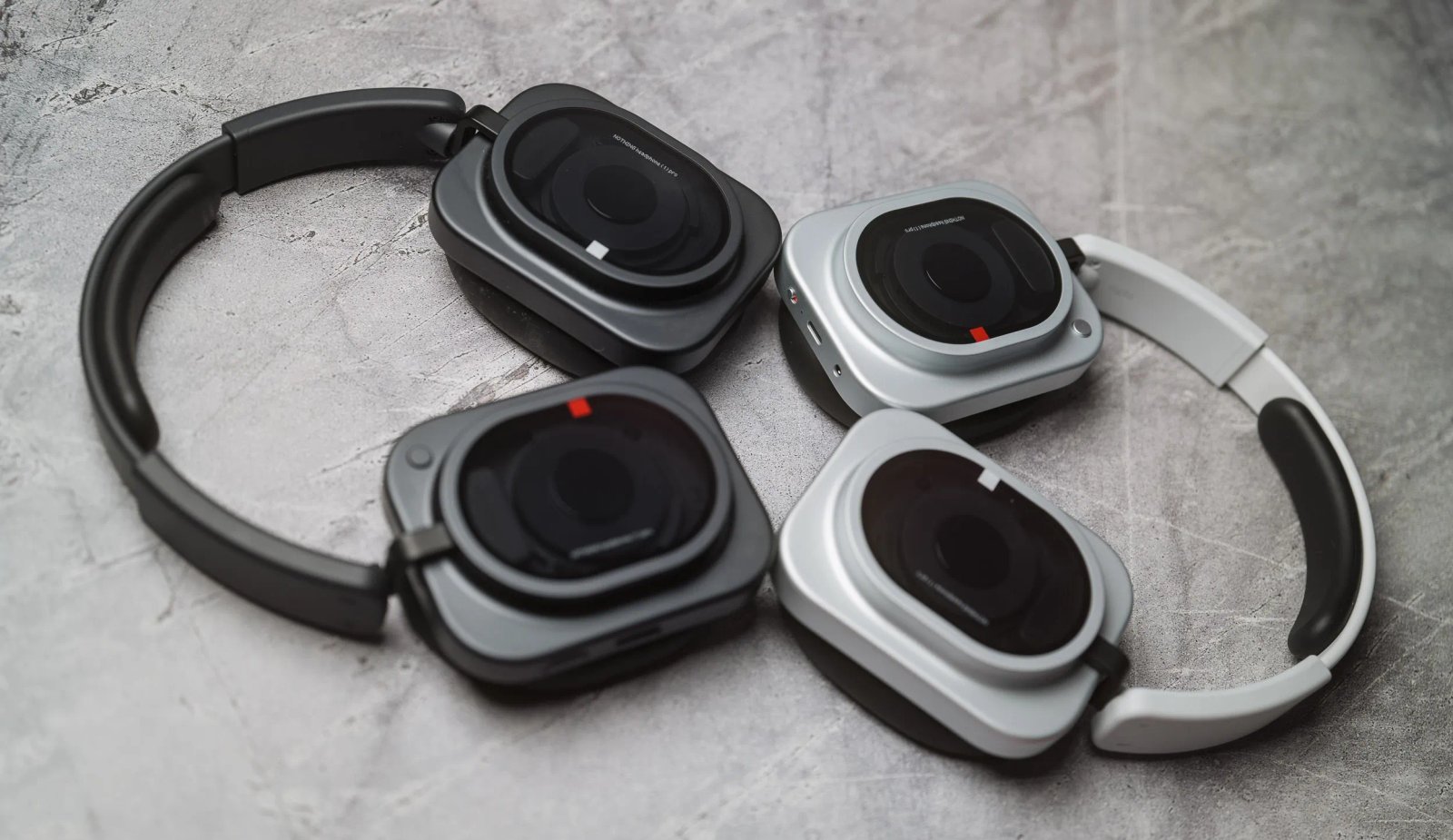

Nothing Headphone (1) Pro
Pros & Cons
-
Upgraded design from Headphone (1) with more premium accents, wider headband and softer earpads -
Triple driver configuration delivers rich detailed sound with strong, punchy bass -
Improved noise canceling that’s closer to top tier -
Good voice-calling performance -
Spatial audio with head tracking -
USB-C audio -
Settings available for those who want to use them as studio headphones
-
Headphones are slightly heavy compared to Bose and Sony flagship ANC models -
They fold flat but don’t fold up -
Hard carrying case is stylish but heavy and unpractical -
Pretty pricey
Billing itself as the fastest-growing consumer audio brand in the world, Nothing has released a steady stream of earbuds and headphones over the last few years with eye-catching designs at a variety of prices. At $399, its new Headphone (1) Pro are its most expensive headphones to date, and not surprisingly, it’s most advanced.
Not only do the over-ear headphones feature new transducers with a triple-driver configuration, but improved noise-canceling and a more premium design with upgraded machined metal, as well as shatter- and scratch-resistant Panda glass on both earcups instead of translucent plastic. If you can overlook their style-over-substance carrying case — it’s a hardshell riff on Apple’s controversial AirPods Max case — they are impressive headphones that compete favorably against other models in this price range.
Read more: Best Headphones of 2026
Nothing Headphone (1) Pro design
Nothing was founded in London in 2020 by Carl Pei, the co-founder of OnePlus. The translucent theme has been part of the company’s design ethos from the get-go, incorporated into its Android smartphones, earbuds and earlier over-ear headphones, the Headphone (1) and more affordable Headphone (a).
Nothing products are marketed toward somewhat younger consumers looking for stylish alternatives to popular mainstream options from premium brands like Apple and Samsung. There’s also a value component in the mix, as the company’s phones, headphones and earbuds tend to be more affordable than many premium offerings. While the Headphone (1) Pro is pricey at $400, its list price is lower than the Apple AirPods Max 2’s ($549), the Sony WH-1000XM6’s ($450), the 2nd-Gen Bose QuietComfort Ultra Headphones’ ($449) and Sonos Ace Ultra’s ($449).

The rectangular design of Nothing’s over-ear models won’t appeal to everyone (my teenage daughter wasn’t smitten to put it mildly), but it does stand out among the multitude of headphones with round earcups.
What you get when moving from the Headphone (1) to the Headphone (1) Pro is a sleeker-looking headphone with aluminum that now extends further up on the earcups, encasing the smoky glass oval-shaped windows that allow you to peek inside at the headphones’ components and see the triple-driver design.
By redesigning the internal architecture and swapping steel arms for titanium, Nothing has managed to make this Pro model a touch lighter than its non-Pro predecessor (327 grams versus 329 grams). Also, to increase comfort, the headband is wider (it has a wider 132-to-169mm adjustment range), with thicker padding at the crown, and the earpads are twice as soft, with a new 8mm silicone “baffle wall” inside the cushion (you can definitely feel the difference). The softer earpads not only make the headphone more comfortable to wear over longer listening sessions, but they also create a tighter seal, enhancing noise-canceling performance.

Equipped with Bluetooth 6.1 and Auracast support, they have wear-detection sensors that pause your music when you take the headphones off and resume playback once you put them back on. Like the Headphone (1), they seem sturdy and have an IP52 splash- and dust-resistant rating, though they’re a tad on the heavy side.
At 327 grams, they’re lighter than the 385-gram AirPods Max, but both the 254-gram Bose QuietComfort Ultra (2nd gen) and 254-gram Sony WH-1000XM6 weigh noticeably less, and I still found both those models slightly more comfortable to wear over longer listening sessions. That said, the Headphone (1) Pro shape and design give them a bit more streamlined look compared with the XM6s (i.e., they don’t appear to stick out as much).

As I said about the Headphone (1), the headphones’ physical control buttons are among the best I’ve used on a pair of headphones (except for the fact that the Bluetooth button, located on the inside of the earpiece, is hidden). Along with an actual on-off switch, there’s a smooth-operating roller button for adjusting volume and toggling through noise-canceling settings. A paddle button lets you skip tracks forward and backward. And a button that Nothing simply calls “the Button” activates your voice assistant. It can also be programmed as a shortcut to other features, such as Nothing’s Channel Hop, which lets you toggle between recent audio apps.
New to this model is a switch inside the left earcup that lets you toggle on a flat EQ for studio environments, where you’re looking for a neutral EQ to evaluate audio material.
The case is a bit much and not enough
Some people may like the included protective carrying case, which looks like something you’d stick a portable gaming device into, but I wasn’t too thrilled with it. Nothing went for a protective hardshell vibe akin to a Pelican case. However, it comes across as a bulkier, armored version of Apple’s controversial minimalist case for the AirPods Max and AirPods Max 2.
Yes, it’s protective (it fully covers the earcups and is rubberized on the inside), and I had no problem getting the headphones in and out of it. However, it’s a heavy case and doesn’t have a spot for storing the included headphone cable for wired listening. (You also get a USB-C cable for charging, but I’m less concerned about storing one of those with the headphones, particularly since they have good battery life.)
A pair of loops is included to attach to each side of the case, should you want to add your own shoulder strap (no strap is included). It’s not my style to wear my headphones like a purse, but for others looking to make a fashion statement, the option is there.

Sound quality for the Nothing Headphone (1) Pro
Nothing is positioning these headphones as made for both everyday listening and pro listening, “combining daily essentials like active noise cancellation with studio-grade features for listening, producing and mixing.” Marketing this as a so-called dual-use headphone seems like a little bit of a stretch to me, but maybe that’s because I’m more old-school and favor brands like Sony, Sennheiser, Beyerdynamic and Audio-Technica when it comes to studio headphones.
As noted, one of the highlights of the Headphone (1) Pro is that they have a triple-driver architecture, with each driver specializing in part of the frequency range (bass, midrange and treble). There are separate dynamic drivers for bass and midrange (where vocals live) and a new treble xMEMS driver for the highs.
I’ve tested plenty of headphones and earbuds with dual and triple drivers, some of them with planar magnetic drivers in the multidriver mix. Having multiple drivers doesn’t guarantee better sound, but it can certainly help if done right with high-quality components.

Nothing released the Headphone (1) in collaboration with KEF, the well-regarded British audio company that’s known more for its speakers than its headphones. However, some people thought the headphone didn’t sound exciting enough, so this go-round, Nothing’s engineers did the tuning themselves for everyday listening and tapped into the expertise of Metropolis Studios for help with the “pro” listening experience.
Aside from the dedicated Flat EQ Switch that provides a neutral sound profile for producers and creators (it’s too blah for everyday listening), you also get Studio B, a new Dynamic Spatial Audio mode that “lets you experience the acoustic character of a mixing room,” and five new custom EQ profiles that are “designed to boost the best of British music.” There are five modes of Dynamic Spatial Audio with head tracking.
Additionally, the Headphone (1) Pro supports hi-res wireless and wired playback via USB-C for lossless, with high-fidelity audio up to 24bit/192kHz. And there are robust manual EQ settings to create custom profiles, as well as a Personal Sound mode that configures the EQ to your ears based on a hearing test in the Nothing X app for iOS and Android.
The headphones support the AAC, SBC and LDAC audio codecs for music playback and LC3 for Auracast broadcast audio. Many Android devices support the LDAC audio codec.

Apologies for all that info, but Nothing’s marketing team gave me a lot to sort through. What I can say after testing these headphones for a week is that they clearly sound better than the Headphone (1) headphones, with more depth and detail, along with bass that hits harder. You get better separation between instruments, there’s more sparkle in the treble and punch to the bass, and the soundstage seems a little more open. This Pro model definitely sounds more exciting.
When that original over-ear model first launched, the headphones’ designers made some boasts about it sounding as good as the AirPods Max for $250 less. That ended up not being true, but with the Headphone (1) Pro, you can make a better case that it sounds as good as the AirPods Max 2 — and some of you may actually think it sounds superior, especially those of you who like a bit faster, less laid back sound.
I put these up against the Sony WH-1000XM6 and came away slightly preferring Sony’s sound. I just liked the tonal balance a little better, as the Sonys are a little warmer and less aggressive in some ways. With the XM6s, everything seems to be in the right place on the soundstage, and I didn’t have to dive into a bunch of spatial audio modes to dial the sound in more to my liking.
All that being said, for some people, one of the strengths of the Nothing Headphone (1) Pros will be that you can make adjustments to EQ settings. You can play around with the spatial audio modes to create your preferred custom listening experience.
The only problem with reviewing headphones that offer a wider range of listening experiences for different listening tastes is that it’s hard to know what the baseline really is. I mostly leaned on the default Balanced setting in the Nothing X app for my head-to-head comparisons, comparing the sound to the default settings for competing models. (The Personal Sound setting was too aggressive for me, as there was some treble push that accentuated the highs too much.)
Improved noise canceling
Nothing says the headphones have their best “real-time” Adaptive Active Noise Cancellation, with up to 46dB noise reduction, that uses a 10-mic system to “more accurately filter surroundings, especially when it’s windy or when you’re in traffic.” Nothing says it’s 5dB stronger in average noise reduction than Headphone (1), which has six microphones and 40% broader noise-cancellation coverage across the frequency range.

I tested the headphones in the streets of New York and did my usual test with the noise of the HVAC unit in my apartment, which creates a low but fairly loud rumbling noise. The AirPods Max 2 did a slightly better job in that test, managing to muffle the unit’s rumblings about 10% more effectively.
The Sony WH-1000XM6 and Bose QuietComfort Headphones (2nd Gen) are also slightly ahead of the Nothing Headphone (1) Pros for noise canceling, overall, but they’ve definitely improved from the Headphone (1). That model had a bit of a faint hiss when I did my HVAC test. With this new model, it’s less perceptible. I’d rate the noise canceling at an A-minus and give the transparency mode a similar rating (it sounds natural, but the AirPods Max 2’s transparency mode sounds slightly more natural).
Battery Life
Nothing says the Headphone (1) Pro delivers up to 30 hours of listening with noise canceling (ANC) on and up to 68 hours with it off. That ANC number is worse than what you got with the original Headphone (1), which was rated for up to 35 hours with ANC on, but 30 hours is still decent. By comparison, that’s 6 hours better than the AirPods Max 2’s battery life with ANC on and matches the Sony WH-1000XM6’s battery life with ANC on (it’s better with ANC off). With fast-charging, you get 2 hours of listening from a 5-minute charge with ANC on.
It’s unclear why the battery life is not as good as Headphone (1)’s, but I’d conjecture that the Pro’s more advanced noise canceling draws more power.
Voice-calling performance
I tested the headphones in my usual spot in the noisy streets of New York. Callers said they heard almost no background noise and that my voice sounded relatively clear, though it warbled occasionally. At the same time I was testing these headphones, I was testing Anker’s new Soundcore Space 2 Pro headphones, which retail for $200 and feature Anker’s new Thus chip. The Space 2 Pro also reduced almost all background noise, but callers said my voice sounded clearer, and they couldn’t tell I was outside or using headphones to make the call. With the Nothing (1) Pros, they said they could tell I was on headphones and outside. Like the noise canceling, I’d rate the voice-calling performance an A-minus.
Nothing Headphone (1) Pro final thoughts
With the Headphone (1) Pro headphones, Nothing builds on its solid start with the Headphone (1), improving the performance across the board and making the headphone a little sleeker looking and more comfortable. The original Nothing (1) model didn’t quite deliver on its promise of matching Sony’s, Bose’s and Apple’s flagship models while costing less, but the Headphone (1) Pro is now a legitimate premium noise-canceling contender. However, their list price is about what you’ll pay for competing models from Sony, Bose and Sennheiser, with its new Momentum 5 Wireless Headphones. (Now that the Sony and Bose flagship models have been out for a while, they are seeing discounts.)
Nothing gives you a lot to play around with in terms of sound modes, and you get wired listening, as well as the whole studio monitors angle that I personally don’t have any need for, but some people may find appealing. As I said, I didn’t care for the case, which seems to detract a bit from the seriousness of the headphones (by that I mean the headphones seem to have audiophile aspirations), but I’m sure some people will have a different view.
I look forward to firmware updates that should make these headphones even better, and perhaps we’ll see discounts in the coming months that shave $50 to $75 off their list price and make them easier to recommend over competing models.

See full bio