dailynewsnblog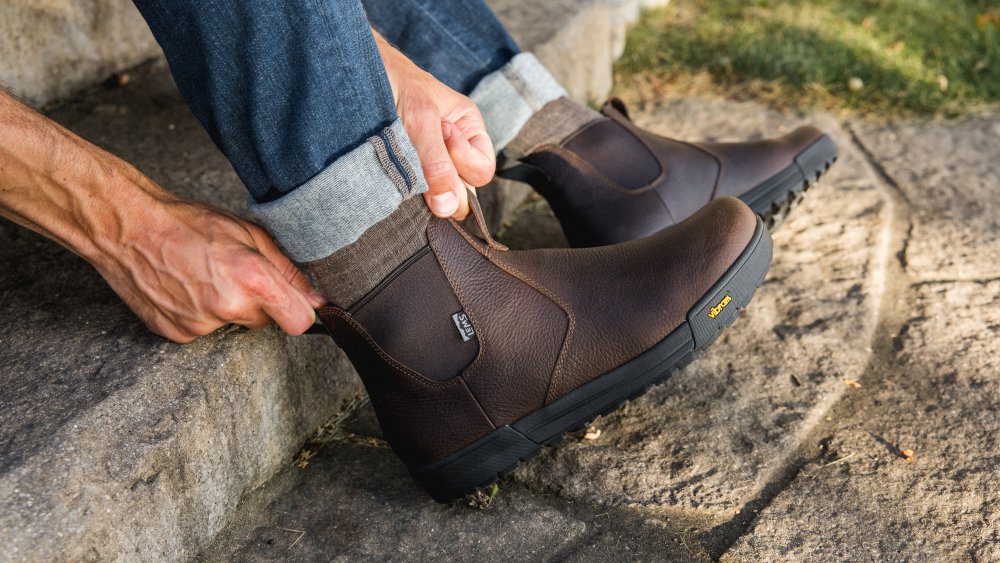
Lems founder Andrew Rademacher is obsessed with wider toe boxes, and he’s taking his vision into the running market.
Rademacher started the brand in 2011 as a casual lifestyle shoe company. “I had just graduated from college and had a passion for shoes and barefoot running, and the barefoot movement at that time,” he told Footwear News. He had a degree in landscape design and taught himself how to design shoes when he started Lems. The firm how has 17 employees.
“We just designed our first running shoe [but] before that, our shoes were really worn for everyday use, just casual lifestyle [for] walking around,” Rademacher said.
As for the focus on natural foot anatomy, the Lems founder said all of the brand’s shoes feature a wider toe box. “All of them have a low-heel drop. Zero-to-five millimeter drop now is considered low-heel, and we also have a three-and a four-millimeter drop shoe,” he said. As a point of reference, a two-millimeter drop is considered more towards the barefoot concept, as if one is walking naturally on the ground.
As a runner in college, Rademacher said he knew that he eventually wanted to include a running shoe, which launched last month. The running shoe is available for both men and women and in a choice of two widths, medium and wide. And because the toe box is already wider, the Lems founder said the medium width is generally more for women, with the wider width targeting men.
“Traditionally, running shoes in particular have been built with narrow toe boxes,” he said, pointing out that the shoes were made using traditional lasts. “Now they’ve realized through research and studies that allowing your toes to spread apart and splay upon impact will help your running gait and running efficiency, as well as strengthen your toes. That allows you to run more miles.”
And with growth in the wellness movement, Rademacher believes that interest will go beyond the running category. “A lot of people in the weightlifting community, the CrossFit community, are working out barefoot or in low flat, simple, non-cushioned shoes,” he said. “In the gym, more people are wearing zero-drop, and that spills into other [areas] like yoga. Women are starting to understand maybe strengthening your toes is a good thing. And we’re starting to value the natural shape of our feet now, instead of deforming our toes and causing bunions over time.”
The Boulder, Colo.-based firm thinks of itself as an outdoor footwear company. Operating with that mindset, Lems recently added hiking sandals to its mix for both men and women. The shoes are manufactured in China and Cambodia. Rademacher said it did get hit with tariffs last year, which resulted in a price increase.
“We’ve been able to maintain prices since then, and now tariffs have gone down this year. We even got a tariff refund credit a couple of months ago,” he said, noting that the refund will be applied towards more research and development. One area for investment is new mold openings, which he said is “expensive.” The company is also working with Vibram for rubber outsoles because “traction is important in the outdoor market.”
For the fall line, Lems has geared up for cold weather with waterproofing and a grippier Vibram Megagrip outsole. The shoes can work across multiple rugged terrains and different work environments. Among the updated styles are its Chelsea Boot Tuff, the Tactical Pro Boots and the Trail Blazer Mid. Average pricing ranges from $165 to $215.