dailynewsnblog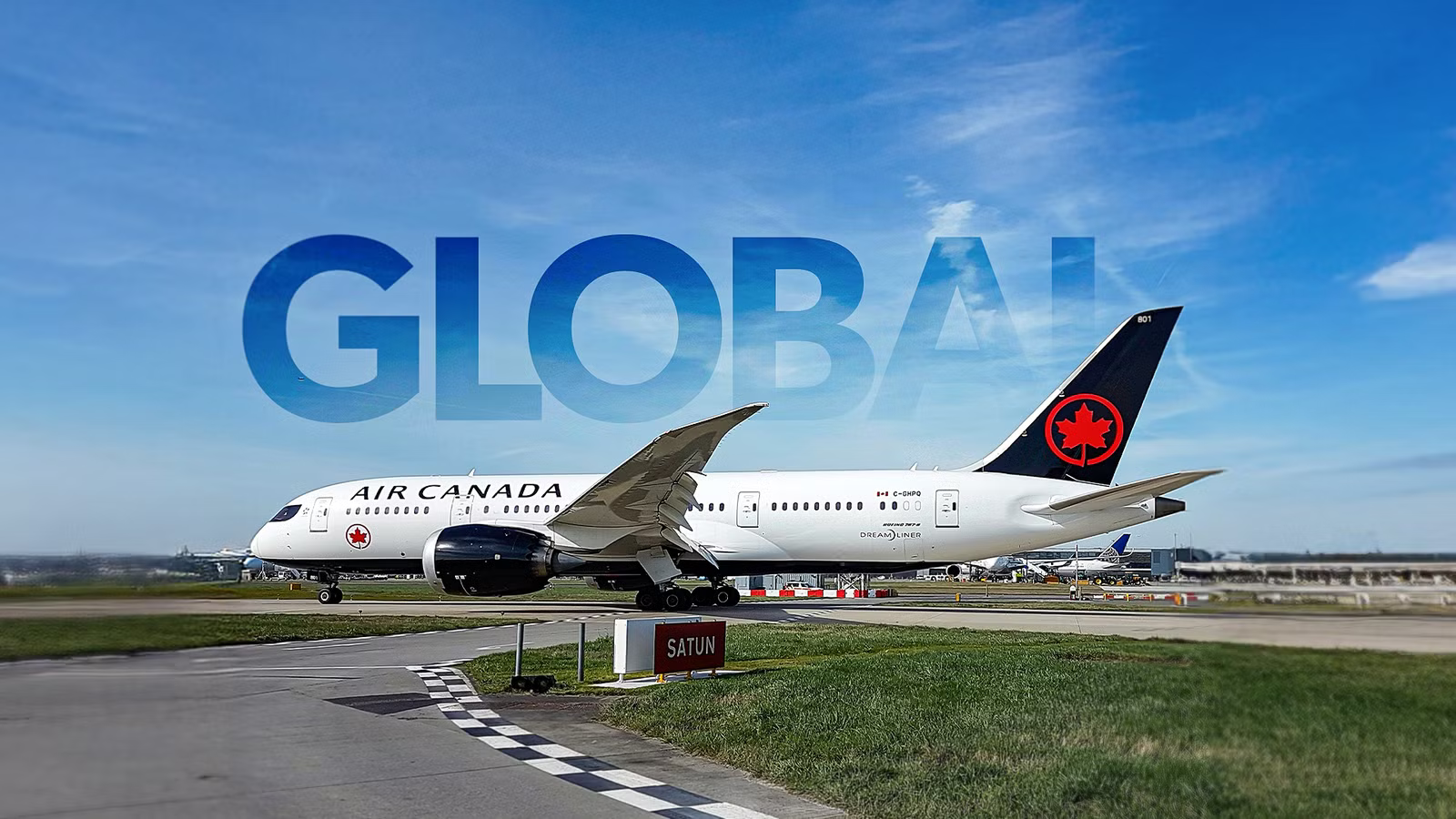
 Air Canada’s Summer 2027 schedule initially looks like a straightforward international expansion, with five new destinations appearing on the route map. But behind
  Guangzhou Baiyun International Airport (CAN),
  Oslo Gardermoen Airport (OSL), Shannon Airport (SNN), EuroAirport Basel-Mulhouse-Freiburg Airport (BSL) and Dubrovnik Airport (DBV) is a much more fundamental change: Canada’s flag carrier is being forced to rethink how it generates international demand. With Canadian air travel to the United States falling sharply, Air Canada is looking beyond its traditional domestic and transborder markets.
The airline’s response is to build a network designed around long-haul connectivity, smaller long-range aircraft and Canada’s geographical position between the world’s major economic regions. Air Canada Chief Commercial Officer Mark Galardo has described the ambition as becoming a “true global airline,” but what does that transformation actually look like, and can the carrier replace weakening US demand with international sixth-freedom traffic?
A 27% Drop In US Air Travel Is Changing Air Canada’s Strategy

The immediate reason for Air Canada’s strategic shift is the deterioration in Canadian demand for travel to the US. According to data cited by Yahoo Finance Canada, Canadians’ return trips by air from the US were 27% lower in July 2026 than in July 2024, while Air Canada’s own flight volumes between Canada and the United States fell by 13% over the same period. The figures do not mean the transborder market has disappeared, but they demonstrate how quickly an important source of traffic has weakened.
For an airline with an enormous network across Canada and the United States, that matters far beyond individual routes. Transborder flying can provide valuable year-round connectivity, while US destinations also feed Air Canada’s international network through  Toronto Pearson International Airport (YYZ), Montréal–Trudeau International Airport (YUL) and Vancouver International Airport (YVR). When Canadians travel less frequently to the US, however, the airline must find other passengers and other markets to support its aircraft and hubs.
Air Canada is now pursuing a strategy that puts international traffic at the center of its future network. Its Summer 2027 schedule will feature more than 125 international routes to over 85 destinations outside the United States, with up to 169,000 international seats available every week. Overseas flight volumes are also expected to increase by approximately 8% compared with Summer 2026.
That raises the more important question: if Canada’s own population cannot meet the demand for such an international network, where will the additional passengers come from?
Canada’s Geography Could Become Air Canada’s Biggest Advantage

The answer lies partly in geography. Air Canada wants Toronto, Montreal, and Vancouver to function not only as gateways to Canada but also as transfer points to other international markets. This is the essence of the sixth-freedom strategy: a passenger does not necessarily need to begin or end their journey in Canada for Air Canada to benefit from carrying them through one of its hubs.
Toronto is particularly well positioned to connect traffic between the United States and Europe, while Montreal provides another important transatlantic gateway. Vancouver, meanwhile, offers a natural bridge between North America and Asia. The carrier can use its Canadian network to combine local Canadian passengers with international connecting traffic, increasing the potential customer base for long-haul services. Air Canada has explicitly identified this international connecting opportunity as part of its ambition to become a “true global airline.”
Air Canada’s Summer 2027 expansion | Planned operation |
International routes | 125+ |
Destinations outside the US | 85+ |
Weekly international seats | Up to 169,000 |
Overseas flight-volume growth | About 8% |
New destinations | 5 |
The Summer 2027 schedule illustrates how broadly the strategy is being applied. Air Canada will add Guangzhou in China, Oslo in Norway, Shannon in Ireland, Basel in Switzerland and Dubrovnik in Croatia, while also increasing frequencies on several existing international routes. The new destinations are not concentrated in a single region; they spread the carrier’s network across Asia and Europe.
The strategy is consequently about more than replacing one group of passengers with another. Air Canada is attempting to change the role its hubs play in global aviation. But to make that work, it needs aircraft that can serve smaller international markets without filling them with hundreds of seats.
The A321XLR Lets Air Canada Go After Smaller European Markets

This is where the popular Airbus A321XLR becomes particularly important. Air Canada is using the long-range narrowbody to open European markets that may not consistently support a larger widebody aircraft. Routes such as Toronto-Oslo, Toronto-Shannon, and Montreal-Basel will use the A321XLR, allowing the airline to offer nonstop long-haul service while keeping capacity substantially lower than a conventional widebody, according to Aviation Week.
The aircraft is configured with 14 lie-flat Signature Class seats and 168 economy seats. That combination gives Air Canada a premium product suitable for long-haul flying without requiring the passenger volumes needed to support a Boeing 787 or Airbus A330 on every route. These economics work well for seasonal or relatively thin markets where frequency and nonstop convenience matter more than sheer capacity.
New route | Aircraft | Summer 2027 frequency |
Toronto–Oslo | Airbus A321XLR | 4x weekly |
Toronto–Shannon | Airbus A321XLR | 3x weekly |
Montreal–Basel | Airbus A321XLR | 4x weekly |
Vancouver–Guangzhou | Boeing 787 | 3x weekly |
Montreal–Dubrovnik | Boeing 787 | 3x weekly |
Source: Air Canada
The Summer 2027 schedule provides several examples. Toronto-Oslo is planned at four weekly flights, Toronto-Shannon at three, and Montreal-Basel at four. These frequencies give Air Canada a presence in markets that might otherwise be difficult to serve with larger aircraft.
The A321XLR gives Air Canada a way to expand the perimeter of its international network without making every new route a major widebody commitment. But Europe’s thinner markets are only one part of the transformation; Asia presents a far more complex challenge because the world’s geopolitical map has changed how aircraft must fly.
Guangzhou Shows How Russian Airspace Is Reshaping Air Canada’s Asia Network

Air Canada’s new Vancouver-Guangzhou service demonstrates the other side of its strategy. The route will launch on May 4, 2027, operate three times weekly, and use Boeing 787 aircraft, giving Air Canada a new connection between Western Canada and southern China. The service will also make Air Canada the only North American airline serving Guangzhou nonstop, according to Points Miles & Bling.
The route is being designed around the continuing closure of Russian airspace to Western airlines. Instead of following historical routings across Russian territory, Air Canada will use more southerly transpacific tracks. That creates a different operational equation for a long-haul airline, as routing, fuel burn, flight time, and payload become intertwined with geopolitical restrictions.
Air Canada is nevertheless expanding its Chinese network. Aviation Week reported that Canada-China two-way capacity reached approximately 772,800 seats in Summer 2026, up 33.5% year over year, while Air Canada’s own capacity increased 43.2% to around 288,500 seats.
The carrier’s market share consequently rose from about 34.8% to 37.3%. The airline plans to increase Toronto-Shanghai service to daily and expects up to 24 weekly flights across Beijing, Shanghai and Guangzhou. The Vancouver-Guangzhou route is basically part of a wider Asian strategy.
The Boeing 787 is crucial here because the aircraft has the range and capacity required for routes that are both geographically long and operationally complicated. It also shows why Air Canada’s fleet strategy must evolve alongside its network: the airline needs one aircraft capable of opening thin markets and another capable of handling long-haul trunk routes.
A Two-Speed Fleet Is Supporting Global Transformation

Air Canada’s emerging fleet strategy effectively creates two different levels of international expansion. The A321XLR allows the carrier to test and develop thinner markets, while the Boeing 787 provides the capacity and range needed for major intercontinental services. This combination gives Air Canada more options and, most importantly, the flexibility to stay competitive.
The distinction is clear in the Summer 2027 schedule. The A321XLR will operate thinner European routes, while Boeing 787s will be deployed in Asia and on thicker European routes with strong seasonal demand. Toronto- Nice-Côte d’Azur Airport (NCE), meanwhile, will receive Airbus A330-300 service twice-weekly.
Air Canada is also awaiting additional Boeing 787-10 capacity. The airline originally ordered 18 aircraft but reduced the order to 14, with production delays affecting the delivery schedule. The first 787-10 is expected later in 2026 and is planned to enter service in 2027, giving the carrier another widebody platform as its international network expands, as per Yahoo Finance Canada.
The airline’s global strategy is inseparable from aircraft availability. A route network based on sixth-freedom connections requires sufficient capacity at the right times of day, while the Russian airspace restrictions make long-haul aircraft utilization and payload planning even more important.
The real test will be whether Air Canada can keep its aircraft productive while maintaining enough connecting traffic to make these international routes work. If the strategy succeeds, the airline will have reduced its dependence on Canadian-US demand without abandoning the geography that made that market valuable in the first place.
Air Canada Is Rebuilding Its Network Around International Connections

The most important consequence of Air Canada’s Summer 2027 plan is that the airline’s definition of its home market is changing. The 27% fall in Canadian air return trips from the United States has exposed the risk of relying too heavily on transborder demand, but Air Canada has not retreated. Instead, it is adding international destinations and attempting to make Canada itself part of the journey for passengers traveling between other countries.
Guangzhou is particularly revealing because it combines almost every element of the strategy. The route uses a Boeing 787, operates on a schedule designed around a potentially significant Asian market, avoids Russian airspace and strengthens Vancouver’s position as a North American gateway to Asia. At the same time, the A321XLR routes to several European cities show how Air Canada can expand into smaller European markets without requiring widebody-scale demand.
The fleet will determine how far this transformation can go. The arrival of the A321XLR and 787-10, together with the continued expansion of the existing 787 fleet, gives Air Canada the tools to pursue a broader international network. But aircraft alone cannot create sixth-freedom traffic; the airline must persuade passengers from across North America and beyond that connecting through Canada is competitive with established global hubs.
That is the open question behind the entire Summer 2027 schedule. Air Canada is clearly adding international capacity, but its long-term significance will depend on whether that capacity can replace enough lost transborder demand with passengers whose journeys begin and end elsewhere. If Toronto, Montreal, and Vancouver can function as global transfer points, Air Canada’s transformation will extend far beyond five new destinations.
Catch what other trackers miss
Emergency squawks, holds, NOTAMs — live signals, no signup.
Open tracker
Catch what other trackers miss
Emergency squawks, holds, NOTAMs — live signals, no signup.
Open tracker