dailynewsnblog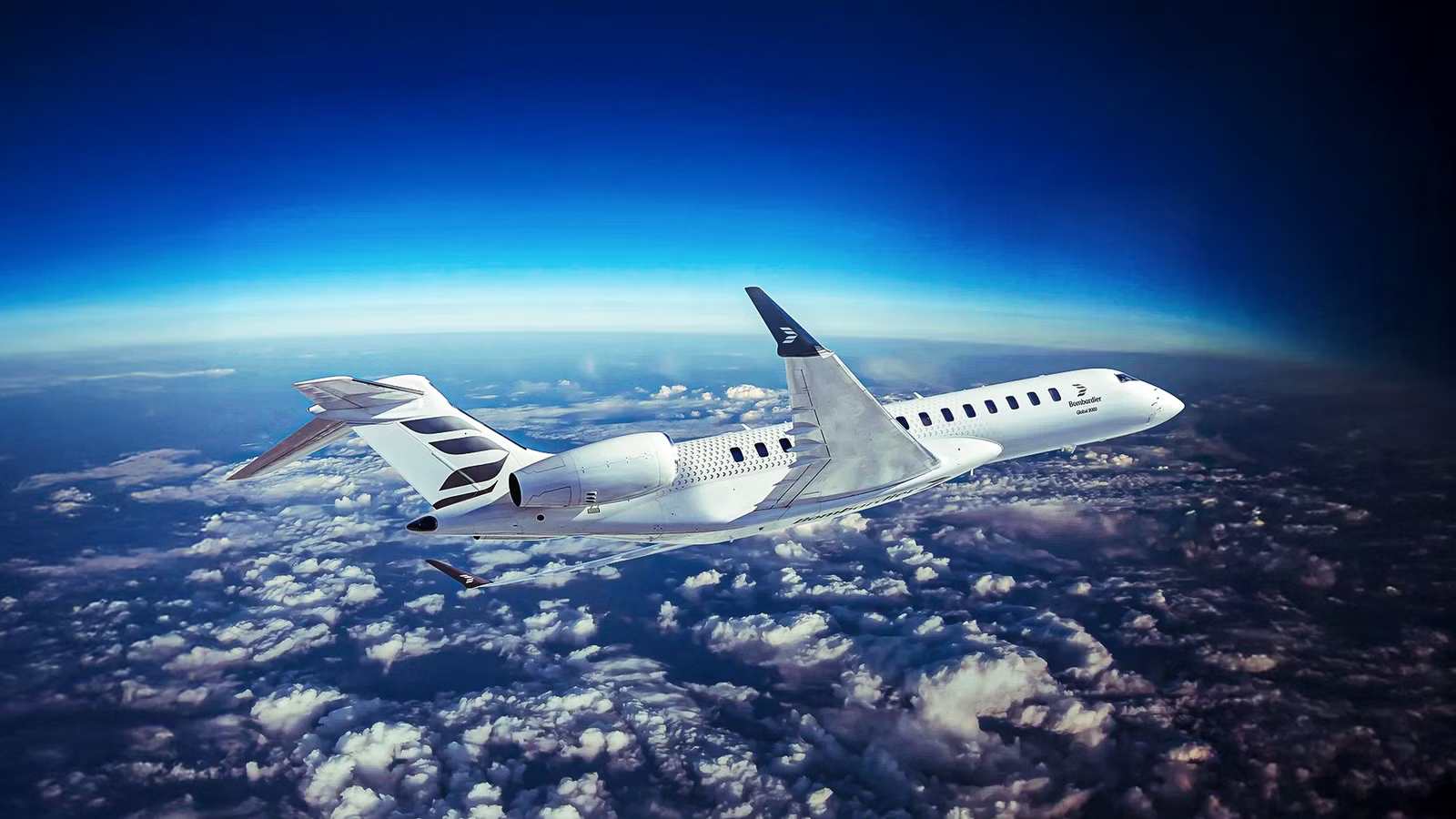
On September 10, the UK Civil Aviation Authority signed off on a piece of paperwork most passengers will never read, and it matters more than its bureaucratic phrasing suggests. The approval clears Bombardier’s Global 8000, the fastest civil aircraft flying today, to fly London City Airport’s (LCY) 5.5-degree glide slope, nearly double the descent angle almost every other airport in the world asks of a jet this size. The prize at the far end of that approach is nonstop service from a runway a few hundred meters from Canary Wharf to Los Angeles, Singapore, or Hong Kong, bypassing  London Heathrow Airport(LHR) , London Luton Airport(LTN), and Farnborough Airport(FAB) entirely. Getting there required Bombardier to solve a problem that has kept nearly every comparable large-cabin jet out of London’s most convenient airport.
This is proof that a purpose-built, ultra-long-range jet can combine intercontinental reach with the short-runway, steep-descent discipline that has, until now, belonged almost exclusively to regional jets and a handful of specially modified exceptions. Netjets, the Global 8000’s launch customer, is migrating its existing Global 7500 fleet to the new type specifically to keep that access. What follows is how a single number, 5.5 degrees, became business aviation’s toughest engineering filter, and why the Global 8000 is one of the only large-cabin jets built to clear it while still crossing an ocean without stopping.
The Angle That Keeps Most Jets Out Of London City

Nearly every conventional landing in the world is flown at close to 3 degrees. London City demands 5.5, a threshold the UK CAA classifies as a steep approach once it passes 4.5 degrees, and it is the only UK aerodrome that imposes the requirement at all. The Civil Aviation Authority’s September 10 sign-off clears the Global 8000 to fly it, but only for airframes whose home registration jurisdiction has separately approved the aircraft’s steep-approach supplement.
The number itself has moved before. Before a 1992 runway extension, London City’s glide angle sat at 7.5 degrees on a strip just 3,543 feet (1,080 meters) long, a constraint so severe it limited the airport to aircraft like the De Havilland Canada Dash 7, as documented by Simple Flying. A further change in April 2019 brought the angle down to today’s 5.5 degrees, alongside an increase in declared landing distance to 3,934 feet (1,199 meters). Both changes were framed as noise-abatement measures as much as performance ones: a steeper path keeps arriving aircraft higher for longer over the surrounding docklands.
Catch what other flight trackers miss
Emergency squawks, holds, NOTAMs — live signals, no signup.
Open tracker
Catch what other flight trackers miss
Emergency squawks, holds, NOTAMs — live signals, no signup.
Open tracker
Very few aircraft in this size class have ever managed the airport at all. Simple Flying has analyzed how British Airways ran a specially modified Airbus A318 on an all-business-class route between London City and  John F. Kennedy International Airport (JFK) for years, but that jet needed a fuel stop in Shannon Airport (SNN) westbound and was a one-off engineering exercise rather than a production model. The Global 8000 is the first time a manufacturer has built the steep-approach capability into a standard, off-the-shelf configuration of its flagship long-range jet, rather than modifying a smaller aircraft to reach further than it was designed to. None of that explains how a jet the size of the Global 8000, built for a Mach 0.95 cruise and multi-continent range, can descend that sharply and still stop in under 4,000 feet. That answer lives in the wing, not the regulation.
Solving The Wing Problem No Other Ultra-Long-Range Jet Has Cracked

Bombardier’s Stephen McCullough, Executive Vice President of Engineering and Product Development, credited the aircraft’s leading-edge slats and braking systems for the short-field performance that makes London City’s approach survivable at this size, according to reporting from AeroTime. Those slats extend the wing’s usable lift at low approach speeds, letting a heavy, high-speed airframe slow down enough to fly a 5.5-degree path without stalling, while the braking system absorbs the added kinetic energy of a steeper, faster descent within the runway’s declared landing distance.
The trade Bombardier is making is unusual precisely because it refuses to trade at all. The Global 8000 posts a top speed of Mach 0.95 and a published range of 8,000 nautical miles (14,816 km), figures ahead of its Global 7500 predecessor at Mach 0.925 and 7,700 nautical miles (14,260 km). Most manufacturers treat runway performance and cruise performance as opposing design goals; Bombardier is selling both in the same airframe.
A wing that can do this is only half the equation, though. Type certification tells regulators the airframe is capable. It says nothing about whether a specific tail number, sitting on a specific registry, is actually cleared to use it.
Why the CAA’s Signature Alone Doesn’t Get You In

The September 10 approval applies to the Global 8000 as a type, not automatically to every airframe. Each individual aircraft still needs a steep-approach supplement approved by its own registration jurisdiction, and, as Simple Flying reported earlier, London City separately runs its own approval process for operators before they can fly in at all. It’s a two-layer filter: the aircraft type has to qualify, and then each specific jet, and its crew, has to qualify again.
As of the CAA’s announcement, London City’s list of approved business jets included Global 7500s flown by three separate operators, alongside Gulfstream’s G650 and G650ER. That’s a short list for an airport surrounded by some of the highest-value real estate on the planet, and it explains why an aircraft with Global 8000-level capability is treated as a genuine milestone rather than a routine addition.
Gary Hodgetts, London City Airport’s Director of Operations, defined the Global 7500’s nonstop demonstration flight to Los Angeles Van Nuys (VNY) in May 2019 as “the longest flight ever out of London City.” He also explained that it “simply demonstrates the exceptional performance of the aircraft.”
That 2019 flight matters because it was a test flight, not a scheduled service. Turning a demonstrated capability into an aircraft that fleet operators actually fly commercially is the harder step, and it is the one NetJets is now taking with its own aircraft.
Why NetJets Is Retiring A Perfectly Good Fleet To Keep This Access

NetJets already operates Global 7500s in London City, part of a fleet that includes several Bombardier types chosen in part for their short-field capability, as Simple Flying examined. As the Global 8000’s launch customer, the fractional operator now plans to migrate its in-service 7500s to the newer type rather than simply adding 8000s alongside them, a decision that only makes sense if London City access is worth more to NetJets’ customers than the upgrade cost.
The commercial logic comes down to time. Bombardier estimates that flying into London City instead of Farnborough or Luton saves passengers roughly 60 to 90 minutes of ground transfer into central London, according to The Stratos Brief. For an aircraft whose entire value proposition is minimizing friction between departure and arrival, an hour and a half saved at the London end of a transatlantic or trans-Asian flight is not a footnote; it’s close to the whole point of buying the airplane.
Saving time on the ground only matters if the aircraft can also cover the distance in the air without stopping, which is where the Global 8000’s range, rather than its runway performance, does the remaining work.
The 2019 Flight That Proved The Concept First

The Global 8000’s London City breakthrough did not happen from a standing start. Its predecessor flew the same runway to Los Angeles nonstop in May 2019 as part of its steep-approach certification campaign, then set the longest flight ever recorded out of the airport, according to Fliegerfaust. That flight established the template: prove the short-field performance first, then let range do the rest. The Global 8000 extends the same formula further, with Bombardier citing potential nonstop pairings to Singapore and Hong Kong.
London City is a demanding case, but it isn’t unique.
As Simple Flying analyzed, Aspen, Lugano, and a handful of other airports around the world impose similarly steep approach requirements, each for its own mix of terrain, noise, or urban density reasons. What sets London City apart is what sits on the other side of it: one of the world’s most concentrated financial districts, which is precisely why an aircraft capable of both the approach and the distance commands so much attention.
None of that changes the fact that regulatory clearance moves jurisdiction by jurisdiction, and the Global 8000’s steep-approach supplement has not yet been approved everywhere an owner might want to register the aircraft.
The Approvals Still Missing From the List

The CAA’s clearance is just the first piece of the puzzle. The Global 8000 has already secured underlying type certification from Transport Canada, the Federal Aviation Administration (FAA), and the European Union Aviation Safety Agency (EASA), but the steep-approach supplement specifically needed for London City is a separate approval that has to be granted by each aircraft’s own registration authority, and Bombardier has said that process is still ongoing in other jurisdictions.
A couple of important variables to watch from here are how quickly other national authorities clear that supplement for aircraft registered outside the UK, and how fast NetJets completes the swap from Global 7500 to Global 8000 across its fleet. Both will say more about how real this access turns out to be than the September 10 announcement itself.
The timing adds a layer the engineering alone doesn’t. Days before the London City approval, Bombardier found itself defending its access to a much bigger market after political threats questioned whether the Canadian manufacturer should keep selling aircraft in the US without building them there. A company fighting to protect one form of market access spent the same week winning another, a reminder that for an aircraft this expensive, the runway it can use is never just a technical detail.
For now, the plainest way to read the certification is this: Bombardier built the only large-cabin jet currently capable of treating London City’s 5.5-degree glide slope as a formality rather than a limit, and it did so specifically so that a decades-old runwaywith a bad reputation for stopping big jets could stop launching them toward Los Angeles instead.