dailynewsnblog
As robots learn to fake feelings, the line between comfort and creepy keeps shrinking.
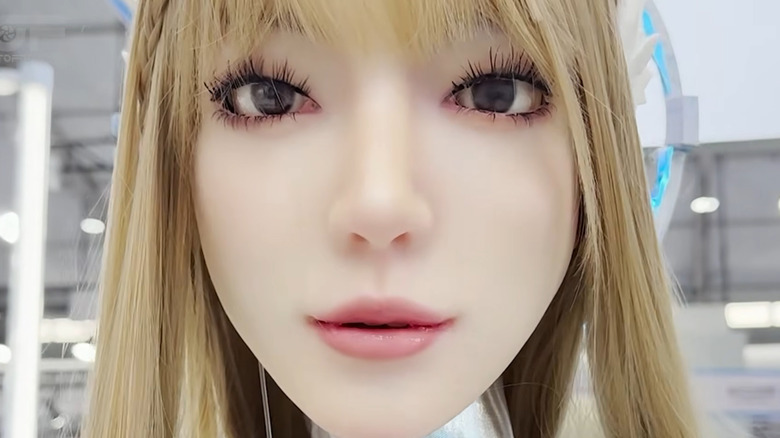
Humanoid robots have come a long way from clunky and monotone machines. Today’s models can hold conversations, dance (well, sort-of) and even mimic human facial expressions with unsettling accuracy. The latest addition to this continuously growing list is the Yansyn-X2, a robot that made headlines for something no consumer device has done before: crying on command.
Yes, you read that right. Footage from the 2026 Inclusion Conference in Shanghai shows a demonstrator asking the robot, “Can you shed tears for me?” and then, a few seconds later, a single tear rolls down its face. It’s a striking moment from a technological standpoint, but also one that sparks a lot of unease.
This isn’t just a novelty stunt. There’s a serious engineering effort behind those tear ducts as the research into affective computing amps up in the robotics industry. If you haven’t heard of affective computing, you should know it’s about teaching machines to recognize, interpret and respond to human emotions. The goal isn’t to fool anyone into thinking a robot genuinely feels sadness, but rather to make human-robot interactions feel more natural. Still, watching a machine well up with tears sits in the middle of uncanny valley territory — an utterly uncomfortable space where something looks almost human, but not quite.
The crying robot: engineering emotion

The Yansyn-X2 was developed by Yanxi Technology, a Chinese robotics firm based in Ningbo. According to the company, the robot relies on a three-layer technical architecture to pull off its emotional display. First, an AI algorithm analyzes conversational context and tone to determine when an emotional response is appropriate. Then, when the system detects sad or empathetic language, it signals bionic components beneath the robot’s medical-grade silicone face (now that’s a weird phrase to write), shifting its features into a sad expression. Lastly, a separate microfluidic system dispenses “tears” at the corner of the eyes.
The current version is a static model rather than a walking robot, although it can turn its head, track people and gesture with its arms. Plans are for future versions to use bionic muscles instead of servo motors for smoother and more varied facial changes. Is this actually useful, or just for show? A study published back in 2023 in Frontiers states that researchers found that robots displaying facial expressions matching the emotional tone of a conversation were rated more likable, trustworthy and human-like than robots showing no expression or mismatched ones. Basically, the industry is looking to build more emotionally responsive machines to ease people into working alongside robots in various settings.
The fast-growing robotics landscape
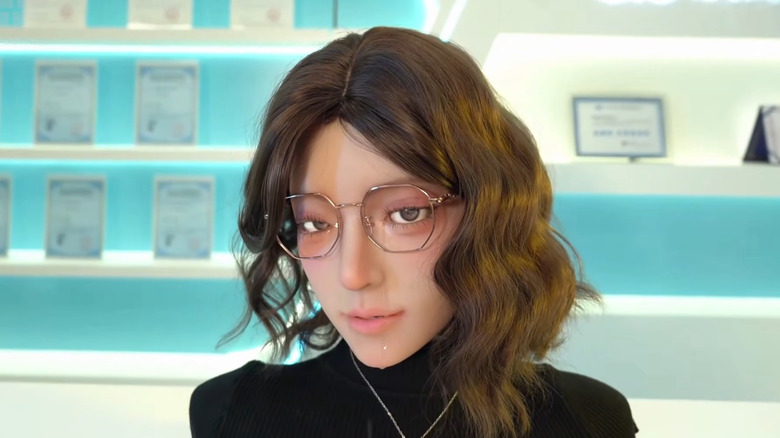
Yansyn-X2 isn’t a one-off robot that’s making our skin crawl. It’s part of a broader wave of humanoid development happening across several fronts. At CES 2026, robotics companies showed off a ton of machines aimed at different goals. LG’s CLOiD (slowly) folds and sorts your laundry. WIRobotics’ Allex is handy for holding objects of up to 6.6 lbs while also creating recognizable hand gestures. SwitchBot’s Onero H1 won our best robot in show award because it did what we really want robots to do — loaded the washing machine — because that’s what we really want AI and robots to do instead of writing and painting in our place.
Other robots over the past year have achieved impressive feats. At Beijing’s second annual World Humanoid Robot Games, the Tiangong Ultra robot ran the 100-meter dash in 9.39 seconds, which beats Usain Bolt’s 9.58-second human record. Japan Airlines began testing an android baggage handler at Haneda Airport in May, seeking to offset the country’s shrinking workforce. 1X’s $20,000 NEO home robot promises to learn household chores, although it still needs human teleoperators watching through its cameras in the beginning.
The broader picture shows an industry working hard to increase speed, dexterity, utility and emotional believability. Robots that can spring, fold towels and now cry are inching closer to blending into daily life. While some features are definitely something we’d (maybe) welcome in our lives, others are deeply unsettling.