dailynewsnblog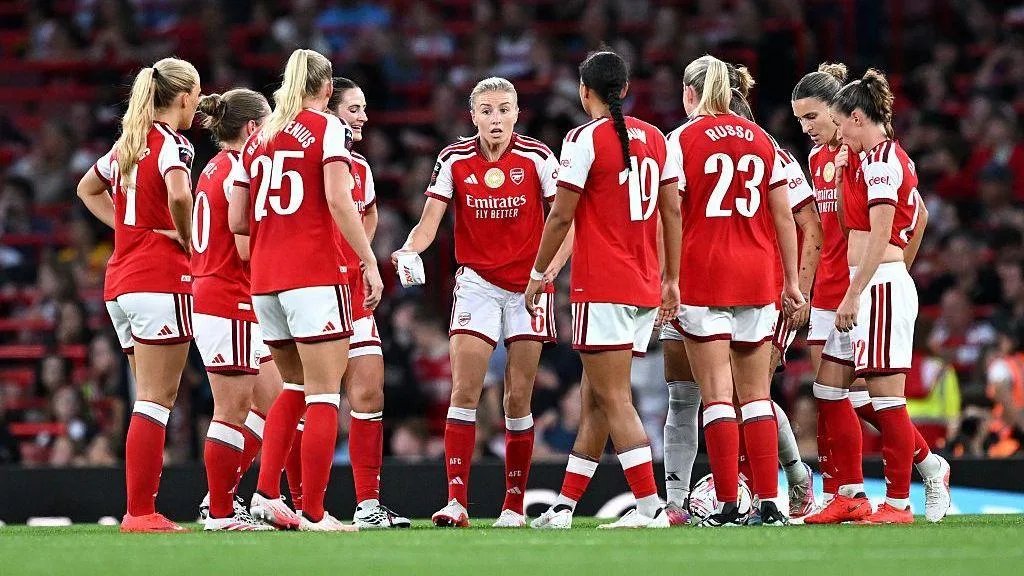
Arsenal go into their Women’s Super League game at Stamford Bridge knowing defeat by rivals Chelsea would be a damaging result just four weeks into the season.
It feels like an extreme assessment but the Gunners know all too well that if they fall behind early on, it is hard to catch up in the WSL title race.
Advertisement
Renee Slegers’ side are already seven points behind leaders Manchester City, albeit with a game in hand, and it would be foolish to give them further breathing space.
Successive draws against Crystal Palace and Manchester United have dented Arsenal’s start to the campaign.
Their slow starts have proven to be their undoing in previous campaigns as their search for another WSL title has gone on for seven years.
In that time, they have lifted the Women’s Champions League and Women’s Champions Cup, proving they have a squad capable of winning major trophies.
But it is the same story so far in 2026-27 as Arsenal’s shooting boots have been missing and their lack of ruthlessness in front of goal has proven costly.
Advertisement
They face serial winners Chelsea on Sunday (16:30 BST) knowing they need to get over the line this time.
“If I look at the last two games, not turning that dominance into goals and wins, is something we have to look at,” said Slegers.
“We believe in the quality of the squad and their ideas. We can create in a variety of ways. When that starts clicking, it will be really good.
“It really is about the details in the final third.”
Where has the problem come from?
Arsenal were tipped by many to win the WSL this season having invested in their squad in the transfer window.
Germany duo Lisa Baum and Selina Cerci boosted their attacking ranks, though England winger Beth Mead left to join Manchester City.
Advertisement
Slegers still has a wealth of options to choose from up front with Chloe Kelly, Olivia Smith, Alessia Russo, Stina Blackstenius and Caitlin Foord all available, as well as the anticipated return of Michelle Agyemang later in the season.
But despite an array of talent, Arsenal have struggled to score goals.
Across their first three WSL games they have had 56 shots and scored just twice.
They needed a 95th-minute equaliser to draw 1-1 with Manchester United and only beat HB Koge with a 93rd-minute penalty in the Champions League on Tuesday.
They had 70 touches in Crystal Palace’s box and 79% possession but were held to a 0-0 draw by the newly promoted side two weeks ago.
Advertisement
“It’s a combination of things. There’s some details in decision-making and some details in the technical execution,” said Slegers after their draw with United.
“It’s also the ruthlessness in front of goal. I know the players want it. They want to execute for Arsenal.
“What kind of situations are we setting up? What spaces do we occupy in the box? What are the runs like, but also other moments in the game?
“Counter-attacking moments and set-pieces – those are also moments for us to be dangerous from so it’s not only breaking down a low block.”
Why doesn’t Russo always play as a striker?

Alessia Russo has started the first three WSL games in the number 10 position [Getty Images]
Arsenal are creating chances so that is not the problem – but is there anything Slegers can do to change things?
Advertisement
The obvious question is why England’s number nine, Russo, is not playing in that position.
Only Manchester City striker Khadija Shaw scored more goals in the WSL than Russo’s 13 last season and she was second in European competition, behind Barcelona’s Ewa Pajor.
But Slegers, who has often rotated Russo’s position, has preferred her in the number 10 role at some point in all their WSL games so far this season.
It has not paid off for Russo, who is yet to get off the mark, despite attempting 11 shots, including 10 from inside the box.
In total, she has netted just three times in 507 minutes as an attacking midfielder, compared with the 21 she has scored in 2,913 minutes as a striker under Slegers.
Advertisement
Russo has created 1.42 chances per 90 minutes in the number 10 role, more than as a striker (1.27) but she has fewer shots and passes finishing in the final third, and fewer shots from inside the box.
Another striking statistic is that Russo and team-mate Blackstenius have never directly combined for a goal while the England forward has started in midfield.
Against Manchester United, as Arsenal trailed 1-0 and were pushing for an equaliser – which eventually came from full-back Smilla Holmberg – Russo continued to play in midfield.
When asked what Slegers’ plan was, she said: “Basically, we were expecting to be spending a lot of time in their half.
Advertisement
“It was looking at how we could pose as much threat as possible in the box, hence why both Stina Blackstenius and Alessia Russo started.
“There was double threat in that position. We wanted to keep Alessia as high as possible on the pitch. We know she can do both roles really well for us.
“She’s a fantastic number nine. Stina played her role. Selina Cerci also made her official debut. She has other threats, like her aerial play and instincts in the box.
“We have three [players who can play there] but the plan was to have two number nines in the box as much as possible for crosses.”
Advertisement