dailynewsnblog
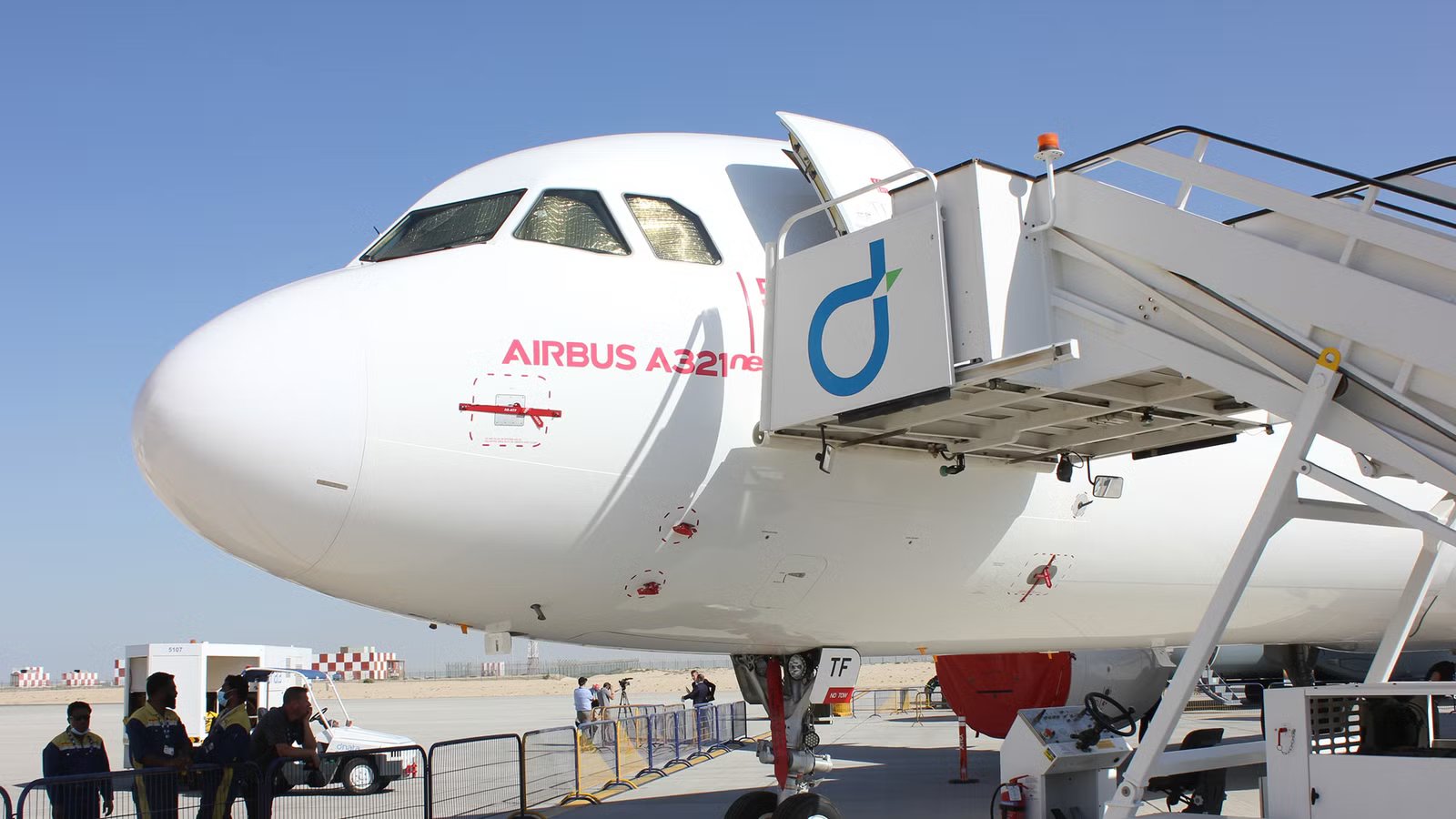
 Air Canada is in the process of bolstering its fleet with the Airbus A321XLR. The longest-range single-aisle jet available today, Airbus’ latest addition to the A320neo family has been specifically developed with long and thin routes in mind. That is, the market for long-distance, direct links between airports where demand is not quite there to justify the use of widebodies. For Air Canada, that makes it ideal to cover a range of transcontinental and international flights. In fact, up until recently, it had been earmarked to carry out services on the airline’s arguably most vital transatlantic link.
Unfortunately, plans can change as airline strategists continuously carry out the complex process of picking the right aircraft for the right routes. In Air Canada’s case, the A321XLR had been scheduled for operations between Toronto Pearson International Airport (YYZ) and London Heathrow Airport (LHR). However, as the deadline for these services to get underway loomed ever closer, it was pulled from the role before even being able to prove itself.
Air Canada & The Airbus A321XLR

As it stands, Air Canada only has a handful of the extra-long-haul A321 variants in its fleet. Having placed an order for 30 in total — 15 of which will be leased, and the rest owned directly — the first of these arrived in February of this year, before entering service four months later in June.
This entailed serving domestic routes initially, with the first transatlantic crossing from Montréal–Trudeau International Airport (YUL) to Toulouse-Blagnac Airport (TLS) then taking place midway through June. A further five A321XLRs have arrived at Air Canada in the months since, taking its total fleet to just six, but ever counting.
Air Canada mainline fleet, from carrier’s website:
Aircraft | Number in fleet |
Boeing 777-300ER | 19 |
Boeing 777-200LR | 6 |
Airbus A330-300 | 20 |
Boeing 787-9 | 32 |
Boeing 787-8 | 8 |
Airbus A321XLR | 6 |
Airbus A321-200 | 21 |
Boeing 737 MAX 8 | 35 |
Airbus A220-300 | 47 |
Airbus A320-200 | 14 |
Total | 208 |
Air Canada has thus far configured these with 14 Air Canada Signature Class lie-flat seats and 168 economy class seats for a total of 182 passengers. As Airbus’ customer senior vice president, Colin Bole, said at the time of the first delivery: “This aircraft is the perfect tool to support their network growth, seamlessly bridging the gap between short-haul and long-haul operations while delivering a 30% reduction in fuel burn per seat.” But while that may make it perfect for niche routes like Montréal to Toulouse, its use case in connecting the busiest hubs on the airline’s network has turned out to be a different story.
Air Canada A321XLRs Toronto To Heathrow Flights Pulled Before They Began

Until early May, schedule data had shown the A321XLR would fly between Air Canada’s primary hub at Toronto and London’s Heathrow later in the year. Namely, such flights were set to run from August 31 to October 23, offering Air Canada a lower-capacity, albeit supplementary, service between the two.
Come May’s schedule change, though, the carrier had pulled the type and dedicated widebody aircraft to fill in instead. That meant the A321XLR never actually saw service for Air Canada between the two major airports, being pulled not only before services started, but even prior to the model’s arrival at the airline.
Heathrow passenger traffic over six months to June 30, from airport’s data:
Region | Traffic (millions) |
UK | 2.2 |
Europe | 16.3 |
North America | 9.8 |
Asia Pacific | 5.8 |
Middle East | 3.1 |
Africa | 1.7 |
Latin America | 1.1 |
Total | 40.0 |
For Air Canada, the harsh reality is that Heathrow is among the most slot-constrained airports across the world. That means airlines pay a hefty premium for sought-after slots and so tend to try and offer as many seats and as much cargo space as possible per flight. So while Air Canada might have wanted, and still wants, to fit the narrowbody A321XLR into the London hub’s busy schedule, the viability of the plan was always partially out of its control.
Widebodies Better Suited For Job Than Airbus A321XLR As It Stands

This is clearly reflected in the aircraft scheduled by Air Canada to fly the route in lieu of the A321XLR. Per May’s schedule update, the Boeing 777-200LR would pick up the slack in September, with the Boeing 787-8 and Boeing 787-9 then fitting in come October. In other words, deploying the smaller A321XLR made less sense for a route that could handle larger widebodies for the time being, which themselves are already used for the purpose anyway.
Indeed, those 777-200LR, 787-8, and 787-9 aircraft on Air Canada’s books are capable of carrying considerably greater numbers of passengers and more cargo at a time. Its 777-200LRs boast 300 seats across three classes, for context, while Air Canada runs its 787-9s and 787-8s with space for 298 and 255 passengers, respectively.
Airbus A321XLR | |
Max Pax seating | 244 seats |
Typical seating (two-class) | 180-220 seats |
Range | 4,700 nautical miles (8,700 km) |
Max take-off weight | 222,667 lb (101.50 tonnes) |
Overall length | 146 feet (44.51 meters) |
Wingspan | 117 feet, 5 inches (35.80 meters) |
Height | 38.7 feet (11.76 meters) |
Simply put, Air Canada deemed it worthwhile to stick with the larger aircraft, given that the use of 182-seater A321XLRs would limit ticket revenue in comparison through an effective cut to capacity. There was another looming factor behind the decision, though, and one that was equally always going to be out of Air Canada’s hands.
Heathrow Slot Timings Just As Much A Factor

The A321XLR’s role in connecting Toronto and Heathrow was always going to be less about replacing widebodies like-for-like and more about supplementing existing services. Under original plans, the narrowbody would actually restore a service that has long been dropped by Air Canada.
Air Canada chief commercial officer Mark Galardo told Canadian trade publication Open Jaw last year that “we are missing the Toronto-London Heathrow day tripper”. Such flights were historically flown by widebodies like 777s and 787s, but only up until roughly six years ago. “This aircraft will help us restore that day tripper,” he went on to say, “and that’s why we were pushing for Toronto”. The day tripper itself, a morning departure arriving in London the same evening, would make up Air Canada’s fifth daily flight between the two as it stands.
Needless to say, that plan heavily depends on securing the right daytime slots, and at a busy hub like Heathrow, that is easier said than done. Where the airline did hold the appropriate slots in the past, giving them up in 2020 has left it having to secure them once again for the plan to work. Air Canada is still planning to reintroduce the product, mind, having announced earlier this month that A321XLRs were earmarked for day tripper flights beginning in May 2027 as part of a wider expansion from Toronto. For now, though, the airline has been busy reshuffling where its A321XLRs will fit as they arrive on the scene.
Wider A321XLR Schedule Reshuffle At Air Canada

It is not just the plan to link Toronto and Heathrow using the A321XLR that has been tweaked by Air Canada. Originally, it had sought to debut the aircraft on flights to Palma De Mallorca Airport (PMI). As it transpired, Toulouse got the first Air Canada-operated model.
This has ultimately come as part of a wider change to original plans too, whether that be down to multi-year delays in deliveries from Airbus, or more a reflection of Air Canada refining routes for its new long-range narrowbodies as they arrive. Either way, after laying out initial plans for A321XLR-operated transatlantic flights, the carrier subsequently cut the type or adjusted how often it would be used at a number of European airports this year.
Namely, this saw alternative aircraft dedicated to serving Mallorca and Dublin Airport (DUB), and the frequency of planned A321XLR flights to Toulouse and Edinburgh Airport (EDI) tweaked all in one fell swoop early in the year. As Air Canada chief operations officer Mark Nasr told Reuters later: “It’s not specific to just anyone, but there still is friction in the system and we’ve had to adopt our business to be candidly much more flexible.” Naturally, delivery timelines have played a part, although wider factors like demand and pilot availability are equally as key.
Air Canada A321XLR Transatlantic Flights Yet To Kick Off From Toronto

Having sought to have A321XLR operations to and from Toronto well underway by this point, Air Canada is actually yet to offer regular transatlantic services from the hub. The Heathrow link would have been the first, based on the previous schedule. Instead, flights to Tenerife South Airport (TFS) and Manchester Airport (MAN) are set to claim the title once they kick off in late October, with these then complementing existing A321XLR flights from Montréal and even ones operated by the model from Halifax Stanfield International Airport (YHZ) to Heathrow itself.
Galardo already laid out part of the reasoning for the initial focus on Montréal last year, dubbing the decision “purely operational”. He explained: “We have a large contingent of Airbus pilots in Toronto and we just can’t train them all in time […] Starting with Montreal presents less risk.” Add in factors that make major trunk routes like that between Toronto and Heathrow specifically more suited to higher-density aircraft, and Air Canada has clearly seen fit to keep the A321XLR operating elsewhere for the time being.
As the airline told Simple Flying: “Air Canada is continuously optimizing its schedule and fleet utilization, and the change in fleet types is a result of that process.”
Catch what other trackers miss
Emergency squawks, holds, NOTAMs — live signals, no signup.
Open tracker
Catch what other trackers miss
Emergency squawks, holds, NOTAMs — live signals, no signup.
Open tracker