dailynewsnblog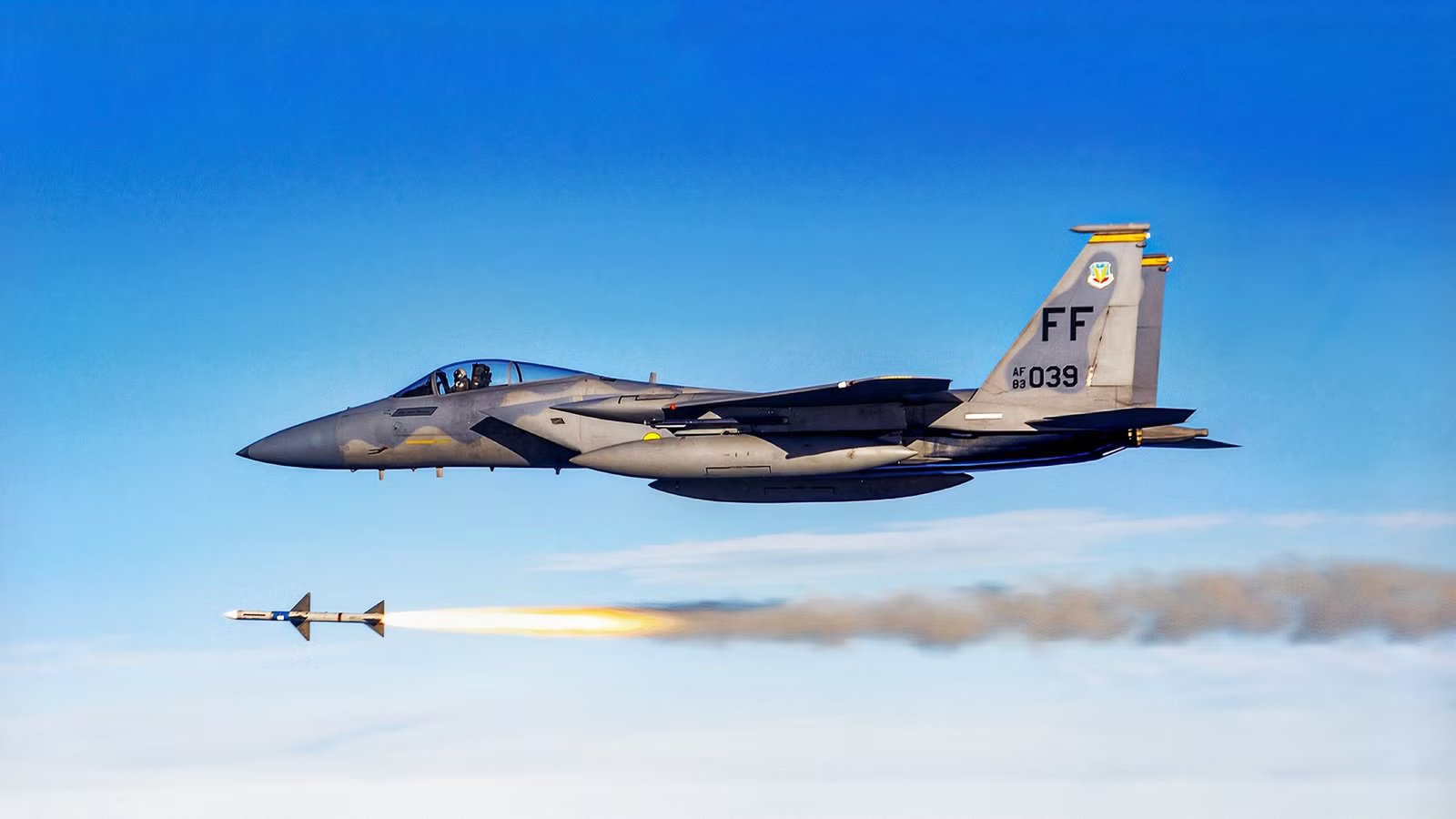
The AIM-7 Sparrow has a long, complicated history with the United States Navy (USN) and the US Air Force (USAF). Developed during the early Cold War, the radar-guided air-to-air missile was intended to give American fighters a reliable way to engage enemy aircraft beyond visual range.
However, the Sparrow’s early combat performance fell far short of expectations, particularly during the Vietnam War. It would take decades of development and successive improvements before the missile finally demonstrated the capabilities it was originally designed to provide.
The Sparrow Missile In Its Infancy And The F5D Skylancer, Its Intended Carrier

The story of what would become the Air Intercept Missile, or AIM-7 Sparrow, began in 1946 under Project Hot Shot, which was funded by the USN’s Bureau of Aeronautics. By 1951, the Sperry Corporation had secured a contract for the full-scale engineering development of the missile. At the time, it was designated the XAAM-N-2 Sparrow I. The missile achieved its first flight in 1953, at the same time the Sparrow II program was getting underway.
Running parallel to the development of the Sparrow I and II was the Navy’s program to design and field a fleet interceptor capable of countering fast-moving, jet-powered bombers. The threat, particularly from the Soviet Union, was the potential for such aircraft to carry and launch cruise missiles. At these increased speeds, a standard propeller-driven aircraft would have very little time to react accurately with wing-mounted machine guns, a staple of World War II aircraft.
While the Sparrow was taking shape, the Navy released an initial requirement for an agile fighter capable of reaching Mach 1.2, possessing afterburning powerplants, and supporting conventional rockets and early-generation air-to-air missiles. Douglas Aircraft Company engineers retained the general characteristics of its F4D “Skyray,” making improvements, particularly reinforced wings to carry the new missiles. The newly designed jet was called the F5D “Skylancer,” and it was intended to carry the developing Sparrow II.
While the Sparrow would move on, the Skylancer would not. The USN’s attention shifted toward Chance-Vought’s competing models, which would eventually become the famous F8U “Crusader” fighter line. This diversion of interest left the Skylancer without a requirement to fulfill, and the sea service eventually terminated its contracts for the aircraft in March 1957.
The Sparrow II Found A New Home In Canada

The Canadian Avro CF-105 Arrow was a twin-engined, delta-wing interceptor capable of surpassing Mach 2 and climbing to 50,000 feet. The purpose of the aircraft was to rapidly ascend to the edge of the atmosphere, intercept, and destroy inbound Soviet bombers that were intent upon dropping nuclear weapons on Canadian cities.
In order to render the Soviet bombers into an airborne debris cloud, the Arrow would have been equipped with Sparrow II or Velvet Glove missile systems. The Canadian military took over development of the Sparrow II following its cancellation by the US Bureau of Aeronautics in 1957. The Sparrow II represented a major change from its predecessor, replacing Sparrow I’s beam-riding guidance with an active radar seeker. The concept promised a true fire-and-forget capability, but fitting an effective active radar system into the relatively small missile proved extremely difficult with the electronics available in the 1950s. The missile could not work reliably in testing, and by 1957 the US Bureau of Aeronautics had abandoned Sparrow II.
Fate would not favor either the Arrow or Sparrow II. Two major factors led to the cancellation of the promising jet: program cost and the changing threat. The Arrow was projected to cost $12.5 million (£9.3 million) per aircraft — roughly $135 million (£100.2 million) in today’s money — for an initial production run of 100 aircraft. Critics of the jet also noted that the threat posed by the Soviets was changing, and the Arrow’s capabilities would soon be outdated.
By the late 1950s, if the Soviets were going to make a nuclear attack on Canada, it was increasingly expected to come in the form of ballistic missiles rather than large formations of Tu-95 Bear bombers crossing the Arctic on a suicide mission. Thus, by 1959, the Arrow program was officially shuttered, and Sparrow II died along with it.
The Air Force And Navy Showed Up For Vietnam, But The Sparrow Did Not

While the fate of Sparrow II was sealed along with the Canadian dream of a Mach 2 super interceptor, Raytheon quietly began developing the Sparrow III as early as 1955 to produce a more viable projectile. The latter was a medium-range air-to-air missile and was designated the Air Intercept Missile 7C (AIM-7C).
The missile had a conventional warhead, solid-fuel motor, and was guided to its intended target by a semi-active radar homing seeker. Semi-active guidance was much more viable for homing because it did not need its own radar transmitter; instead, it homed in on radar energy reflected from the target by the launching aircraft. The AIM-7C was equipped on various USN aircraft from 1958 into the late 1960s.
The primary fighter for both the Navy and Air Force during the Vietnam War was the McDonnell Douglas F-4 Phantom II, which was originally designed as a fleet defense interceptor and was delivered to the USN in 1960. However, the aircraft did not maneuver as well as the MiGs it encountered in close combat, a key facet of the air war. Further, in such engagements — ones the Vietnamese pilots kept as close as possible — the F-4 lacked an internal cannon, a necessity in the low-level, circular or turning battles that often occurred.
When the opportunity did occur to use an air-to-air missile, the results were shockingly disappointing. During the first four years of the war, the ineffectiveness of the AIM-7 Sparrow became quickly evident, according to the National Defense University: “During Rolling Thunder, about 330 AIM-7s were fired for about 27 kills, a success rate of less than 9 percent. The AIM-9B Sidewinder was slightly more effective: about 15 percent of its shots were kills.” The problem was only made worse by the poor layout of the switches and controls in the cockpit, particularly the missile-firing controls.
Catch what other flight trackers miss
Emergency squawks, holds, NOTAMs — live signals, no signup.
Open tracker
Catch what other flight trackers miss
Emergency squawks, holds, NOTAMs — live signals, no signup.
Open tracker
The services fielding the projectile in combat, along with the Department of Defense, were rightly shocked by the Sparrow’s dismal performance, given that prewar testing had forecast greater effectiveness. Preliminary research and development tests for the AIM-7 demonstrated that it could achieve 80 to 90 percent kill rates. However, those tests were not against anything like a MiG; instead, the testing platforms were non-maneuvering drones at high altitudes, many of which emitted artificially strengthened radar returns.
Redemption: The Sparrow Becomes The Aerial Hunter It Was Designed To Be

The dismal performance of the AIM-7 Sparrow cannot be disputed and certainly led to considerable hand-wringing in both the Pentagon and the services that fielded the weapon, particularly given that it was expected to be so effective. However, those early failures were completely eclipsed by its lethality beginning in the early 1980s, which was a harbinger of things to come.
First, by the late 1970s, the missile incorporated solid-state electronics. This modification allowed the AIM-7F to be far more resistant to vibration, heat, and age-related degradation compared to the older vacuum-tube systems. By reducing the size of the guidance and control section, engineers were able to move the warhead forward and install a new dual-stage rocket motor, giving the weapon a boost and sustain phase. The variant also carried a larger 88-pound (40 kg) continuous-rod warhead, improving lethality against larger targets. With these improvements, the Sparrow had a new lease on life, allowing it to be mounted on the McDonnell Douglas F-4E Phantom, Grumman F-14 Tomcat, and McDonnell Douglas F-15 Eagle.
AIM-7 General Characteristics | Related Data |
|---|---|
Primary Function | Air-to-air missile |
Contractor | Raytheon and General Dynamics |
Power Plant | Hercules MK-58 solid-propellant rocket motor |
Length | 12 feet (3.64 meters) |
Launch Weight | ~500 lbs. (225 kg) |
Diameter | 8 inches (.20 meters) |
Wingspan | 3 feet, 4 inches (1.02 meters) |
Range | Up to 18.6 miles (30 km) |
Speed | Up to Mach 4 |
Guidance System | Solid-state, radio frequency homing system |
Warhead | Blast fragmentation |
The F-15 proved the Sparrow’s worth in 1982 when the Israeli Air Force destroyed a MiG-25 with an AIM-7F, and by mid-1984, its value was further proven by the Royal Saudi Air Force when its F-15s shot down two Iranian Phantom aircraft over the Persian Gulf with Sparrow missiles. However, Operation Desert Storm would prove beyond a doubt that the AIM-7 had matured and was an absolute wrecking ball.
Operation Desert Storm, a coalition effort, began on January 17, 1991, and, amongst other things, led to the near-complete destruction of the Iraqi Air Force. According to the Center for Strategic and International Studies: “The Coalition flew a total of 13,075 counter-air sorties in the 43 days of Desert Storm vs. 13,887 combat air patrol sorties in all of Desert Shield. Iraq had nothing approaching the E-3A AWACS, or a fighter with the long range kill capabilities of the F-15C or F-14.”
Within this massive air campaign, the USAF deployed 100 F-15Cs, and a select number of those aircraft used their AIM-7s to account for 23 Iraqi aircraft shot down, while an additional eight were destroyed with AIM-9 Sidewinders. Over the course of the AIM-7’s production run, over 69,000 missiles of all types were produced.
The Sparrow Finally Found Its Mark, But Its Success Was Short-Lived

The AIM-7 Sparrow’s long and troubled development ultimately produced a highly effective air-to-air weapon. After its disappointing performance in Vietnam, successive improvements addressed many of its shortcomings, and by Desert Storm, the weapon had become a formidable BVR weapon. F-15Cs accounted for 23 Iraqi aircraft destroyed with AIM-7s, demonstrating just how far the missile had come.
Yet, just as the Sparrow was demonstrating its effectiveness, it was already being overtaken by the AIM-120 AMRAAM. Operational in 1991, the newer projectile offered active radar guidance, letting pilots fire and maneuver without continuously guiding the weapon. The Sparrow had finally become the weapon it was designed to be, only for the next generation of air-to-air missiles to arrive.