dailynewsnblog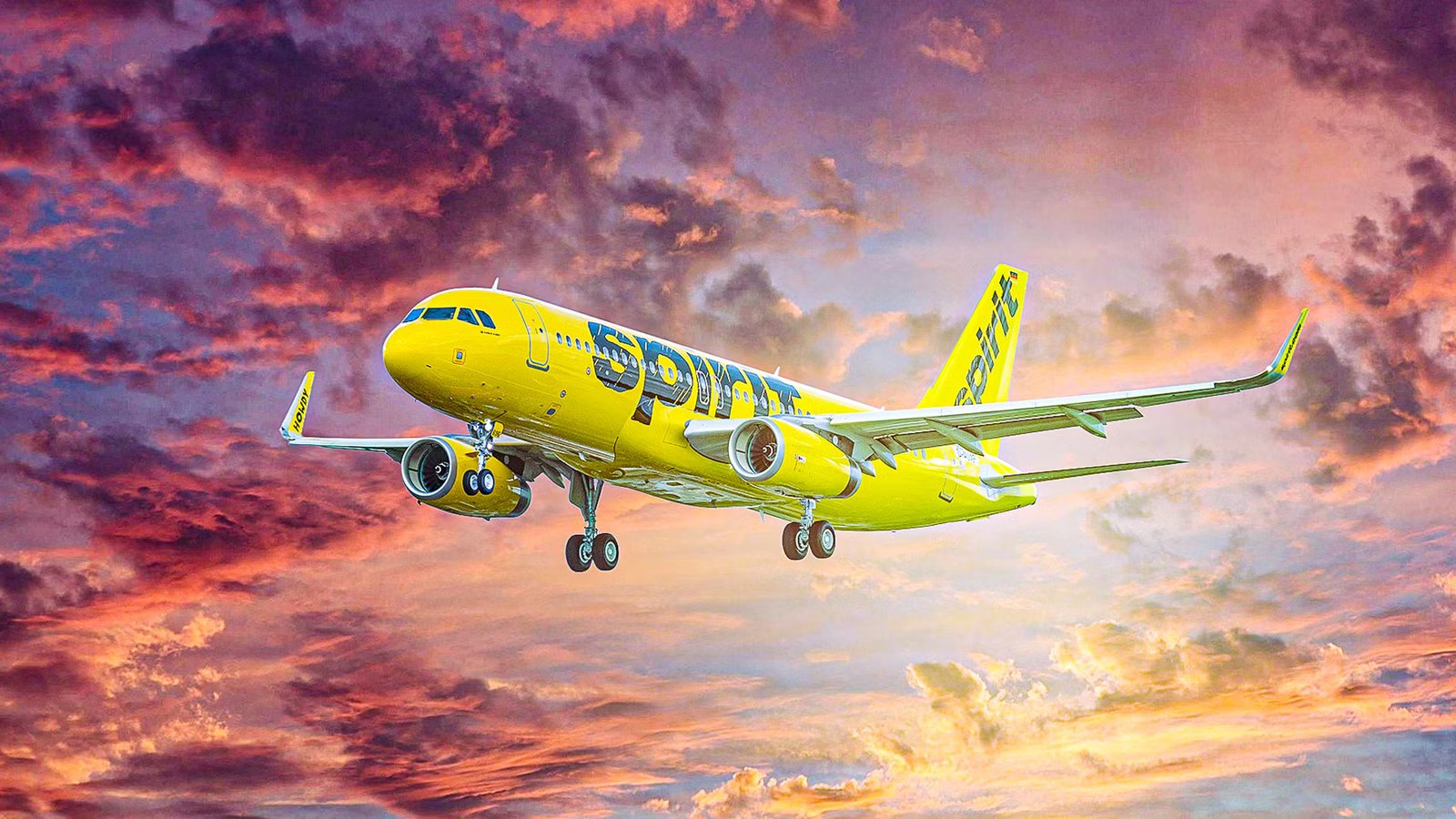
Earlier this year, at the start of May, the world of commercial aviation in the United States of America was rocked by the news that, after an extended financial struggle, Spirit Airlines would be ceasing operations. The yellow-clad budget carrier was among the country’s most distinctive, but, ultimately, it was unable to overcome its economic burdens. Since then, its various assets have been sold.
Now, a key milestone has been reached, following the bankruptcy court giving Spirit Airlines permission to sell its last batch of aircraft. This portfolio consists of 27 jets from the Airbus A320ceo series, which have been sold in two separate transactions valued at a combined $668 million. Elsewhere, passengers are still coming to terms with Spirit’s collapse, as they face a market with higher fares and less competition.
The Last Sale

According to reporting on the matter by View From The Wing, the deals were approved on Wednesday, September 23, by Sean Lane, a bankruptcy judge presiding over Spirit Airlines’ case. Of the 27 aircraft, four examples of the Airbus A321-200 (that bear the registrations N661NK, N665NK, N670NK, and N671NK) have been sold to FTAI Aircraft Leasing Bermuda for the combined sum of $100.7 million.
Meanwhile, the other 23 aircraft, of which ten are Airbus A320-200s and 13 are Airbus A321-200s, have been sold to Save 2026-B LLC for a grand total of $567.4 million. View From The Wings notes that this firm is controlled by Spirit Airlines’ aircraft lenders. Inside Flyer notes that all 27 of the jets have V2500 engines. In terms of the next steps for these jets, the corresponding sales documents confirm that:
“Following the delivery of an aircraft, the buyer shall be responsible for arranging the parking and storage of such aircraft, and shall be responsible for the payment of all parking and storage fees for such aircraft following its delivery.”
How Has Spirit’s Collapse Affected The Market?

Spirit Airlines’ collapse ultimately left a gaping hole in the US low-cost market. While it was not at the peak of its powers at the time that it ceased operations, and its former rivals have raced to pick up the pieces on the routes that it can no longer operate, its absence is still being felt today. On this front, USA Today notes that August was the ninth consecutive month of rising airfares in the United States.
Of course, a key external factor in this trend is the increased cost of fuel brought about by the country’s military aggression in the Middle East this year. However, the reduction in competition in the budget sector certainly won’t have done this trend any favors either. USA Today spoke to several different former Spirit Airlines flyers, who shared their reflections on the big yellow gap that is present in this market today.
One, Matthew Cappucci, noted that, while Spirit, like many US airlines, did not shy away from charging for add-ons, it did at least have the benefit that “its base fares were very low.” Another, Joshua Sheats, was fond of the fact that flyers could pick and choose their add-ons with Spirit, saying that “if you wanted all of the perks that you get with a full-service carrier, you could go ahead and purchase those perks.”
Spirit Airlines’ Historical Fleet

While Spirit Airlines’ fleet was dominated by narrowbody twinjets from the older Airbus A320ceo and the newer A320neo series at the time of its collapse, a closer look at historical fleet data made available by ch-aviation shows that it wasn’t always an all-Airbus carrier. Indeed, the site’s records show that various different models of rear-engined twinjets were among the 309 aircraft that Spirit flew over the years.
As seen above, its historical fleet included four models from the McDonnell Douglas MD-80 series: six MD-81s, 12 MD-82s, 17 MD-83s, and one MD-87. It also flew the older DC-9 series, with one DC-9-20, 11 DC-9-30s, and two DC-9-40s, as well as a single Learjet 60. Its Airbus fleet over the years also consisted of 35 A319-100s, 64 A320-200s, 91 A320neos, 36 A321-200s, and 32 A321neos.