dailynewsnblog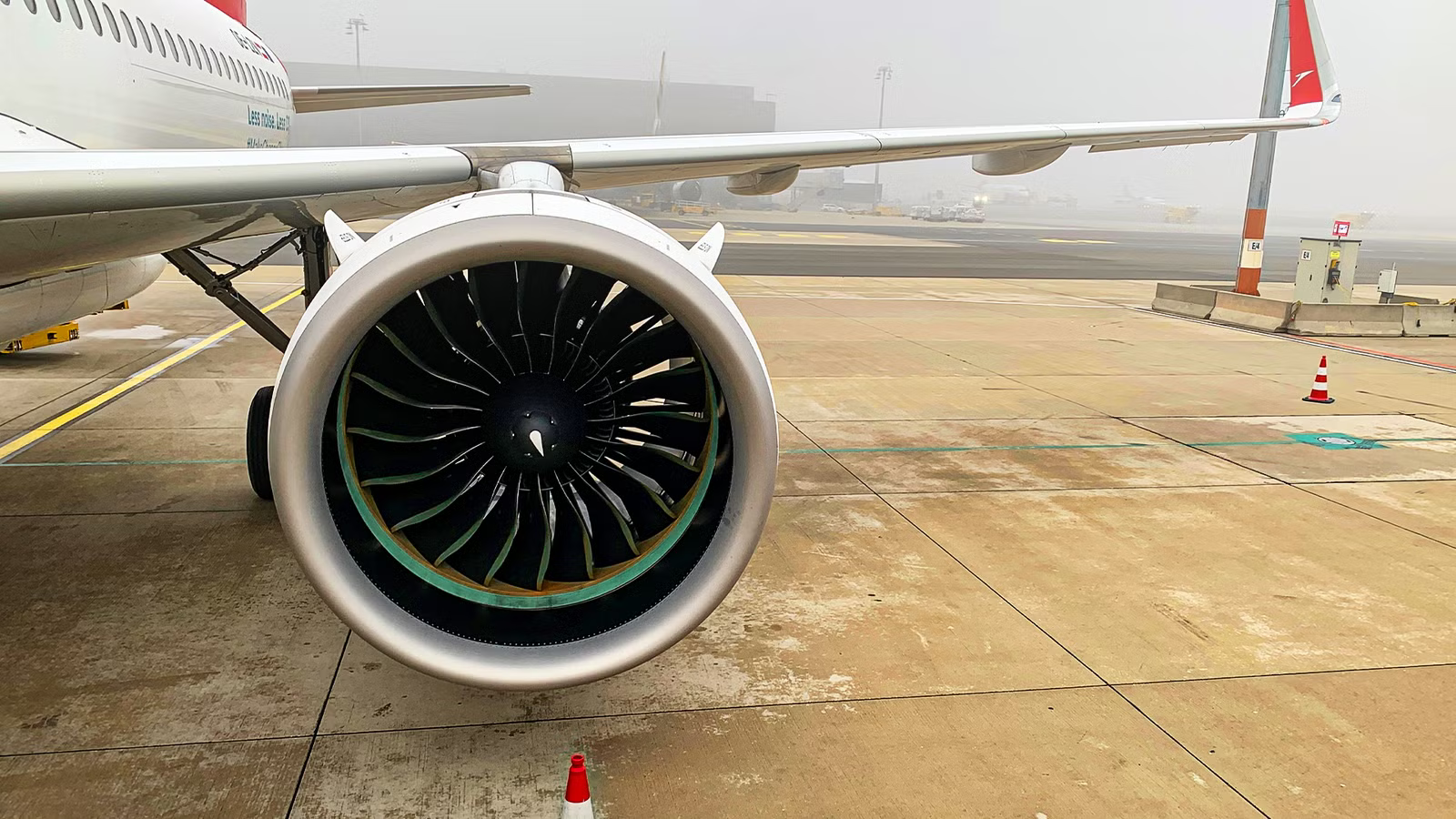
Airline engine manufacturer Pratt & Whitney previously launched a new turnaround time campaign. The numbers are finally moving, with geared turbofan shop visits now seeing turnaround time down 23% year over year. Pratt & Whitney’s stated goal is to consistently turn engines around in 90 days or less. The developments come following the grounding of hundreds of aircraft with urgent MRO needs after microscopic cracks were found in the manufacturer’s geared turbofans.
The main fix behind this turnaround-time campaign is a new technology developed at Pratt & Whitney’s North American Technology Accelerator in Jupiter, Florida. It uses Directed Energy Deposition, a 3D printing method, to remove steps from the manual repair methodology. Simple Flying has contacted Pratt & Whitney for comment.
What Did Pratt & Whitney Launch?

In April 2025, Pratt & Whitney announced it was launching a new additive-geared turbofan repair solution, aiming to significantly improve turnaround time. The 3D printing method was developed in partnership with the Connecticut Center for Advanced Technology and the RTX Research Center. It offers the greatest benefit in minimizing machine changeovers and reducing heat treatment cycles. Beyond this specific repair solution, the technology could also be used to restore worn components in the future.
The manufacturer estimated that the development would cut process time by 60%. It’s part of a campaign to industrialize the solution and scale it across the firm’s Maintenance, Repair, Overhaul (MRO) network. Pratt & Whitney also expected the solution to recover $100 million in parts over the next five years.
“A more agile, additive repair process allows us to better serve our customers by improving turnaround time, while reducing tooling costs, complexity and set up,” said Kevin Kirkpatrick, vice president of Aftermarket Operations at Pratt & Whitney. “At the same time, it reduces our dependency on current material supply constraints. Additive technology has the potential to support a range of critical GTF part repairs.”
How Is The Additive Solution Starting To Have An Effect?

As reported by Leeham News, Pratt & Whitney’s turnaround program, including the 3D printing fix, is starting to have a notable impact. MRO output has increased 40% year over year, while turnaround time has been reduced by 23%. Improvements to Pratt & Whitney’s PW1100Ghave been particularly notable. MRO output for that specific engine has jumped 43%. This was necessary because work scopes for the engine increased 14% last year. The improvements have come not only from innovative engineering solutions, but also from bold investment. RTX has announced over $100 million in investment in its MRO infrastructure, with facilities in Texas, Florida and Arkansas being targeted.
Pratt & Whitney has increased its number of PW1100G shops in its MRO network in recent years. RTX chief executive Christopher Calio explained the importance of achieving the 90-day engine turnaround target at each location, as reported by Leeham News: “We need all 15 of those shops hitting that mark at that standard so that we can continue to make this a well-oiled machine in our aftermarket network.”
The table below shows specifications for the PW1100G. It uses data from the EASA type certificate data sheet:
Fan diameter | 81 inches (206 centimeters) |
|---|---|
Bypass ratio | 12.5:1 |
Static thrust | 24,000–35,000 lbf (110–160 kN) |
Application | Airbus A320neo family |
Length | 133.9 inches (3.4 meters) |
Thrust-to-weight ratio | 3.85 – 5.26 |
Max fan speed | 3,281 RPM |
Pratt & Whitney has also seen the financial perks of these developments. Commercial aftermarket sales at the firm have increased 25%. It has also cut powdered metal-related compensation to $150 million in the second quarter. This is a drop in the ocean compared with compensation paid out to customers over the last three years, which has potentially reached $7 billion.
How Does Pratt & Whitney Use Technology Accelerators?

Many of the improvements Pratt & Whitney is making to turnaround time are based on the work done at two technology accelerators. The North American Technology Accelerator (NATA) is located in Floridaand was launched in April 2024. It focuses on the technology discussed in this article, additive repairs for geared turbofans.
“NATA combines data science with people know-how and state-of-the-art automation to help address customer pain points such as inventory management and part availability, while accelerating our improved repair capabilities and efficiency to better serve our customers,” said Kevin Kirkpatrick, vice president, Aftermarket Global Operations at Pratt & Whitney.
Meanwhile, the Singapore Technology Accelerator (STA) was launched in September 2022 and became fully operational in early 2024. The Singapore facility focuses on robotics, advanced inspection, and more to speed up repairs. The firm estimates that the combined annual savings made from the work at the facilities is $24 million.
Why Pratt & Whitney Must Improve Turnaround Time

When Pratt & Whitney launched its PW1000G family of geared turbofans, used by jets like the A320neo and Airbus A220, it promised to offer quieter operations, lower fuel burn and improved reliability. However, the engine has become part of a major industrial crisis. Defects have been discovered in the powder-metal components used in many of the engine’s most critical sections. The defects have taken the form of microscopic cracks. These cracks can grow under operational stress and cause dangerous engine failures.
A vast number of engines built from 2015 to 2021 have been impacted. Aero Xplorer reported from Cirium data collected in October 2025 that 835 geared turbofan-powered aircraft were grounded in October 2025. This number had risen from 748 jets at the middle of 2025. Each of these jets required thorough inspections of its engines and repairs to be conducted as required. Neither Pratt & Whitney nor its customers were prepared for this MRO workload. As a result, turnaround times for the engines grew from between 60 and 90 days to 250 or 300 days. These snail’s-pace turnarounds are incredibly costly for carriers and lessors.
Pratt & Whitney is getting creative to improve turnaround times. Airlines and lessors have also come up with solutions, cannibalizing otherwise functional aircraft to produce active-geared turbofan engines. Lessors with these usable engines have found themselves with a premium, rare product. At the height of the crisis, they could charge lease rates of $200,000 a month.
The GTF Advantage Package Could Prevent Similar Problems In The Future

While Pratt & Whitney has thought outside the box to reduce its geared turbofan engines’ turnaround time, it hopes to avoid unexpected MROneeds at such a massive scale through developments it has made to the engines. The manufacturer has launched its GTF Advantage Package for the PW1100G, as reported by Flight Plan. The Advantage Package is a complete rework of the engine’s core architecture. It allows the technology to deal with higher airflow and operating temperatures. Pratt & Whitney has developed new hot-section components, airfoil designs, and cooling systems to achieve these goals.
The GTF Advantage package should put future customers’ minds at ease. Pratt & Whitney has also rolled out retrofit and software-based solutions. For example, the HS+ upgrades package captures most of the improvements made by the Advantage Package without requiring a full engine replacement. Software improvements have reduced climb thrust ratings to an optimal level, lowering temperatures in the engine’s hot section during the most demanding phase of flight. The goal of these efforts is to improve the engine’s durability and greatly extend the PW1100G’s lifespan.
This work, focused on the PW1100G, improved the engine’s thrust at sea level by 4%, further optimized efficiency with a 1% fuel burn reduction, and extended engine life by up to 20%. Similar improvements are planned for Pratt & Whitney’s other geared turbofan engines that power the A220 and E2.
What Is A Geared Turbofan?

The Pratt & Whitney engine crisis has been caused by issues with its geared turbofan engines, specifically the PW1000G family. This engine family is used for planes like the A220, A320neo, and the Embraer E-Jet E2 family. A geared turbofan engine has an additional gearbox between the fan (at the front of the engine) and the low-pressure compressor and turbine. These rear components compress and accelerate the air out of the engine’s rear, producing thrust.
Traditional engines use a single shaft to connect everything, so all components must spin at the same speed. A geared turbofan can have these components spinning at different and optimum speeds. The result is reduced fuel burn and noise pollution. Geared turbofans also come with substantial drawbacks. Firstly, these engines are heavier. This is because they include a heavy gearbox system. Depending on how an airline uses its geared turbofan-powered jets, the added weight can offset the efficiency gains. Moreover, whenever a new aviation technology hits the market, it comes with more challenging maintenance procedures. That’s part of why Pratt & Whitney has struggled to adapt to the current MRO challenges.