dailynewsnblog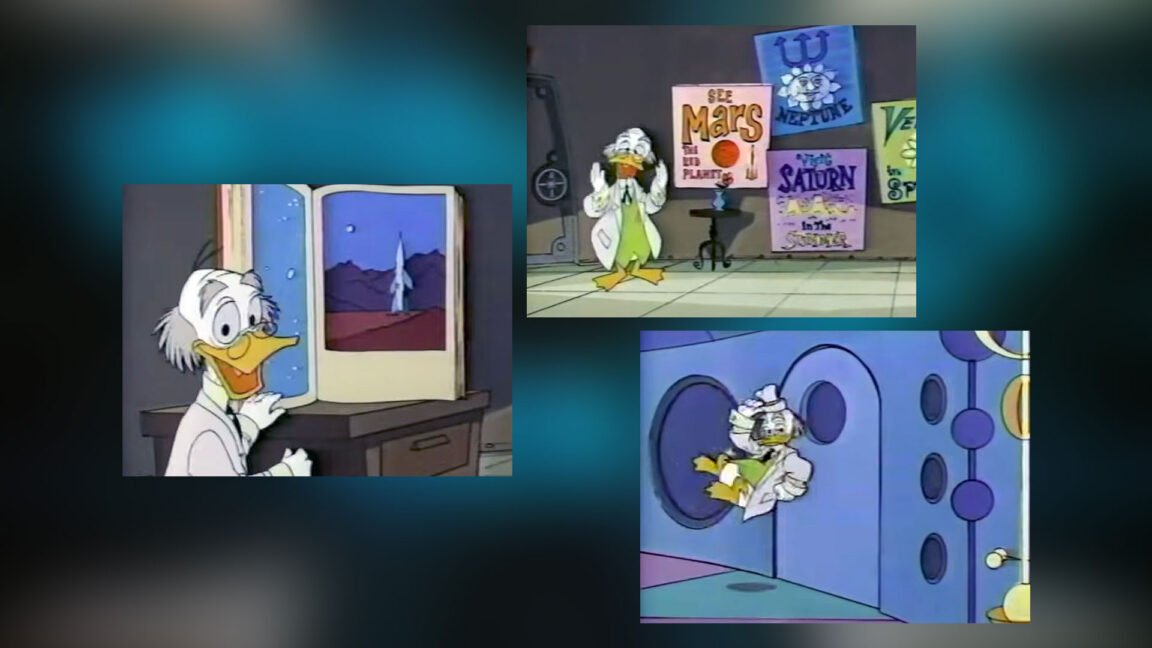
Did you know that the first character that Walt Disney created to specifically appear on television was inspired, in part, by early Space Age rocket scientists?
On this day 65 years ago (September 24, 1961), Disney introduced the “renowned scientist, lecturer, psychologist [and] world traveler,” Ludwig Von Drake. A member of the Duck family (he is the “brilliant and eccentric” uncle of Donald Duck), Von Drake was “the outstanding genius of the century” (per Disney himself) who helped to explain scientific principles and technological concepts to the millions of people who tuned in every Sunday to watch Walt Disney’s Wonderful World of Color on NBC.
A few years later, after expertly (but often absent-mindedly) addressing topics such as how color television works, the health benefits of exercising, and the history of aviation, Von Drake dove into the topic for which he said he wrote the book on, in the February 10, 1963, episode “Inside Outer Space.”
“You people out there are going to see stars you have never seen before… when you go traveling in outer space. In fact, there are going to be a lot of things out there you don’t know about, but don’t let it bother you, ’cause all of the answers is [sic] right in here,” Von Drake says at the beginning of the animated segment. “I call my guidebook Inside Outer Space because everything known about outer space is on the inside.
“Which reminds me, the way things are going, you better get your copy right away before it becomes obsolete,” he says. “And prices go up.”
Credit:
NASA
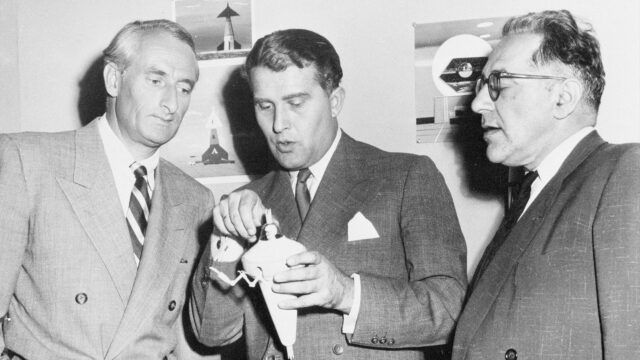
Wernher von Braun (center) discusses a “bottle suit” model with Heinz Haber (left), an expert on aviation medicine, and Willy Ley, a science writer on rocketry and space exploration in 1964.
Credit:
NASA
Tomorrowland
As it turns out, Von Drake was not wrong—well, maybe not about the cost of his book, but about the part about being obsolete. The show reused animation from earlier Disneyland TV episodes, “Man and the Moon,” “Man in Space,” and “Mars and Beyond,” which first aired on December 4, 1957, two months after the launch of the world’s first artificial satellite.