dailynewsnblog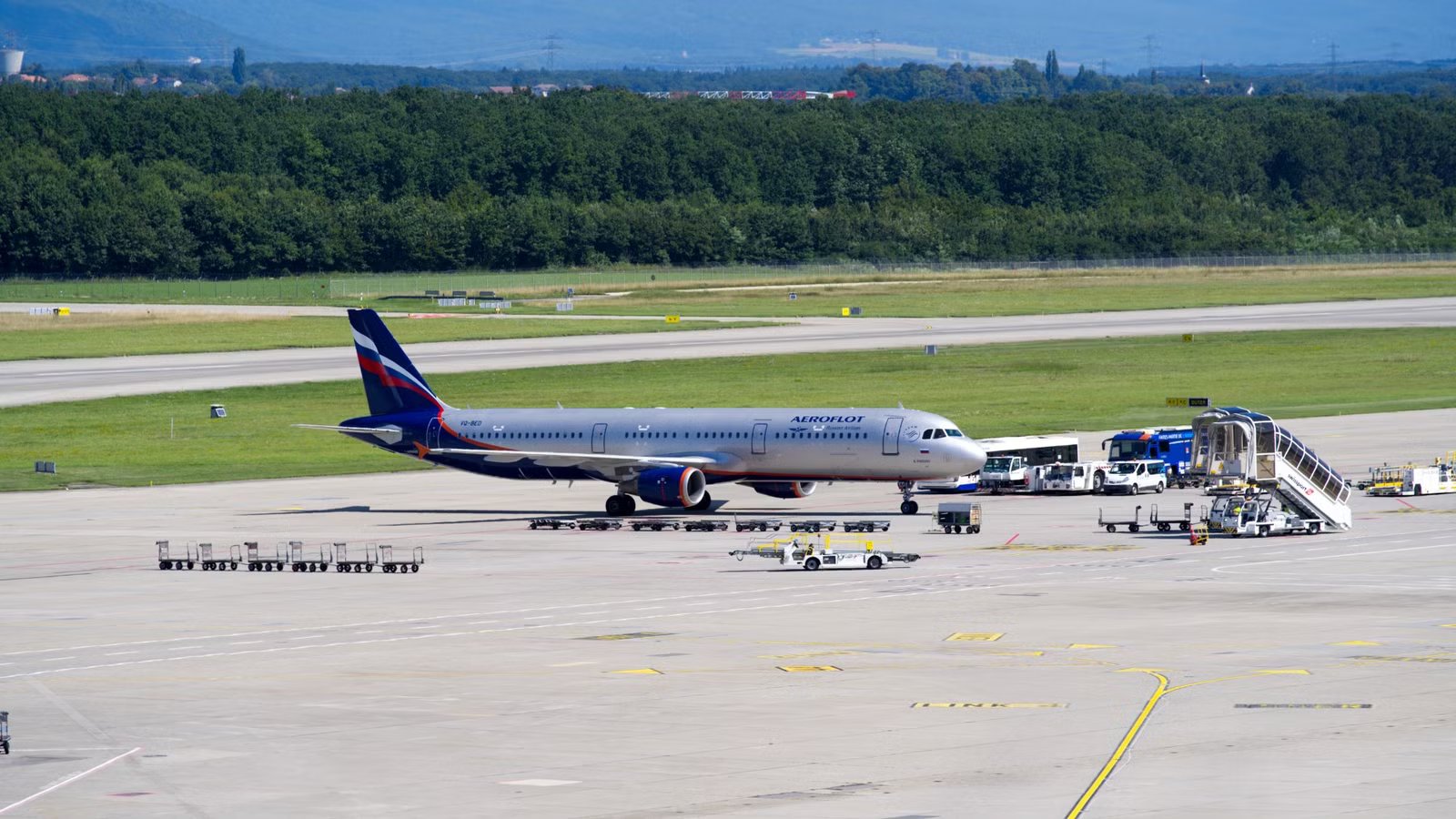
An  AeroflotAirbus A321 has been stranded at Geneva Airport (GVA) in Switzerland since February 2022, when Russia’s invasion of Ukraine triggered sweeping aviation sanctions and the closure of European airspace to Russian airlines. Registered VP-BOE, the narrowbody arrived from Moscow Sheremetyevo Airport (SVO) on February 27, 2022, but never made its planned return flight. More than four years later, the aircraft remains in Geneva, with reports indicating that its prolonged inactivity has left it in a very poor condition.
The A321 is an unusual survivor of the mass disruption that affected Russian aviation in the early days of the war. While many Russian-operated aircraft stranded overseas were eventually returned, repossessed by lessors, or placed into new service, VP-BOE became caught in a particularly complicated ownership and sanctions situation. Its story illustrates how international sanctions can leave an aircraft physically trapped even when the operator itself has not chosen to abandon it
Sanctions Left This A321 Stranded In Switzerland

The Aeroflot A321 arrived at Geneva on the afternoon of February 27, 2022, just days after Russia launched its full-scale invasion of Ukraine. According to One Mile at a Time, the aircraft was preparing to depart for Moscow when the developing restrictions meant it could no longer operate the flight. The aircraft had to return to its parking position, where it has remained ever since, apart from one temporary tow in June 2022.
The timing was critical because Switzerland moved rapidly to align itself with European sanctions. The Swiss government announced on February 28, 2022, that it would adopt EU sanctions against Russia, including a prohibition on Russian aircraft from taking off from or landing in Switzerland. That left VP-BOE on the wrong side of a rapidly changing regulatory environment, with no straightforward route home. Sanctions also restrict relevant aviation goods and services.
The aircraft’s problems have since become considerably more serious than simply being unable to fly home. One Mile at a Time reports that VP-BOE has received essentially no maintenance during its years on the ground, with reported deterioration including visible cracks, uncovered engines, and electronic problems. There have also been reports of old food remaining aboard the aircraft and a possible rat and insect infestation, although these details are based on reports rather than an independently published inspection.
Ownership Issues Made The Aircraft Even Harder To Recover

The aircraft’s ownership structure is central to understanding why the situation became so complicated. VP-BOE was reportedly owned by Russian state-controlled leasing company GTLK through an Irish subsidiary, so it was not directly Aeroflot-owned. According to One Mile at a Time, the Irish leasing company subsequently became subject to liquidation because of sanctions, making a conventional repossession or transfer considerably more difficult.
Switzerland’s sanctions framework also covers aviation-related goods and services, while Russian aircraft are subject to airspace restrictions. SECO’s current sanctions information confirms that Switzerland continues to maintain measures affecting the Russian aviation and aerospace sector, and the country’s Ukraine sanctions regime remains legally binding.
The A321 has nevertheless been moved once since it arrived. In June 2022, it was towed from its normal position because the parking space was needed for a United Nations conference, then returned to the airport’s parking area. One Mile at a Time also reports that parking charges have continued, with a reported cost of around CHF 30,000 ($36,540) per month, potentially amounting to roughly $2 million over more than four years.
Aeroflot’s A321 Is Not Russia’s Only Stranded Aircraft

The Geneva A321 is not the only Russian aircraft to become a long-term casualty of post-2022 sanctions. A much larger example is Volga-Dnepr Airlines’ Antonov AN-124, registration RA-82078, which has remained at  Toronto Pearson International Airport (YYZ) since February 2022. Canada formally ordered the aircraft seized in June 2023 under its sanctions legislation, identifying it as owned or controlled by Volga-Dnepr Airlines or the Volga-Dnepr Group.
The Canadian case has continued to evolve. In August 2026, the Federal Court rejected Volga-Dnepr’s challenge seeking relief from Canada’s sanctions, meaning the enormous freighter remains caught in the dispute. Canadian regulations currently identify RA-82078 specifically and place the aircraft under seizure, with control assigned to the Canadian government and not its Russian operator.
However, there is an important difference between the two aircraft. Canada has formally seized the An-124, whereas the Aeroflot A321 in Geneva remains primarily a sanctions and ownership issue, with its deteriorating condition potentially making eventual recovery impractical. For VP-BOE, the longer it remains inactive, the more difficult and expensive it will likely be to return it to airworthy condition, potentially making dismantling or parts recovery a more realistic future outcome.