dailynewsnblog
A major air traffic control failure brought flights across the New York and Philadelphia region to a standstill on Monday morning, before spreading into one of the most disruptive Northeast aviation events in recent memory. Initial problems with frequencies at Philadelphia Terminal Radar Approach Control (TRACON) prompted the Federal Aviation Administration (FAA) to halt arrivals into  Philadelphia International Airport (PHL),
  Newark Liberty International Airport (EWR) and Teterboro Airport (TEB).
CBS News then reported that  New York JFK Airport (JFK),
  LaGuardia Airport (LGA) and Westchester County (HPN) were subsequently placed under ground stops as the disruption widened. By early afternoon, the problems had delayed more than 600 flights at Newark and Philadelphia alone, representing more than 20% of flights at the two airports, while Flightradar24 reported average delays of more than four hours at these airports.
  Boston Logan International Airport (BOS) was also placed under traffic restrictions as diverted traffic poured north, although Boston’s challenge has been airport volume rather than a failure of its own ATC equipment.
FAA Administrator Bryan Bedford has now attributed the crisis to damaged fiber infrastructure associated with construction work in New Jersey. While more information about the root cause is still incoming, the current episode occurs after repeated Newark disruptions in recent years due to FAA equipment outages.
“ATC Zero”: Flights Across The Northeast Come To A Halt

The first major interruption began at around 9:31 AM, with the FAA initially reporting problems with frequencies at Philadelphia TRACON, the facility responsible for directing traffic around Philadelphia and, through its Area C, Newark and surrounding airports. The agency initially paused flights into Philadelphia, Newark and Teterboro, but the situation deteriorated over the following hours.
By 12:48 PM, New York TRACON, known as N90, was being reported as ATC Zero, while FAA restrictions had expanded to JFK, LGA, and HPN. Separately, Deep Arrival had reported how another equipment problem had disrupted Newark and LaGuardia only the previous day before normal operations were restored.
Airport | Impact During The Event | Primary Reason |
|---|---|---|
Newark (EWR) | Ground stop; severe arrival/departure delays | Philadelphia TRACON/communications failure |
Philadelphia (PHL) | Ground stop; arrivals severely restricted | Philadelphia TRACON failure |
Teterboro (TEB) | Ground stop | Philadelphia TRACON/Area C failure |
New York JFK (JFK) | Ground stop as disruption expanded | Wider New York ATC disruption |
LaGuardia (LGA) | Ground stop, followed by traffic-management restrictions | Wider New York ATC disruption |
Westchester County (HPN) | Ground stop | Wider New York ATC disruption |
Boston (BOS) | Ground-delay program/traffic restrictions | Airport volume and diverted traffic |
The cause is particularly significant. Bedford has said that a backup fiber line had been accidentally cut by a construction crew in New Jersey, leaving the system without the redundancy it should have had when another circuit failed. Reporting citing Bedford said controllers lost radio and radar capabilities during the failure. That is especially notable because the FAA completed a new fiber network between New York and Philadelphia last year, specifically using two separate communications paths so equipment could continue operating if one path failed.
By early afternoon, however, there were signs of recovery. The aviation account xJonNYC, which had been tracking the outage throughout the morning, reported that N90’s systems had been rebooted and that radar, frequencies and landlines were functioning again, with controllers initially concentrating on aircraft already caught in the disruption. He also advised:
“This isn’t a case where they can just “pick up where they left off. This evening is going to be messy and honestly may trickle into tomorrow. It’s going to be a slow restart, and inbounds are currently prioritized. For anyone flying this evening in or around the area, I’d expect heavy delays.”
That slow restart is the important point. Previous Northeast disruptions have demonstrated how quickly reduced New York capacity can propagate throughout an airline’s network, with hundreds of thousands of passengers impacted. Domestic and transatlantic operations for  United Airlines at Newark and
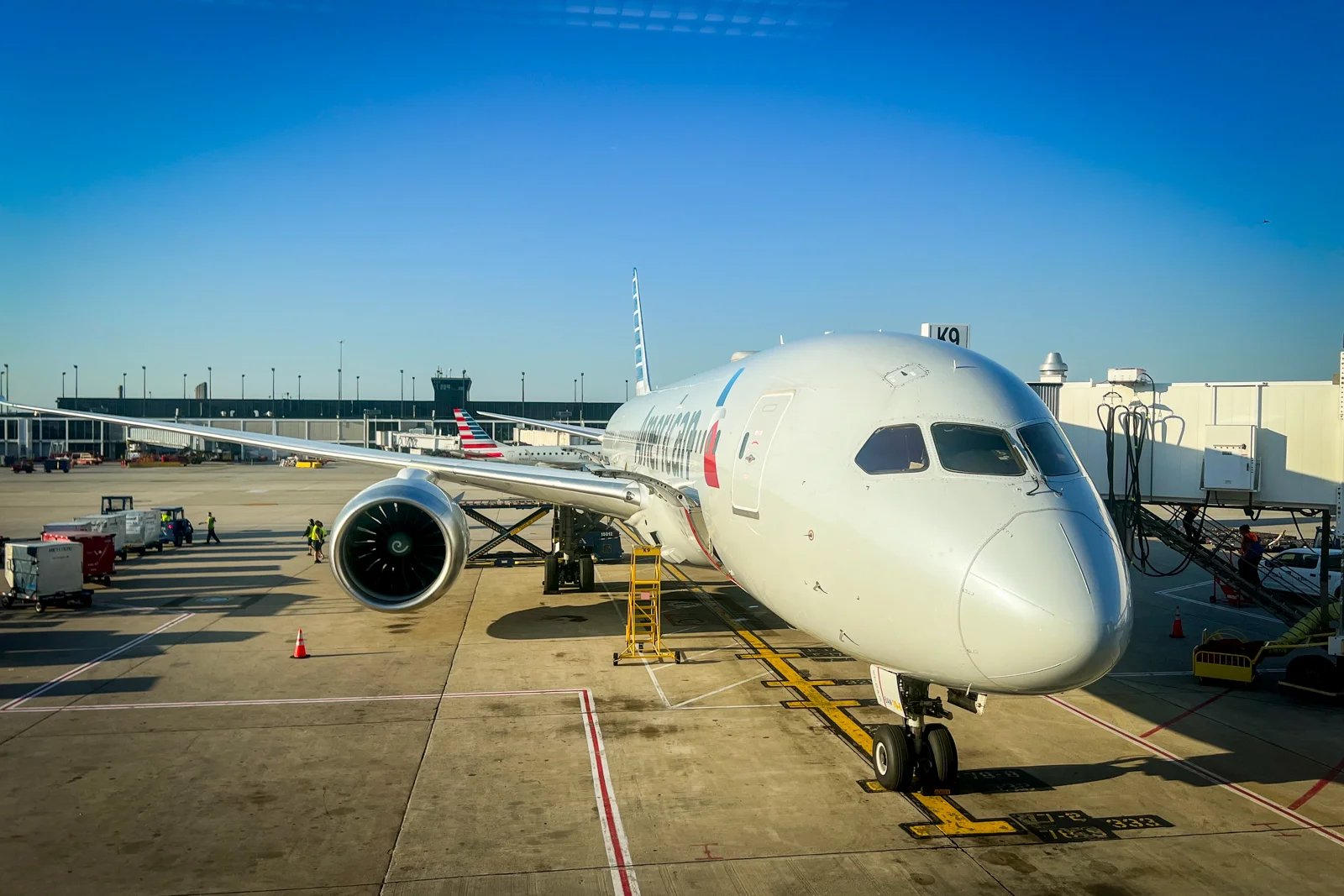
  American Airlines at Philadelphia will be particularly exposed, but scores of international carriers will also be impacted, leading to potential knock-on effects globally.
Why A Philadelphia Failure Can Shut Down New York

The geography sounds counterintuitive — how can an issue in Philadelphia shut down New York? This is because Newark, while in the New York metropolitan area, has its arriving and departing aircraft handled by Philadelphia TRACON Area C. The FAA transferred responsibility for Newark’s airspace from New York TRACON to Philadelphia in 2024 amid persistent staffing difficulties at N90. Radar data for Newark was subsequently processed through systems linking New York and Philadelphia, making telecommunications between the facilities critical to everyday operations.
Facility | Airports/Airspace Relevant To The Disruption | Role |
|---|---|---|
New York TRACON (N90) | JFK, LGA, HPN and wider New York airspace | Sequences arrivals and departures around New York |
Philadelphia TRACON | PHL and multiple surrounding sectors | Terminal-area control around Philadelphia |
Philadelphia TRACON Area C | EWR and associated satellite traffic | Controls Newark arrivals and departures |
Boston ATC/Airport System | BOS and surrounding Northeast traffic | Absorbed additional traffic and diversions |
Following Newark’s repeated 2025 outages, the FAA added three high-bandwidth telecommunications connections, replaced older links with fiber technology, deployed backup capability, and moved toward establishing a separate STARS radar-processing hub at Philadelphia. The July 2025 fiber upgrade was specifically advertised as providing redundant paths between New York and Philadelphia. Monday, therefore, has exposed that the available redundancy itself can be compromised.
“ATC Zero” itself has a specific FAA meaning. Under the agency’s operational-contingency rules, it is declared when a facility cannot provide its normal services with its own personnel or appropriately qualified personnel elsewhere. It doesn’t necessarily mean the physical airport is closed; it means the ATC facility cannot provide the services needed to handle normal traffic, forcing traffic to be stopped, transferred or severely restricted until contingency procedures can be implemented. At the time of writing, the FAA was still reporting ground stops at PHL, JFK, and EWR, with severe delays at BOS and LGA. The latest updates can be found here.
Diversions Pile Into Boston As Delays Surge

The consequences were already substantial before the system began restarting. By early afternoon, Flightaware was reporting hundreds of delayed and canceled flights across the five major airports impacted, with delays highest at PHL and EWR already showing nearly 400 cancellations. Even Boston, which is only part of the impact by virtue of being the main overflow airport, is reporting severe delays.
Airport | US Airline Exposure | Latest Verified Impact |
|---|---|---|
EWR | United | 200+ flights delayed, 380+ flights canceled. Average delays of 4+ hours |
PHL | American | 370+ flights delayed, 130+ flights canceled. Average delays of 4+ hours |
JFK | Delta, JetBlue, American | 200+ flights delayed, 10+ flights canceled. Average delays of 1+ hours |
LGA | Delta, American | 270+ flights delayed, 20+ flights canceled. Average delays of 1+ hours |
BOS | Delta, JetBlue | 350+ flights delayed, 50+ flights canceled. Average delays of 1+ hours |
Unfortunately, Boston was particularly poorly positioned to serve as a pressure-release valve when things started going wrong. Massport began a 75-day period of closure or extremely limited use of Runway 9/27 on August 31 while installing an Engineered Material Arresting System at the Runway 27 end, explicitly warning that Logan would have reduced runway capacity during the work.
Monday’s failure also lands embarrassingly in the middle of an unprecedented FAA modernization program. Congress provided an initial $12.5 billion for the new ATC system, and Bedford told lawmakers last week that more than 64% of the FAA’s copper-based telecommunications infrastructure had already been replaced with modern equipment. Monday’s outage demonstrates that resilience depends not only on replacing old hardware, but on ensuring that backup paths remain genuinely independent and resilient when the primary system fails.