dailynewsnblog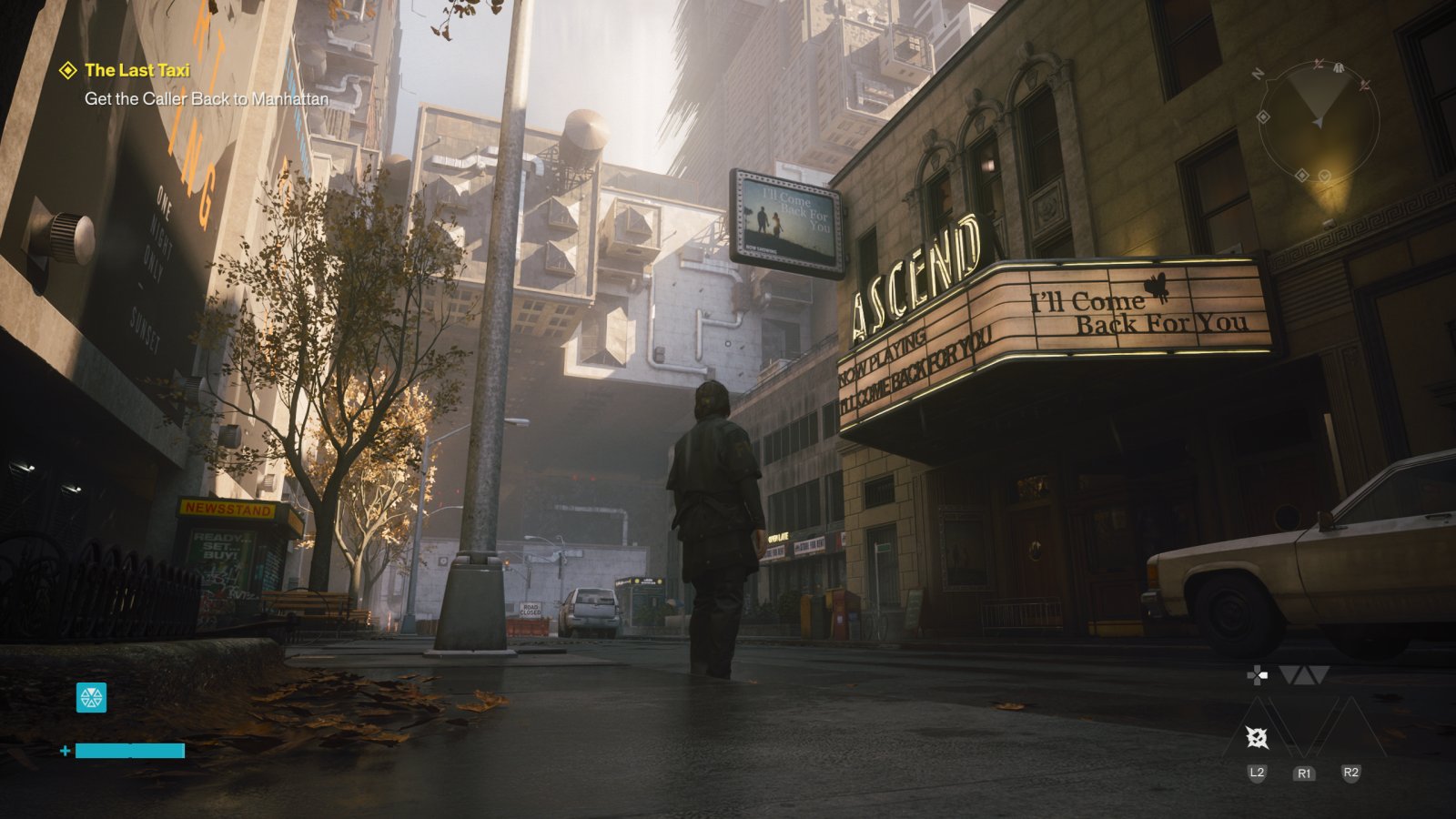
Remedy Entertainment has proved time and again that its distinctive blend of tone, atmosphere, action and surprise resonates with players — so much so that its best games are remembered for their highs and forgiven for their flaws. It’s easy to forget that 2019’s Control had uneven difficulty and some rote bosses that rubbed some gamers the wrong way when its strong, distinct storytelling captivated them throughout. The same was true of 2023’s Alan Wake II, which blended strangeness and character-driven storytelling so effectively that its difficulty spikes were easy to overlook.
Which is why the follow-up to Control, titled Control Resonant, will probably find its way into gamers’ hearts despite taking some of the wrong lessons from Remedy’s earlier games. Nowhere else will you find an experience quite like Resonant, even if the studio’s magic feels somewhat diluted from lunging after mainstream gameplay elements that, quite frankly, aren’t why people play a Remedy game.
There’s a throughline of strong, novel storytelling that still runs through — and shines in — Resonant. After the new director of the Federal Bureau of Control, Jesse Faden, carved a path through the extradimensional Hiss invasion to save her brother, Dylan, at the end of 2019’s Control, her victories dried up. Seven years into the stalemate, Jesse bids her brother goodbye and plunges a powerful weapon into him. When he wakes, the Hiss have broken out of the FBC’s headquarters to possess all of Manhattan — and, in turn, the world.
That’s where Resonant begins, with a promise that Dylan’s attempt to redeem his past Hiss-possessed sins will lead to a cornucopia of weird adventures that made Control so special — but this time, on a city-wide scale. He grabs a radio off an FBC grunt and links up with Zoe, a field squad leader brigadiered into handling New York City’s messy streets after everyone senior has been eliminated. Learning who Dylan is, she cautiously holds his leash, sending him on missions as she struggles to believe he’s thrown off the yoke of destruction.
For the record, so does Dylan, but it doesn’t make it easier to stomach the abuse hurled at him by FBC agents bringing up their many dead colleagues. In an early story mission deep into a Hiss-controlled skyscraper, Dylan is periodically overwhelmed by memories of possession, even forced to relive the murderous early days when the FBC’s HQ, the Oldest House, was overcome by the malevolent and monstrous Hiss. Fighting through his fears, he saves a prominent FBC chief thought lost, who still treats him with disdain. Dylan’s uncertain redemptive march is, pardon the pun, one of the most resonant themes of the game.
It’s unfortunate that it took me 10 hours of fumbling about in the rest of the open world to reach that point. Shortly after starting the game, players are turned loose in a few connected Manhattan neighborhoods with little indication of what will and won’t be signature Remedy experiences. It’s so easy to get lost in the routine hack-and-slash gameplay that I started worrying that the game lacked the studio’s signature juice.

Mucking through a city that doesn’t feel much like Manhattan
When players excitedly fired up 2014’s BioWare fantasy adventure Dragon Age: Inquisition, they quickly got mired in the opening area, lost and baffled that their beloved series might have been subsumed into a mundane open-world adventure. Advice spread through the game’s community like wildfire: Leave the Hinterlands opening area and you’ll reach the real game.
That recommendation regrettably applies to Resonant. Remedy isn’t too keen on holding players’ hands through its games, and at a time when vocal players condemn overprescribed direction (such as the infamous yellow paint), it’s understandable that Resonant’s developers would leave players to their own devices. The game points them toward a list of goals and lets them take the lead.
But most of the early-game goals involve delving into dungeons tucked into the corners of vast open-world areas populated by roaming squads of Hiss. According to the story, this is Manhattan, but its stretches of streets and rooftops feel generic, resembling the sleepy apartment blocks of Brooklyn south of Prospect Heights more than the bustling heart of America’s most iconic city. Remedy smartly avoided resorting to instantly recognizable landmarks and iconic buildings, but that meant the only things that reminded me of my eight years in NYC were the laundromats and pseudo-bodegas I ducked into for item chests.

The game’s areas that are most striking are the ones that could be in any city, and even the sidequests don’t make it feel like any particular place. Resonant’s Manhattan has the most identity when it’s warped by the Hiss or a new force called the Patterning, which significantly alters the city’s geometry. Here, at least, Remedy gets to flex its design muscles with some radically fun, distorted topography.
One thing Remedy gets right is that New York City is perpetually under construction, using scaffolding as diegetic platforms for gaining height and soaring over gray-brown buildings. Temporary flight returns from Control, and it’s still a hoot to awkwardly hurl yourself at enemies and whack them with the Aberrant, Dylan’s shape-shifting Altered Item. Unlike Control’s gun-based combat, Dylan’s weapon is melee-only, and can take the form of a wide reaper’s scythe to hit multiple enemies or a pair of daggers for quick attacks. But gathering upgrade materials to build out your arsenal is a slow process, which left me with a single set of attacks for hours and hours. (Remedy seems to like this miserly upgrade pace, which was very evident in its ill-fated multiplayer experiment, FBC: Firebreak.)
 Remedy Entertainment/Screenshot by CNET
Oddly, the Aberrant’s imagery might be the most strikingly familiar to New Yorkers: In the subspace where Dylan manages his powers and upgrades, the weapon is massively enlarged into a steel I-beam driven through the concrete ground, evoking memories of the wreckage of 9/11.
And boy, will you get to know your arsenal, as every area and lull between story sequences is packed with combat against similar Hiss enemies — or, later, infectious Mold creatures. Like most of Remedy’s games, it becomes the price of entry as you progress. Bosses are deliciously designed — early on, you fight a giant sculpted head; later, a titanic magma creature in a furnace — but inconsistently challenging. I was able to beat the latter only after boosting my stats enough to wear it down.
 Remedy Entertainment/Screenshot by CNET
The best of Remedy isn’t in the open world
Remedy’s Manhattan looks flatly normal in some areas, while others bend in on themselves, as in the film Inception. These Gravityland sections are fun places to use the game’s other major movement mechanic: jumping around while reorienting yourself to walls and ceilings. But they also show how little even this novelty does for me. The best parts of the game — and perhaps every Remedy game — are indoors.
There’s a reason players fell in love with Control’s Oldest House, a relic outside of time with brutalist concrete and groovy 1960s style that promised and evoked so much mystery, from its heights to its depths. I’ve played around 18 hours of Resonant, and only now — delving deep into a new region underground filled with floating block structures over a potent abyss — have I found an area that fills me with the wonder I felt wandering around the first game. It’s no surprise that these indoor areas are riddled with the stunning light, shadows and color that Remedy expertly deploys to set stark moods.
 Remedy Entertainment/Screenshot by CNET
It’s admirable that Remedy would try applying its formula to the open world, but these areas are weaker, their sense of warped weirdness diluted by daylight and recognizable mundanity. The story-heavy missions within enclosed areas far better showcase Remedy’s blend of action and environment. In one standout sequence, Dylan is dropped into a sinkhole atop a diving bell, with Zoe keeping in touch over a PA system. He must fight through a Gravityland-warped apartment complex and defeat a boss at the bottom, only for the bell to be accidentally yanked away. Fighting despair as Zoe’s frantic calls fragment over dimensional interference, Dylan hears a song she plays over the PA, and he follows it through a dizzying stretch of rooms to escape.
This — this is the kind of sequence that sticks in players’ minds, combining character arcs, action, surrealism and a new yet graspable environmental logic that bends the brain in the best way. It doubles as a great needle drop, like all of Remedy’s greatest sequences. (The studio was so confident in this section that it was part of Resonant’s Summer Game Fest demo.)
 Remedy Entertainment/Screenshot by CNET
It’s easy to forget that Remedy itself began with games exploring New York City, but the Max Payne series was intentionally set in a version of NYC riddled with rain, crime and drama. So far in my time with the game, Resonant’s best parts aren’t set in subways, rooftops or skyscrapers; they’re in the bizarre, altered corners that could be anywhere, really. Anywhere you happen to fall through the cracks of normalcy and realize the world is larger, stranger and more dangerous than you thought.
There’s a version of Resonant that might have perfectly synthesized this into the Big Apple, but I (and many other gamers, I’m betting) will be willing to trudge through missteps exploring a game unlike any other, relishing the moments where Remedy swings for the fences — and knocks it out of the park.

See full bio