dailynewsnblog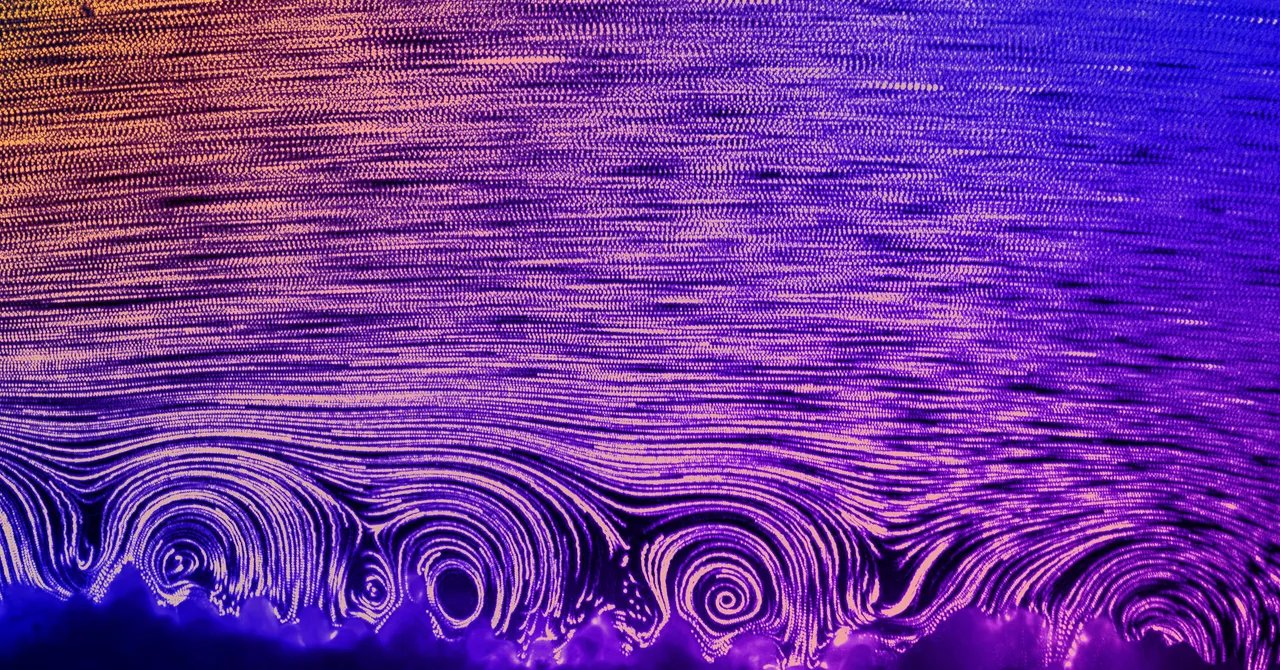
Every coral colony is cushioned by a thin boundary layer of water whose movement is slowed by friction at the coral’s surface. Researchers assumed that corals were passive with respect to the slow-moving boundary layer, simply relying on natural diffusion through it to provide nutrients and oxygen.
Then, in 2014, a team from the Massachusetts Institute of Technology and the Weizmann Institute of Science published a groundbreaking study showing that coral cilia interact with the boundary layer by rapidly whipping about to generate swirls of fresh, oxygenated seawater. Until a decade ago, scientists thought of these cilia merely as brooms that move mucus and sweep away waste particles and other debris. The research not only modeled the tiny vortices created by the cilia for the first time, but also revealed the cilia’s importance for survival and metabolism.
At first, the microbiologist and environmental engineer Orr Shapiro, who led the 2014 work at MIT as a postdoctoral fellow, was interested in how microbes that infect corals and cause disease follow concentration gradients, a process called chemotaxis. Under the microscope, he noticed something weird: In the boundary layer, particles were swirling around and mixing together—not at all like the passive diffusion he had been expecting.
“That was to me, and I think later on to the entire field, sort of a paradigm shift,” said Shapiro, now a researcher at the Volcani Institute in Israel. It became clear that the boundary layer wasn’t static, but rather a dynamic zone, and one where cilia were creating their own turbulence. The realization inspired Shapiro’s team to go off on a tangent, mapping the flow of oxygen to coral tissues via cilia. “It really transformed how we understand this [micro]environment, because suddenly the diffusion is no longer really important,” Shapiro said.
Diffusion is the default route for nutrients traveling through water, but it’s painfully slow. It can take as long as four minutes for oxygen to travel just 1 millimeter. That’s why the fast-moving flows created by cilia are so important: because naturally flowing water slows down near the coral’s surface, and corals consume oxygen faster than diffusion can supply it.
It is a system that delivers enough oxygen, despite the cilia’s energy consumption. But there’s a downside: Oxygen dwindles as temperature climbs. That’s when corals run into trouble.
Scientists have a clear understanding of one thing that happens to corals when water gets too hot: bleaching. As water temperatures rise, a coral’s symbiotic algae become stressed and release molecules that are toxic to the coral in large quantities. To protect itself, the coral expels its own algae—a primary food, energy, and oxygen source—and soon loses its color. It’s a slow death and an increasingly common occurrence as heat waves sweep across the world’s reefs.
But sometimes, some corals on a reef bleach while others don’t, and in other cases corals under heat stress die without expelling their algae. An international team of microbiologists, engineers, and physiologists was eager to understand how heat affects cilia, and whether this could explain different types of coral death.