dailynewsnblog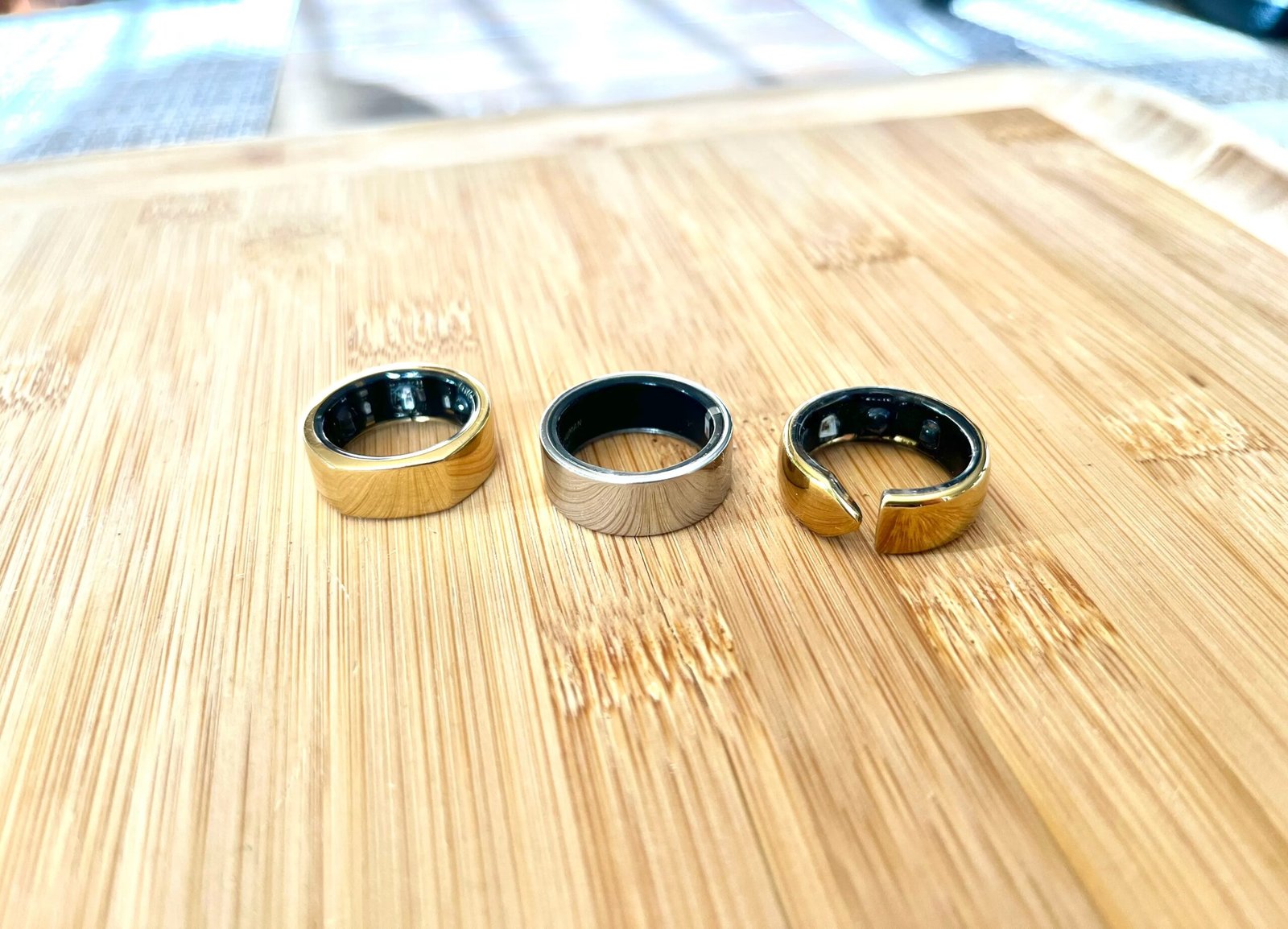
Smart rings are a stylish, functional way to monitor your health and fitness, especially if you don’t like the bulkiness of most wearables, which can be particularly bothersome while sleeping. I’ve spent years testing fitness trackers, smartwatches and smart rings, yet one ring outperformed the rest as the best smart ring for tracking sleep, stress levels and more.
Our Picks

Bottom Line
The Oura Ring is my favorite smart ring because its app is easy to understand, and it’s a stylish, subtle wearable. Some standout updates on t…
Pros & Cons
-
Stylish ring -
App is easy to understand and read -
Auto-tracks movement -
Can detect the onset of illness -
Sets a bedtime window based on your chronotype -
Waterproof up to 330 feet
-
Expensive, starting at $399 -
Not the best fitness tracker -
Could use more app integrations
It’s worth noting that since my testing, the Ultrahuman Ring Air has been banned in the US following a lawsuit filed by Oura, maker of the Oura Ring. The Ring Air was previously my pick for the best smart ring if you like working out. If you’re interested in trying out the Ultrahuman brand, its latest Ultrahuman Ring Pro is currently available in the US.
The Oura Ring 5 may be the smallest smart ring we’ve ever tested, but it’s features are mighty. / Vanessa Hand Orellana/CNET
Best smart ring overall
Oura Ring 5
-
Stylish ring -
App is easy to understand and read -
Auto-tracks movement -
Can detect the onset of illness -
Sets a bedtime window based on your chronotype -
Waterproof up to 330 feet
-
Expensive, starting at $399 -
Not the best fitness tracker -
Could use more app integrations
The Oura Ring is my favorite smart ring because its app is easy to understand, and it’s a stylish, subtle wearable. Some standout updates on the newest generation of the ring include a 40% smaller band, scratch-proof materials and an updated symptoms radar that can alert you if you’re getting sick or your biometrics are off from your baseline.
If you like to track your workouts with a wearable, the Oura Ring has an automatic detection feature, which can sense when you’re exercising or possibly doing chores around the home.
The app is truly where the Oura Ring shines because the interface clearly displays your latest sleep data, your readiness (or how recharged you are), heart rate, cycle insights if you menstruate and stress levels. Oura has enhanced its women’s health feature, which tracks your cardiac health and even provides menopause insights (among other things) to help you navigate these stages.
Oura tracks more than 50 metrics and is easily rechargeable with an eight-day battery life. Keep in mind that to get accurate insights and recommendations from the smart ring, you’re advised to wear it for at least a month so it can gather data on your habits. Additionally, to get the most out of your ring, you’ll have to sign up for the Oura membership, which is $6 per month. If one of your goals is to improve your sleep, the Oura Ring will help you establish a sleep schedule customized to your needs.
The Oura Ring determined that my ideal bedtime window was between 9:30 p.m. and 10:30 p.m. The ring knew that I generally wake up around 6 a.m., so it aimed to help me get eight hours of sleep. I could tell I felt more tired and less energetic on days when I went to bed later than Oura’s suggested time. It would also give me a lower readiness score on the days when it could tell my sleep and stress levels were affected.
It can also tell you what your chronotype is — based on your natural circadian rhythms — to determine whether you’re a morning or night person. I’m not surprised it identified me as a morning person because I’ve always been an early riser.
If you own an iPhone, you can allow Oura to share data with other app integrations, such as Apple Health, Strava, Wild AI, Cronometer, Noom, Zero, Headspace, Natural Cycles, Clue and the Flo app.
In general, if you want an overview of your health data, Oura does a great job of condensing it into an easy-to-read, easy-to-follow app. Starting at $399 (plus the $6 monthly membership fee), it isn’t the cheapest wearable, but depending on the insights you want about your health, it may be worth it.
Other smart rings we tested
The Ultrahuman Ring Air: Following a lawsuit filed by Oura Ring, it has been banned in the US. It was not at the time of my testing, after which we awarded it the superlative “best smart ring if you like working out.” But if you own a ring or purchase one, you can still use it exactly as intended. The company is working on a new design and plans to launch it as soon as possible. In the meantime, the Ultrahuman Ring Pro is available in the US, starting at $479.
The Ultrahuman Ring Air came out in June 2023. Verizon teamed up with it to be the first carrier to sell a smart ring. The light ring, which costs $349, is available for iOS and Android. It uses infrared photoplethysmography (PPG) sensors to track sleep, recovery, stress levels, caffeine intake, calories burned, steps and reproductive health for those who menstruate (cycle, ovulation and pregnancy insights). There is no extra subscription fee to use the Ultrahuman ring, so that’s a plus. Unlike the Oura and Evie Ring, the Ultrahuman Ring Air has a more masculine look and a thicker band. If you prefer daintier jewelry, this may not be the smart ring for you.
I wasn’t a fan of the app layout for this ring because it looks too busy, making it difficult to read. Between the app’s dark backdrop and each data marker having a different background color, it’s displayed in a way that makes it too much to take in at once. The key data markers are also not always in the same order. For example, at times when I open the app, the permissible caffeine window is shown as a line graph at the top, depicting the window during which it’s OK to drink caffeine.
Right after that is the dynamic recovery data, then sleep and sleep debt, followed by data on your light exposure window as a countdown, and that’s just the first half of the page. Perhaps the app would benefit from a more consistent, simpler approach to displaying all this data. Someone who loves data may like this, but I thought it could be presented in a more digestible manner. I was also reminded that wearables can be inaccurate: When I compared the sleep data and other metrics across the rings, they never matched. In some cases, the readings were close, and in others, they were off by a lot.
One of the features that stood out to me was this smart ring’s ability to record different types of workouts. Unlike the other smart rings I tested, the Ultrahuman Ring Air seemed to have better workout tracking, but it can still use some improvement. I think it could benefit from the Oura Ring’s auto-detection feature for movement, and even take it a step further by accurately detecting the type of workout you’re doing based on your exercise habits. The Ultrahuman Ring Air also lets you create zones, which you can share with other friends who own the ring. The zones are meant to share your movement stats for the day to help you connect. If you own the Ultrahuman M1 Live Glucose Monitoring patch, you can even connect your data to the ring, which would probably give you a more detailed reading.
I mainly used this ring to record some of my strength training workouts. As I mentioned, the Ultrahuman ring has a long list of workouts you can choose from to record, ranging from outdoor running, functional strength training, outdoor walking, household chores, cross-training, hiking, Pilates and a lot more. The Ultrahuman ring’s data mainly looks at your average heart rate, heart rate recovery, calories burned and the heart rate zone you’re in (zone 1 to 5). This can be helpful in some circumstances, such as when you’re pregnant and want to avoid overexertion or keep track of your training zone.
At one point, I wanted to see how similarly the rings collected data during a run. I usually use my Apple Watch to record my runs, so I’m familiar with how it calculates distance and pacing. I compared the results from the Oura and Ultrahuman Ring Air with my Apple Watch, since the Evie Ring can’t record workouts in real time. The Oura and the Ultrahuman Ring Air captured similar data (heart rate, pace, distance), but it was surprising that, even though each wearable provided its own estimates for these factors, the Ultrahuman Ring was the most inaccurate.
For example, the Apple Watch logged me at 10 minutes, 25 seconds per mile pace for the 30-minute run, but the Ultrahuman Ring Air captured it at a pace of 17 minutes per mile, which is a vast difference and makes me question its accuracy if I were to rely on it as a wearable. Whereas the Oura Ring captured it as a 10:32-minute/mile pace, which is closer to the Apple Watch reading. If you don’t mind the ring not capturing the most accurate data when running and want a basic reading, you may not mind the Ultrahuman Ring Air. However, if you’re training for races and care about accurate metrics, you’re better off using a different type of wearable.
As far as sleep tracking goes, I don’t think it captured my reading as accurately as the Oura Ring. Similar to Oura, the Ultrahuman Ring Air uses its own sleep scores. The Ultrahuman ring seems to provide me with a more generous reading than the Oura. With the Oura Ring, I can tell when I’m not as well-rested. Besides the ease of recording a workout in real time, I liked that the Ultrahuman ring gives you a caffeine window that’s easy to follow. I am sensitive to caffeine, and I usually don’t drink a lot of coffee to begin with, but I have referred to Ultrahuman’s recommendations and tried to stick to the window. I notice when I drink caffeine outside of the window, it’s harder for me to wind down.
Like other rings on this list, the Ultrahuman ring underwent some updates during the testing period, but I didn’t notice anything significant in the data I received. If you’re a fitness enthusiast, you may like the Ultrahuman Ring Air. But before I go smartwatch-free, I would like to see some improvement in a few of its wellness features.
The Evie Ring: It appears to no longer be available. It was the first smart ring on the market designed with those who menstruate in mind to help them track their sleep and other wellness factors. The ring retailed for $269 (the cheapest on this list), was iOS- and Android-compatible and came in three colors: silver, rose gold and gold. No subscription was needed to use this ring.
The ring design was also a touch more stylish than that of the Oura and Ultrahuman rings, but that depends on your personal preference. The charging case was ideal because you could take it anywhere, since it has up to 10 additional charges before needing the charging cable, and it was a good way to store the ring when not in use. It had a four-day battery life, though I would argue it was more like three days, like the other rings.
What was supposed to make Evie unique is that it could track menstruation cycles and automatically track your sleep, heart rate, exercise and more. However, unlike Oura or Ultrahuman, which provide suggestions to improve specific aspects of your health based on the data they collect, Evie fell short in that regard. While it could log your menstruation symptoms daily, whether you have a heavy or light flow, a workout or even read sleep data, Evie didn’t make recommendations based on this information. It functioned more like a health diary than an actionable piece of wearable tech.
I didn’t find that Evie did anything different to make it stand out from the other two rings I tested, even with the various software updates it went through. The app itself was basic and easy to follow, but its design was lacking. I will give it credit: one of the latest updates included an AI chatbot that asked about your health goals and offered recommendations based on your answers. I found it more generic than I would’ve liked, because the ring should be familiar with your habits based on the data it collects. You can easily lie to a chatbot, which defeats the point of wearing a smart ring that monitors your health habits.
Like the other rings, I had to log a workout after the fact because it only records certain activities. It also tracked how active you are, your steps and the calories you burn throughout the day. This is fine, but I could just wear a smartwatch and get the same data. As far as the features being targeted toward menstruating people, I didn’t think it was anything revolutionary. I could easily use Apple Health to track when I’m ovulating or to log my period. I would’ve liked to see Evie take it a step further. For example, skin temperature readings could offer more information than just telling me my average at night. It left me wanting more because tracking body temperature is how some people can tell they’re ovulating or most fertile, especially if they’re trying to get pregnant.
Evie had potential, but until it revamps its software functions and readings, you’re better off with a different smart ring that’s already ahead of the curve.
Reebok Smart Ring: Reebok launched the Reebok Smart Ring in October 2025. I was excited to see an activewear brand release its own smart ring and hoped that it would be reliable for tracking fitness data. This $249 ring fell short for me due to the cheaply made design and lackluster app. It didn’t collect as much information as I would’ve liked from the fitness perspective, and I thought it could use improvements.

Overall thoughts
If you’re going to invest money in a wearable device, you should make sure you get the most out of it. Of the four tested, the Oura Ring seemed to be the best-performing smart ring, providing the feedback I found helpful. Like any wearable, it could use improvement as technology becomes more sophisticated, but the latest updates seem promising. I would like to see the Ultrahuman Ring Air and Reebok Smart Ring improve their fitness tracking, as they already have the functionality. With these improvements, I can see them being the go-to smart rings for athletes and fitness enthusiasts.
If Evie wants to cater to people who menstruate, it would benefit from some updates that stand out from the crowd. With technology advancing so quickly, it’s not enough to put out a stylish-looking ring and not expect people to want more from it. Ideally, the best smart ring should provide the user with health insights based on all their health markers. This can be helpful data that they can share with their healthcare providers in case of an emergency or if they have certain health concerns.
Smart ring FAQs
Do smart rings require a monthly subscription fee?
Some smart rings do have a monthly fee. Of the options I tested, the Ultrahuman Ring Air and Evie Ring have no subscription fees, while the Oura Ring requires a monthly fee for full functionality.
Do smart rings need to be removed when you shower or wash your hands?
No, you generally don’t need to take your smart ring off to shower or wash your hands. Most smart rings are water-resistant. All the models that I tested can be worn while showering, washing your hands and even swimming.
Though it’s best to check the exact care instructions of your preferred model, as some have different waterproof ratings or care guidelines. For example, Evie recommends removing the Evie Ring when applying hand sanitizer or lotions, while the Oura Ring can be used with hand sanitizer.

See full bio