dailynewsnblog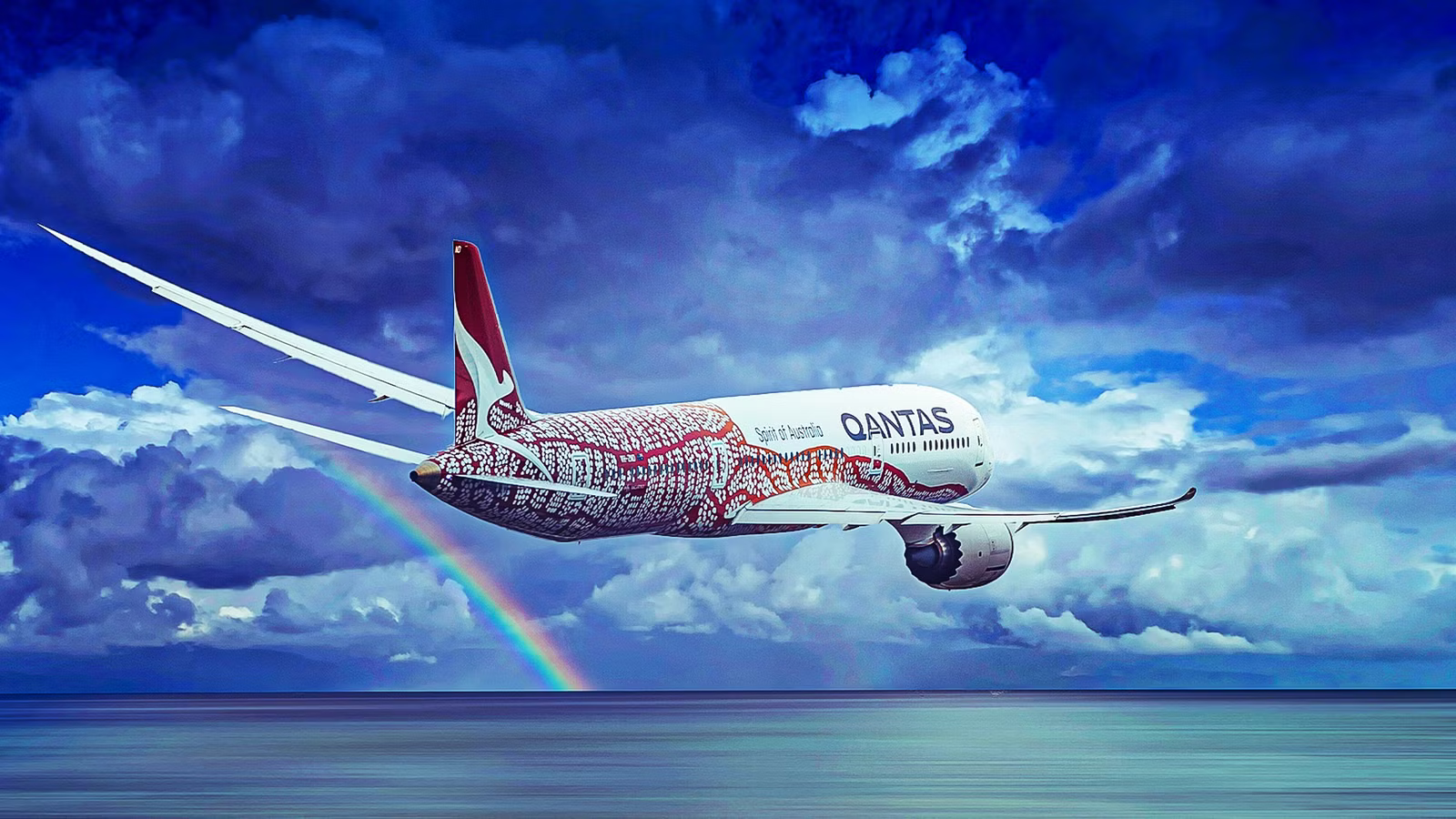
Qantas has spent decades using major Asian gateways such as Singapore Changi Airport (SIN) and  Hong Kong International Airport (HKG) as important components of its international network. But the arrival of the Boeing 787-9 has changed the economics of how Australia’s flag carrier can reach the world, allowing it to operate long-haul services directly from Australia instead of relying as heavily on intermediate hubs.
The real story is not simply that Qantas is growing in India or restoring services to Japan. Instead, the airline is spreading its Asian network across several distinct demand pools, including India, Japan and Southeast Asia, while using smaller and more efficient twin-engine aircraft to connect those markets directly. Qantas’ latest fleet plans reinforce that strategy, with the airline describing its next-generation aircraft as the foundation for a more flexible network and planning to begin retiring its Airbus A380 fleet from 2028.
Why Is The Boeing 787-9 So Important To Qantas’ Asian Strategy?

The Boeing 787-9 has effectively allowed Qantas to think beyond the traditional Asian hub model. Instead of requiring large numbers of passengers to be consolidated through Singapore or Hong Kong, the aircraft’s range and economics allow Qantas to connect Australia directly with markets that can support long-haul demand on their own.
This is particularly important because Qantas has already demonstrated that its 787-9 operation can generate strong economics on long-haul point-to-point routes. In its FY2026 results, the airline said its long-haul 787-9 routes continued to deliver the strongest contribution margins in its international network. Qantas also said the next-generation fleet had produced the highest profitability and customer satisfaction of any aircraft type in its international operation.
That makes the Dreamliner a special tool for the network. Qantas currently operates 14 787-9s, and the airline has confirmed additional 787-9 deliveries from 2027 as part of its wider fleet transformation. The carrier says the next-generation fleet is intended to support a “right aircraft, right route” approach, allowing capacity to better match individual markets.
The significance becomes clearer when looking at India’s growing role. Qantas operates Sydney-Bengaluru, and from October 2026, it is scheduled to introduce a seasonal Melbourne-Delhi service. The airline’s current international network also includes direct services between Australia and Tokyo, Hong Kong, and Singapore, showing the strategy is not about abandoning established Asian gateways overnight but about making them less indispensable.
What Is Driving Qantas Away From The Traditional Asian Hub Model?

The biggest change is that Qantas no longer needs to concentrate all of its Asian exposure around a handful of transfer points. Historically, hubs such as Singapore were valuable because a large aircraft could bring Australian passengers into Southeast Asia and then distribute them across a much broader regional network.
The economics of that model become less attractive when a carrier can instead deploy a smaller widebody aircraft directly between two cities. The 787-9 provides sufficient range for long-haul markets while carrying substantially fewer passengers than an A380, making it easier to launch routes without requiring enormous volumes of connecting traffic.
Different Network Strategies For Different Aircraft
Qantas’ Network Strategy | Traditional Hub Model (For A380) | Point-to-Point Model (For 787) |
Main purpose | Consolidate connecting traffic | Connect individual markets directly |
Aircraft philosophy | High-capacity widebodies | Smaller, efficient twin-engine aircraft |
Key gateways | Singapore/Hong Kong | Bengaluru, Delhi, Tokyo, and others |
Demand requirement | Large connecting flows | Stronger local demand |
Network flexibility | More dependent on hubs | Easier aircraft redeployment |
Strategic benefit | Scale through connections | Direct access to premium markets |
Singapore illustrates the transition particularly well. Jetstar Asia, the Qantas Group’s Singapore-based low-cost carrier, permanently ceased operations on July 31, 2025. Jetstar Asia ceased operations due to rising costs and increasing competition in the region, although Jetstar Airways continues to operate routes between Australia and Southeast Asia.
This means Qantas is not abandoning Singapore: its mainline network continues to connect Singapore with Sydney, Melbourne, Brisbane and Perth, while Singapore remains important to the carrier’s broader European network. But closing Jetstar Asia means the group no longer needs to maintain the same Singapore-based low-cost regional structure it once operated.
How Are India And Japan Replacing The Need For More Hub Connectivity?

India may be the clearest example of what the 787-era strategy makes possible. Rather than routing Australian travelers to India through Singapore or another Asian gateway, Qantas can sell a direct Sydney-Bengaluru itinerary. The airline is also adding a seasonal Melbourne-Delhi route beginning October 26, 2026, creating a second direct connection between Australia and one of India’s largest aviation markets.
The Bengaluru route is particularly important because it targets a market where business, technology and corporate links create demand beyond conventional leisure traffic. A direct service also allows Qantas to attract premium passengers rather than handing part of the journey to another airline operating through an Asian hub.
Japan provides a different version of the same strategy. Qantas operates daily services between Australia and Tokyo, with flights using both  Tokyo Haneda Airport(HND) and
  Tokyo Narita Airport (NRT), while its relationship with Jetstar Japan has historically allowed passengers to connect onward to destinations including Osaka, Sapporo, Fukuoka and Okinawa. Qantas’ own website says customers can connect from its Australian services to multiple Japanese destinations through codeshare flights operated by Jetstar Japan.
That arrangement gives Qantas many of the commercial benefits of a hub without requiring Qantas itself to operate a large fleet of aircraft throughout Japan. The airline can put the long-haul capacity where it believes demand is strongest and rely on partners for onward distribution.
The strategy is also evolving structurally. In 2026, Qantas agreed to sell its 33.32% stake in Jetstar Japan through a share buyback, a transaction designed to shift the Japanese low-cost carrier toward Japanese ownership while allowing Qantas to concentrate capital on its core Australian operations. Importantly, Qantas said its Australia-Japan services and codeshare arrangements would not be affected.
Catch what other flight trackers miss
Emergency squawks, holds, NOTAMs — live signals, no signup.
Open tracker
Catch what other flight trackers miss
Emergency squawks, holds, NOTAMs — live signals, no signup.
Open tracker
Is The 787-9 Really Better Than The A380 For This Strategy?

The A380 still has one enormous advantage: capacity. When Qantas needs to move very large numbers of passengers between major cities, a superjumbo can provide enormous seat capacity while concentrating operations on relatively few flights.
But that advantage can become a disadvantage when demand is uneven. An airline does not need 400-plus seats on every Asian route, every day of the year. A 787-9 gives Qantas more opportunities to match capacity with demand and potentially operate a route profitably without filling an A380.
Qantas’ fleet strategy makes this shift explicit. The airline says its A380 fleet will begin retiring from calendar year 2028, as the aging aircraft can’t remain in service indefinitely. Qantas attributes the decision partly to increasing operating and maintenance costs as the global A380 fleet ages and the aircraft is no longer in production. The airline also says additional 787-9 deliveries and Project Sunrise aircraft will preserve network reach as the A380s disappear.
Qantas Fleet Role
Aircraft | Role In Qantas’ Future Network | Strategic Advantage |
Boeing 787-9 | Long-haul point-to-point | Flexibility and strong route economics |
Boeing 787-10 | Medium/long-haul high-density markets | More capacity than 787-9 |
Airbus A350-1000ULR | Project Sunrise | Ultra-long-haul nonstop routes |
Airbus A380 | Gradually retiring | Very high capacity on trunk routes |
Airbus A330 | Gradually retiring | Legacy international capacity |
The 787-9 sits in a particularly important position. It is not as large as an A380 and cannot match the range of the future A350-1000ULR on the most extreme Project Sunrise missions. But it occupies the middle ground that Qantas needs: enough range for long-haul flying, enough capacity for premium-heavy markets and enough flexibility to move between routes.
Qantas’ FY2026 results underline that point. The airline said its long-haul point-to-point 787-9 routes continued to have the strongest contribution margins in its network, while the aircraft also delivered significantly higher customer satisfaction than the rest of its widebody fleet.
Could Hong Kong And Singapore Still Matter To Qantas?

Absolutely. The biggest risk in describing Qantas’ strategy as a complete withdrawal from Hong Kong and Singapore is that both markets remain firmly on the airline’s network map. Qantas currently lists Sydney and Melbourne services to Hong Kong, while Singapore continues to be served from Sydney, Melbourne, Brisbane and Perth.
The difference is that these cities no longer have to carry the same strategic weight. Qantas can retain direct services where the local market works while simultaneously expanding elsewhere. This is considerably less risky than betting the entire Asian network on one or two transfer hubs.
Hong Kong is a good example. It remains an important financial and commercial center, but Qantas’ network does not need Hong Kong to provide access to every other Asian market. Instead, the airline can connect Australia directly to India, Japan, Southeast Asia, and other destinations, allowing Hong Kong to compete for traffic on its own merits.
Singapore remains even more structurally important because it sits on the traditional Australia-Europe corridor. Qantas continues to use Singapore as a hub for flights to London, and its international network still includes numerous routes through Singapore.
The closure of Jetstar Asia should not be interpreted as Qantas giving up on Singapore. Rather, it demonstrates how the group is becoming more selective about where it commits capital and operating complexity. That flexibility is precisely where the 787-9 earns its strategic value. If one Asian market weakens, Qantas has a smaller, more efficient widebody it can potentially shift elsewhere without the enormous capacity commitment associated with an A380.
What Does The 787-9 Mean For Qantas’ Future Asian Network?

The main point is that the Boeing 787-9 is helping Qantas replace a network built around concentration with one built around optionality. India, Japan and selected Southeast Asian markets can each be evaluated independently instead of being treated primarily as destinations reached through Singapore or Hong Kong.
This is particularly significant because Qantas is simultaneously moving toward an even more ambitious point-to-point future. Project Sunrise will introduce Airbus A350-1000ULRs from 2027 for nonstop Sydney-London and Sydney-New York services, while additional 787-9 aircraft will strengthen the carrier’s conventional long-haul network. Qantas expects around 70% of its available seat-kilometers to be operated by next-generation aircraft by FY2031.
The result is a layered network. The 787-9 handles long-haul markets where nonstop service can generate attractive returns; the Airbus A350-1000ULR will tackle the world’s most demanding ultra-long-haul routes; and partners can provide onward connectivity where Qantas does not need to operate its own aircraft.
That is why Qantas’ future in Asia is not really about walking away from Singapore or Hong Kong. It is about making sure the airline no longer needs either city to make the rest of its Asian network possible.
The 787-9 has given Qantas something the A380 could never provide at the same scale: the ability to serve a diverse set of markets with aircraft sized to individual demand pools. Bengaluru can be a destination in its own right; Delhi can receive seasonal capacity; Tokyo can combine Qantas’ own flights with partner connectivity; and Singapore and Hong Kong remain available when their local economics justify continued flying.
In other words, Qantas is not abandoning the Asian hub model overnight. It is making the model optional. And as more 787-9s arrive and A380s disappear from 2028 onward, that distinction could become one of the defining features of the airline’s international network.
Catch what other trackers miss
Emergency squawks, holds, NOTAMs — live signals, no signup.
Open tracker
Catch what other trackers miss
Emergency squawks, holds, NOTAMs — live signals, no signup.
Open tracker