dailynewsnblog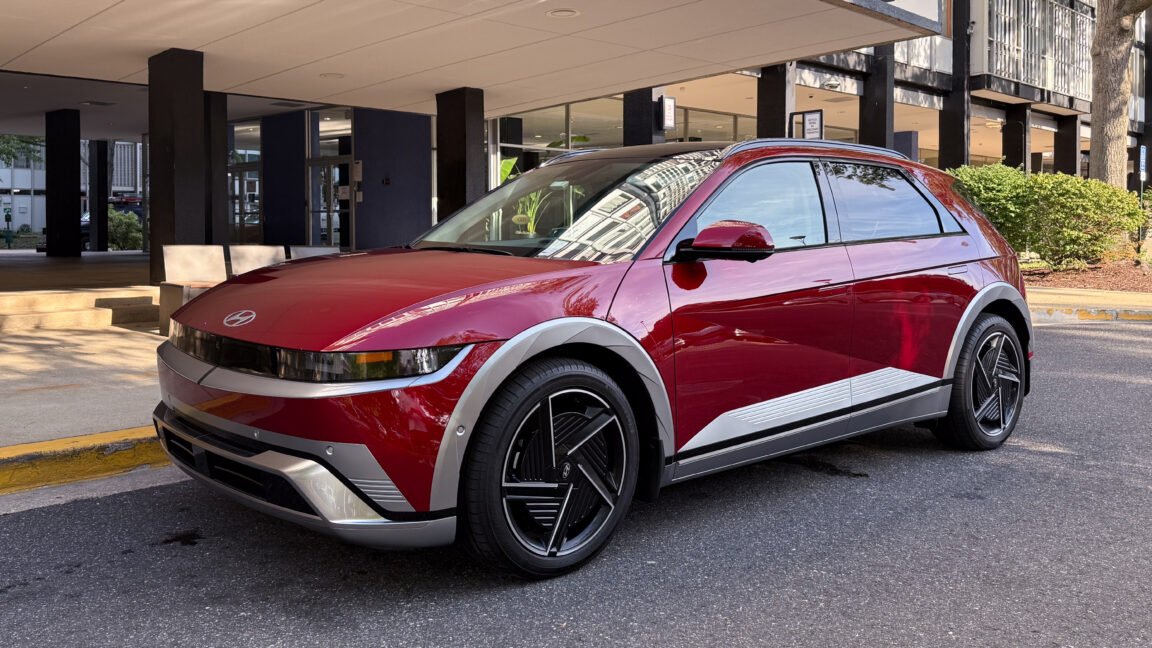
When we first drove the Hyundai Ioniq 5 at the end of 2021, it didn’t take much exposure to the angular electric vehicle to find much about it appealing. Back then, an 800 V architecture had only really been seen in expensive high-end EVs from Porsche, but here was a mainstream model with that same technology—and even faster fast-charging, taking just 18 minutes to go from 10–80 percent. The retro looks didn’t hurt either, channeling the boxy hatches styled by Giorgetto Giugiaro in the 1970s and ’80s. But five years is a long time in the car world, and the compact electric crossover segment is far more competitive than it was when the Ioniq 5 debuted. We figured it was worth spending some more time with one to see how it still stacks up.
Although the Ioniq 5 range starts at $35,000 for the standard range model, our test car was a 2026 Ioniq 5 AWD Limited, which has an 84 kWh battery pack—part of the lifecycle refresh in early 2025 that also swapped in a NACS (J3400) charge port in place of the CCS1 port you’d find on earlier cars. Among the other additions that arrived as part of the 2025 refresh was a rear windshield wiper, which was sorely needed at launch.
This range-topping trim starts at $45,075, with an extra $3,900 for the addition of the front electric motor that gives the AWD version a combined output of 320 hp (239 kW) and 446 lb-ft (605 Nm). The added traction of AWD (when you have grip) is desired by many, but you do trade something for it: efficiency. The AWD version has an EPA range of 269 miles (432 km) versus 318 miles (512 km) for the rear-wheel drive variant.
Jonathan Gitlin
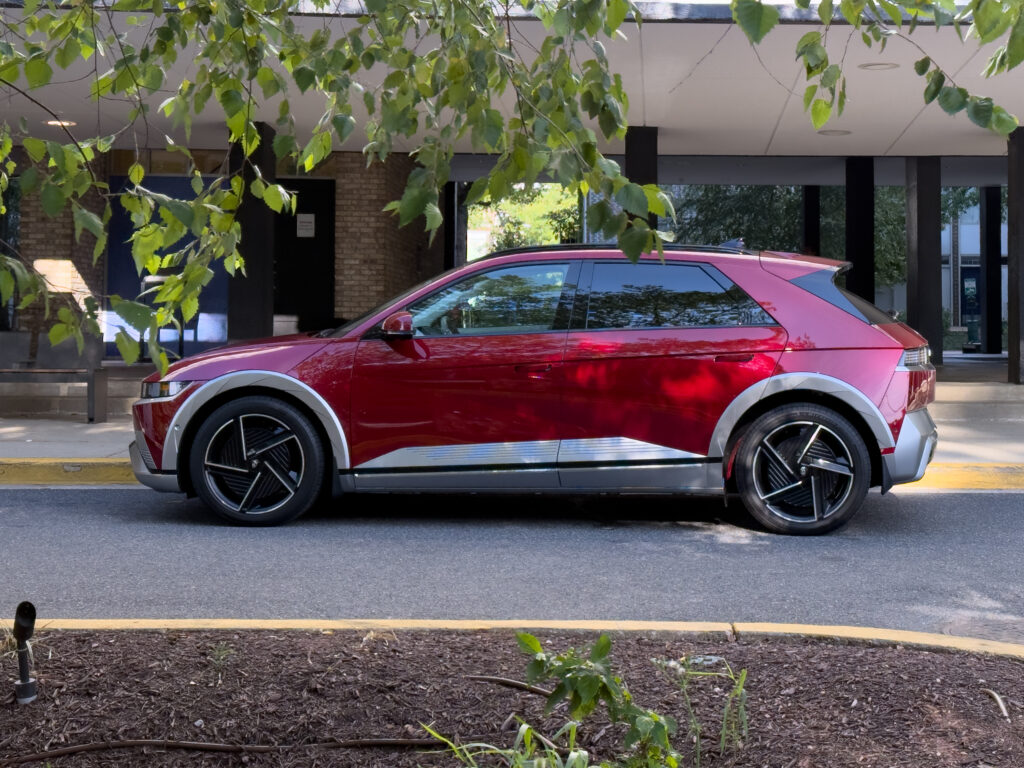
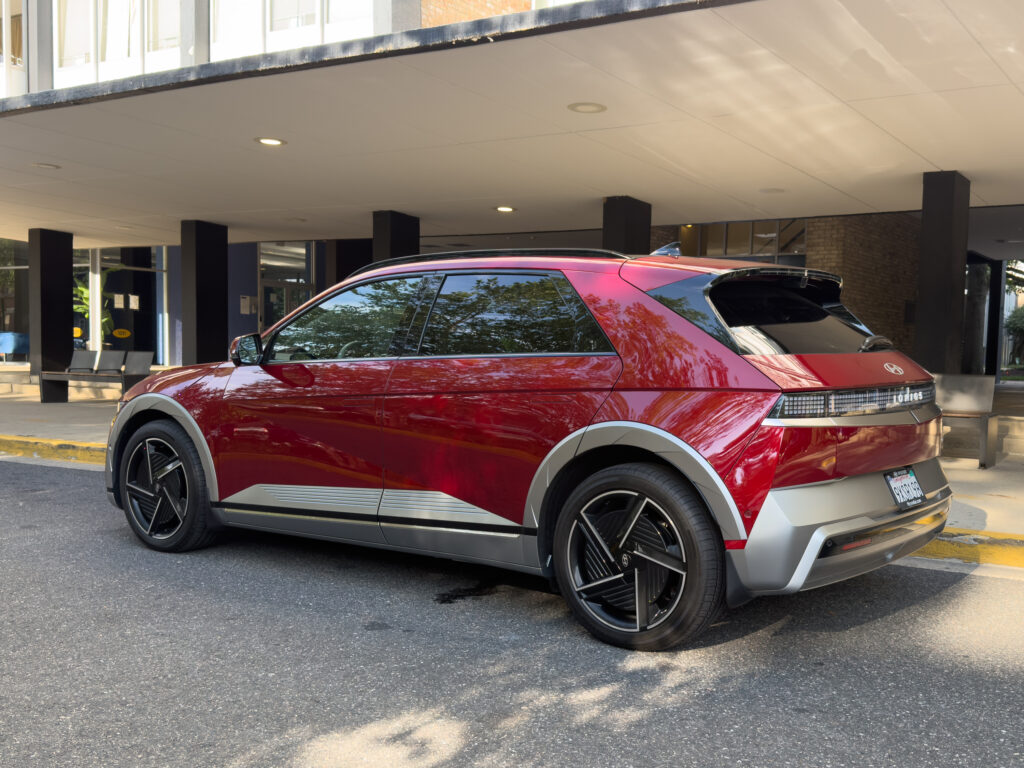
The “Ultimate Red” paint is a $500 option I might eschew.
Jonathan Gitlin
Jonathan Gitlin
The shape still looks fresh in 2026
Jonathan Gitlin
The “Ultimate Red” paint is a $500 option I might eschew.
Jonathan Gitlin
The shape still looks fresh in 2026
Jonathan Gitlin
Single-motor Ioniq 5s should easily be capable of 4 miles/kWh (15.5 kWh/100 km) or more. But with both axles powered, even in Eco mode, you can expect closer to 3.4 miles/kWh (18.3 kWh/100 km). Having 49 miles (79 km) more range would, of course, mean a little longer behind the wheel between charging stops, should one happen to be on a road trip or dependent upon public fast-chargers, but even with a larger pack, the 2026 Ioniq 5 still fast-charges plenty fast. The native NACS port means the Ioniq 5 can charge at Tesla Superchargers as well as other networks, like IONNA and Electrify America.