dailynewsnblog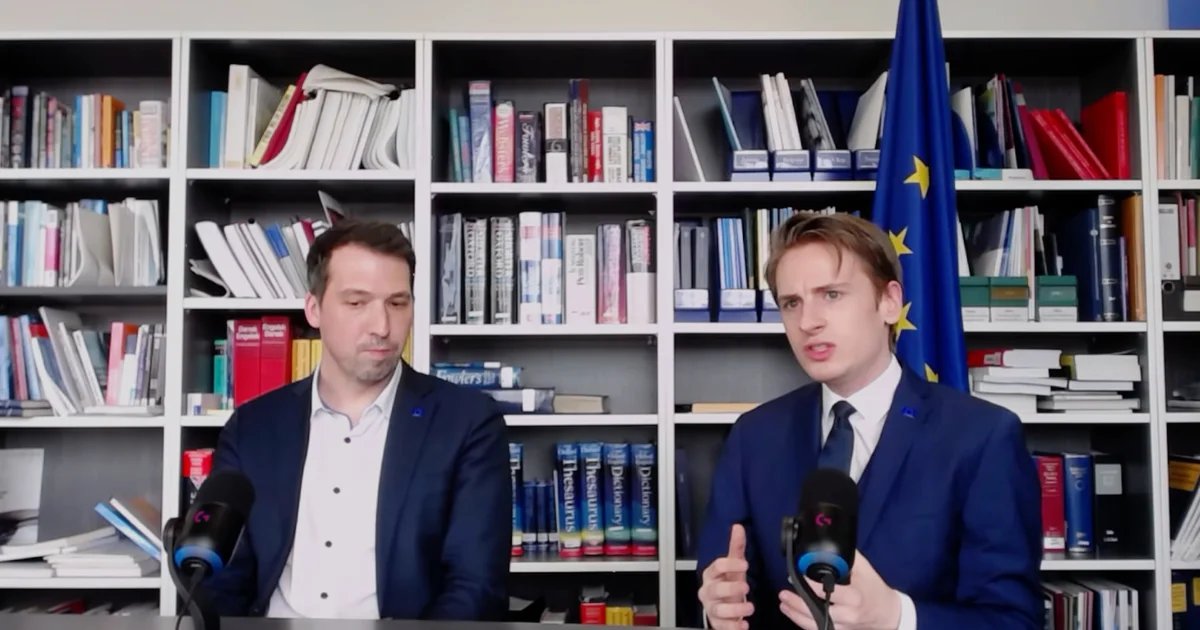
The European Commission proposed new rules around how under-15s access the likes of social media, AI chatbots, and online video games earlier this week. The draft legislation is called the EU Kids Act and calls for the setting up of a tiered system governing the types of accounts children under 15 can create to access such services, enforced by mandatory age verification for all users.
The documents laying out the proposal have been officially released, and based on the current wording the Commission have used to define what they class as an online game, it seems single player games that rely on online platforms like Steam for updates, distribution, or even a one-time authentication could be caught in the crossfire. That is, unless the definition is tightened up before the law is set in stone, if it indeed it makes it that far.
When the proposal originally leaked, prior to its official unveiling by European Commission president Ursula von der Leyen, reports suggested there was no detail as to how the body had defined the concept of “online games” – and by extension, which sorts of games would fall under the proposed regulations. Now it looks as if that definition is rather broad, as it stands.
For instance, in a press conference held by the Stop Killing Games campaign about the proposed act, European Pirate Party senior policy adviser Paul Diegel – who serves as an assistant to sitting European Parliament member Markéta Gregorová – noted that the current draft of the legislation would even see single player games affected “because they’re connected to Steam for updates”. Since the proposal docs are publicly available via the European Commission’s site, I’ve dug out the current version of the section on what is or isn’t an online game as far as the proposed act is concerned. It reads as follows:
Video games have become an important part of the digital environment in which minors participate and interact with others, in a playful, goal-oriented or entertaining manner. Certain video gaming platforms allow the dissemination and exchange of user-generated content to an indeterminate number of recipients of the service and the facilitation of contact between these recipients. Such online games fall within the definition of online platforms referred to in Regulation (EU) 2022/2065 and should be covered by the scope of this Regulation.
At the same time, some online games that do not allow the dissemination of information to an indeterminate number of recipients should also fall within the scope of this Regulation. This is the case of any game that can be played on a computer, a mobile device, or a games console, irrespective of whether the game underlying software is subsequently executed locally, remotely, such as by means of durable medium, and irrespective of whether the service is provided free of charge, against payment, or against hybrid remuneration involving in-service (or in-application) purchases.
Online games that are accessible or purchasable exclusively through physical media, without any online component enabling their access, distribution, or purchase, are not considered online games for the purposes of this Regulation. For the avoidance of doubt, where an online game also has certain features corresponding to a video sharing platform, it shall be considered an online game for the purpose of this Regulation.
If I’m reading that right, the sole exception in the current proposal applies to games that can only be bought or accessed physically, not via an online storefront like Steam. Even if the online element’s only being used to distribute the game and subsequently ship updates to it, it seems like it would fall under the purview of the regulation as it’s written at this stage, meaning it’d be subject to age verification.
It’s worth noting that the EU Kids Act is still just a proposal at the moment. Tightening up or refining definitions such as this one, so that the law only affects exactly the sorts of games it intends to, is something I’d peg as almost certain to happen as the pending legislation is revised and scrutinised as part of the EU’s lawmaking process. That means that if the Act does eventually end up being set into law, it could have a definition that only singles out specific types of online game that mirror social media, in the sense of connecting children to endless other players they can chat with or see the user-created content of.
For now, I’m gonna go and spend what remains of my Friday afternoon writing about a topic less heavy on legal jargon.