dailynewsnblog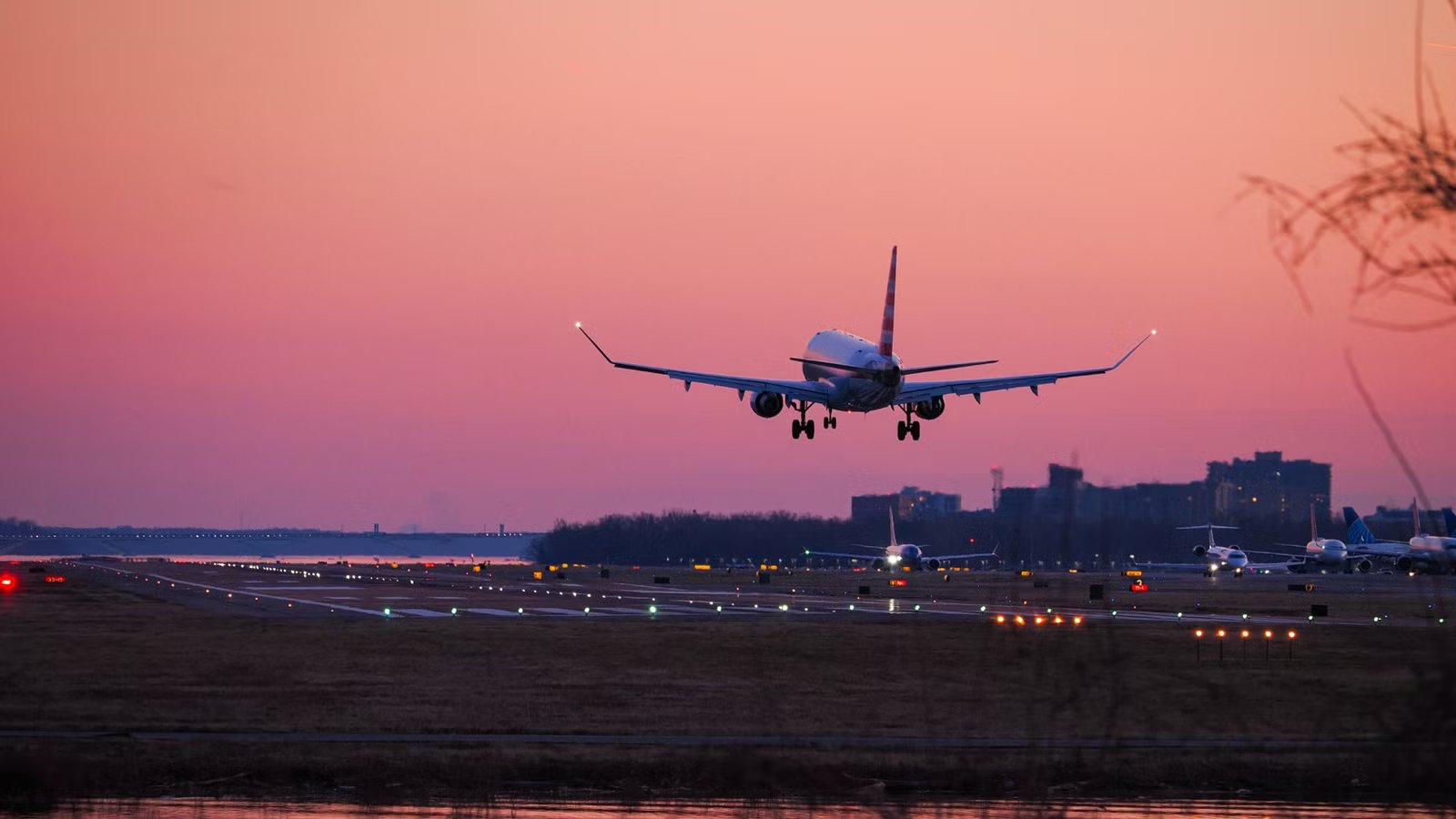
On Wednesday night, traffic was brought to a halt over  Ronald Reagan Washington National Airport (DCA) when a suspected drone sighting occurred near the massive hub’s airspace. All flights were stopped for 20 minutes and air traffic control broadcast a general alert to all pilots to look out for an unmanned aerial system over the airfield.
Airport staff searched for the drone but were unable to find it. DCA then notified local and federal authorities as well as the Federal Aviation Administration. If the perpetrator is apprehended by the FBI, the federal charges carry a penalty that can be as severe as a $100,000 fine and a year in jail.
Reagan National Airport’s Struggle

The incident on September 16 follows a long list of ‘near miss events’ in DCA’s skies and comes less than two years after the deadliest midair collision in US airspace in over 20 years. Every close call at DCA has drawn extra scrutiny. American Airlines Flight 5342 hit an Army Black Hawk helicopter in 2025 and killed 67 people aboard both aircraft. The investigation that the National Transportation Safety Board followed found 15,214 near misses going back to 2021.
CNN reports that Reagan National Airport has the busiest main runway of any airfield in America. Over 800 daily takeoffs and landings pass through DCA when it is operating at full capacity. Despite recommendations from the NTSB, alongside efforts from the FAA and Army, there continue to be incidents between jets and helicopters that are too close for comfort.
The additional threat posed by illegal drone flights adds yet another hazard for an airport that has a notorious reputation in the commercial aviation community for complex, congested, and risky airspace. One charter pilot said, “I saw a light that I thought might have been a drone.” Meanwhile, the pilot of an American Airlines regional jet was quoted by CNN:
“We saw, like, a drone or something that went flying by, probably halfway down the runway.”
DCA’s Airspace Overhaul And Flight Restrictions

In the aftermath of Flight 5342, the NTSB conducted a massive multi-month investigation. In its final reports, the NTSB identified profound systemic failures by the FAA and Army. Investigators revealed a historical lack of risk mitigation between 2018 and 2025 that allowed over 4,000 close encounters to happen where planes and helos flew as close as 0.19 miles (0.31 km) apart.
The NTSB explicitly ruled that the FAA’s design of Helicopter Route Four failed to provide adequate structural separation between jetliners and low-altitude military helos. In response, the FAA passed an Interim Final Rule that permanently bans non-essential helicopter operations from the immediate airspace surrounding DCA. It also permanently closed ‘Route Four’ which was the one flown by Priority Air Transport 25 when it collided with AA5342.
Despite these sweeping air management overhauls, the safety push is not considered finished. The NTSB recently classified the FAA’s response to roughly one-third of its recommendations as insufficient or unacceptable. NTSB Chairwoman Jennifer Homendy fiercely critiqued the FAA for failing to use its own safety data.
Pilots Bearing The Burden As The First Line Of Defense

Criticized by the NTSB for lacking safety data monitoring programs, the military responded with tighter technical requirements and flight limits for helos operating in the DC vicinity. The NTSB found ATC and helo pilots had lodged multiple official warnings about tight bottlenecks over the river, yet no timely corrections were made before the tragedy occurred.
The Army revised its policy to better align with the FAA and ordered all military aircraft to continuously use ADS-B Out broadcasting technology around DCA. The Army distributed upgraded ADS-B In hardware to local flight crews. Following another near-miss incident at DCA in May 2025, the Army temporarily suspended flights along the closest routes for review and reevaluation.
The Drone scare on Wednesday night set up similar conditions for a potentially tragic accident like the situation that led to AA5342. That collision occurred just00 feet (91.44 meters) in the air and roughly half a mile short of Runway 33. One of the core criticisms of the NTSB was dangerous reliance on the “see-and-avoid” principle in DCA airspace. Wednesday night proved that despite new airspace rules, pilots are still acting as the primary detection mechanism to keep the skies over DCA safe far too often.