dailynewsnblog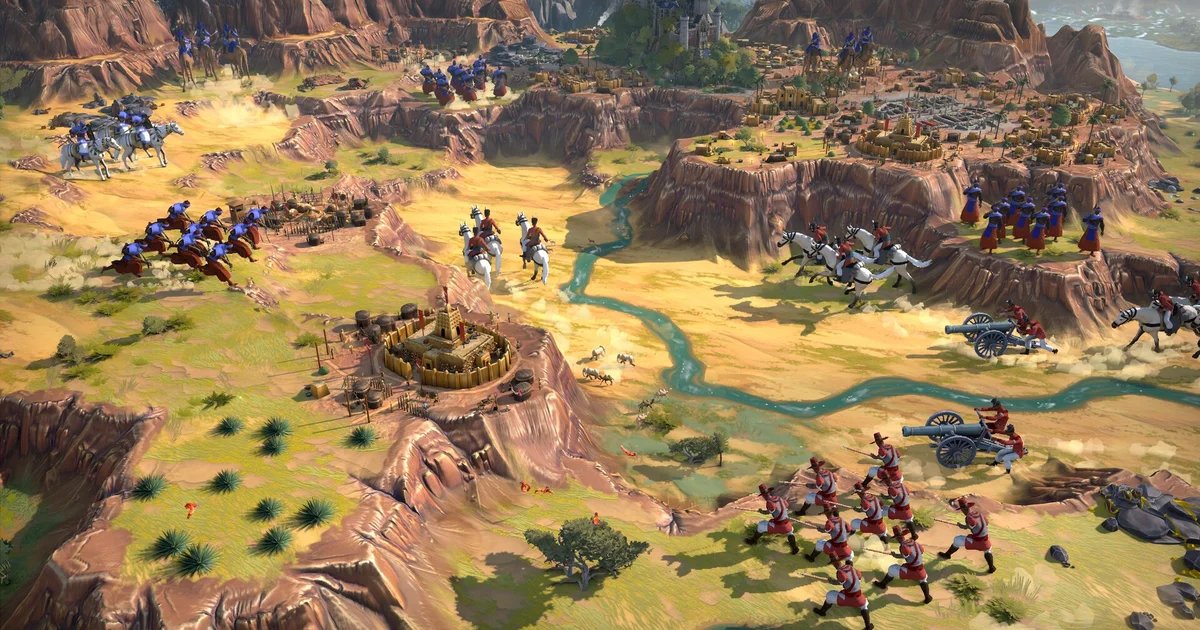
There is an issue in 4X games. In fact, it’s so persistent, that Amplitude Studios’ co-founder and CEO Romain de Waubert de Genlis describes it as an “inherent problem”, one his team have been attempting to solve since the first Endless Legend released back in 2014.
“One of the X’s, ‘explore’, disappears after a while,” de Waubert de Genlis explains. You’ve discovered the map for one thing, so there is no more world to uncover. But ‘explore’ can also refer to something more abstract, your strategy becomes fixed. Because you can see the lands, and you can see the resources, and you can see the enemies you face, you must decide on a course of action and there will rarely be much reason to change it.
But spotting the problematic ‘X’ is far simpler than fixing it.
De Waubert de Genlis points to the changing seasons in the original Endless Legend as their first attempt to solve the problem. In that strategy game, partially inspired by Game Of Thrones, progressively shrinking summers and lengthening brutal winters were designed to make long campaigns less static. “We’ve always had those changing maps or moments,” he says.
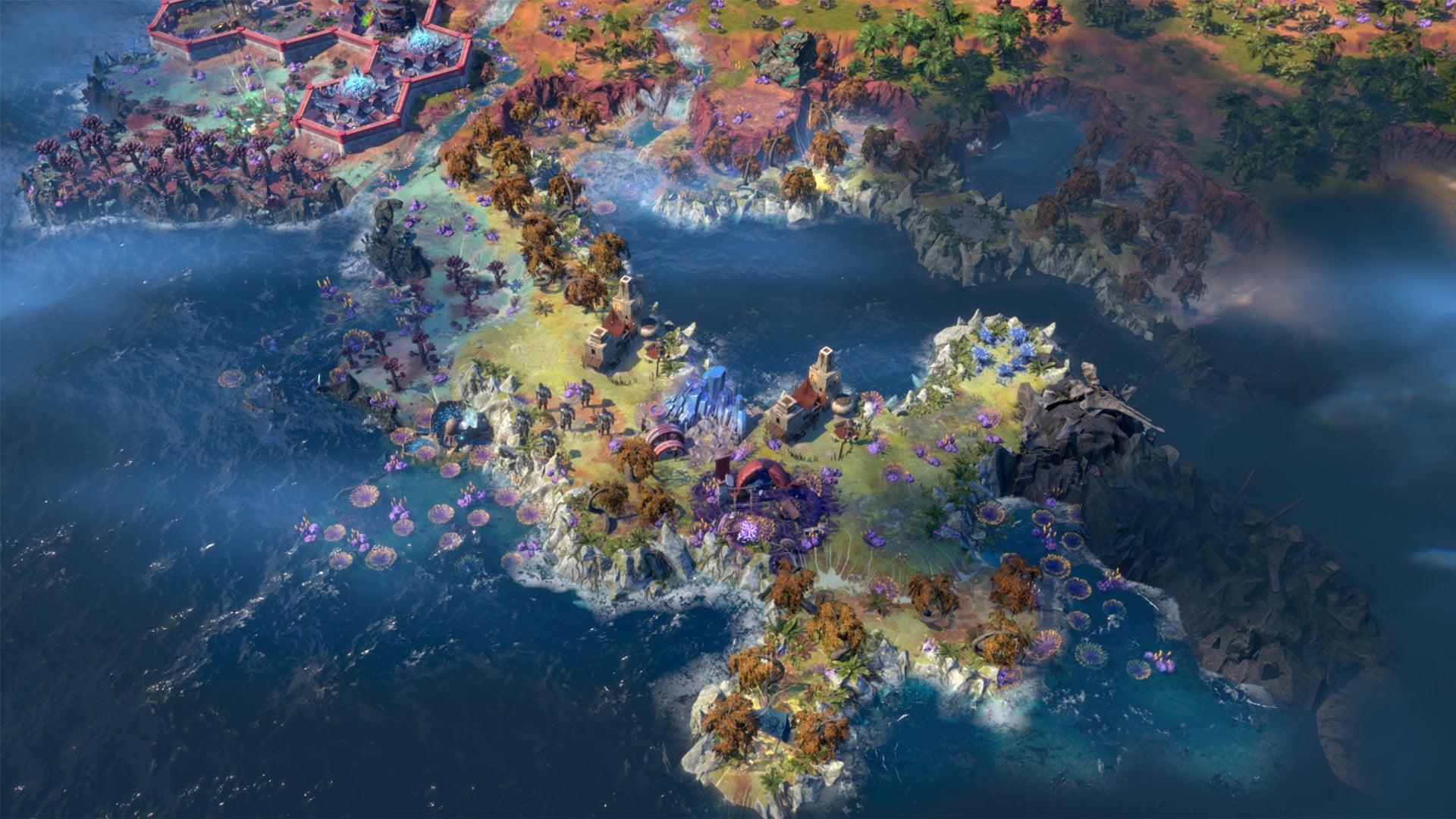
With Endless Legend 2, the change is more dramatic. Campaigns begin with different players on scattered islands. High seas keep the landmass small at first, but as the campaign’s turns pass the water will recede, revealing new territory to be claimed. By introducing new land, players can’t define their strategy for the entire game in its first turns. “It shuffles the cards again and again,” de Waubert de Genlis says.
As with other 4X games, each faction in Endless Legend has access to a sprawling tech tree, and a large part of the puzzle of each game is assessing the territory around you and choosing what to research first. Shrewd choices make for a strong economy, and a strong economy often leads to a whomping great army with which to meet your sniveling opponents. However, that emphasis on strong starts means some players will restart a campaign over and over until they roll a starting area that fits their strategy, rather than fitting their strategy to the starting area.
“We have a lot of players that start games over and over because they don’t like the beginning,” de Waubert de Genlis says. “We should look at the stats, but full playthrough is probably 5% of the games.” To compel players to stick around longer, Amplitude need to make players comfortable with imperfection. The first step is a tried and tested technique: “You need to be guaranteed of some balance in the initial [area] around you.” That means some good resources, but also never too many. If a player ever has a game when everything around them is, as de Waubert de Genlis puts it, “100% amazing or 100% really stupid”, then they will know extremes are possible and that encourages them to restart until they land on a good one.
The next, and this is specific to Endless Legend 2, is ensuring that when the waters recede, the land it reveals offers challenges and opportunities. As de Waubert de Genlis said when telling me about shifting attitudes to early access releases, “this was not perfect at the beginning” and has taken a lot of fine tuning with players. In the game’s initial launch, when new land appeared there was just too much of it, so it didn’t force conflict between players. Now there are more choke points around valuable resources. This, he says, is designed to create “More feeling of ‘I have to fight for that little piece of new land that just appeared'”.
In getting the balance of resources around the initial spawn point right, and by consistently proving campaigns throw up strategic challenges, de Waubert de Genlis believes Endless Legend 2 will persuade players to stick with a game for longer. “For me, that’s what makes a good player, being able to look around and say ‘Okay, shit, I have all that desert around me. How will I solve it?’,” de Waubert de Genlis continues. “To me, that’s the whole idea with 4X – We are creating a random puzzle, how will you solve it?”
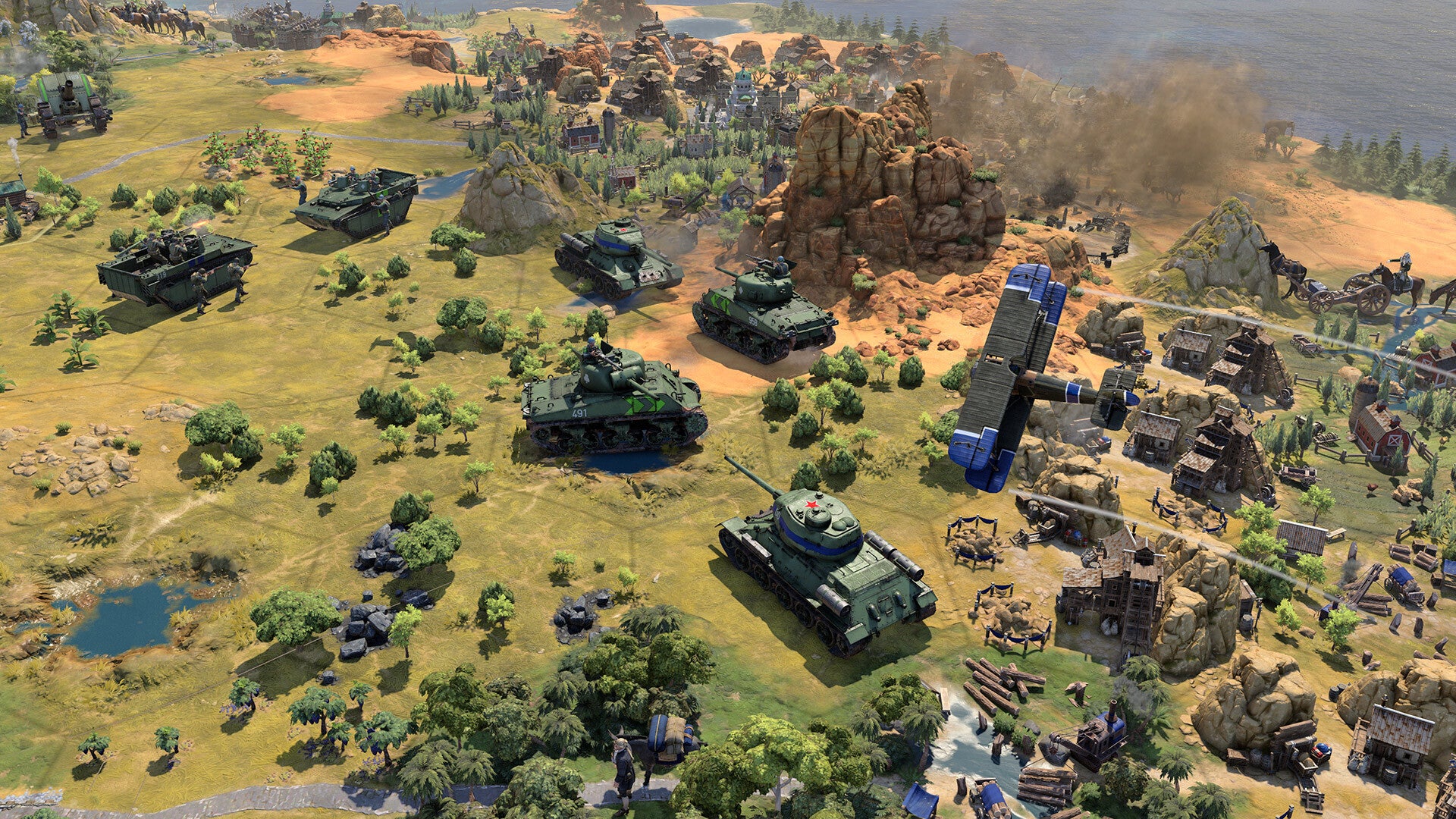
Back in 2024, I was talking to Firaxis about this exact same problem, and how they hoped to solve it for the then upcoming Civilization 7. “It’s tough to get through the whole game,” creative director Ed Beach told me at the time. “Our systems and the number of units and entities you have to manage explodes after a while.” To tackle that challenge, Beach and his team decided to break the campaign up into chapters and make it “more digestible”.
Instead of picking your nation and then playing it all the way from the start of human settlement through to the space age, you would play through an era of history until you hit a crisis point that marked the chapter’s end. Survive through that and you would progress into a new age, unlocking a suite of new technologies to research, and starting the journey towards a different crisis.
“We see a lot of players in Civilization 6, where they’ll constantly restart,” executive producer Dennis Shirk said. “They get to a point about midway through the game where they’re like, ‘I’m not going to win. I’m just gonna start over.'” Similar to how Amplitude use receding water to encourage players not to restart, because a tough situation isn’t necessarily forever, chapters are Firaxis’s way of saying “wait, we’ve got something cool that you could try first,” Shirk explained.
However, alongside the chapter breaks, Firaxis introduced a system that has proven unpopular. When players stepped into a new chapter they would select a new, successor civilization, playing the next chapter on the foundations of what they had built in the previous. Swapping nations meant players felt unconnected to the faction they eventually carried over the finish line of a campaign – like it wasn’t the one they had started with, all those turns before. Firaxis has spent the two years since Civilization 7’s release walking back those systems, allowing you to now take a single nation all the way from the start of the campaign through to its end.
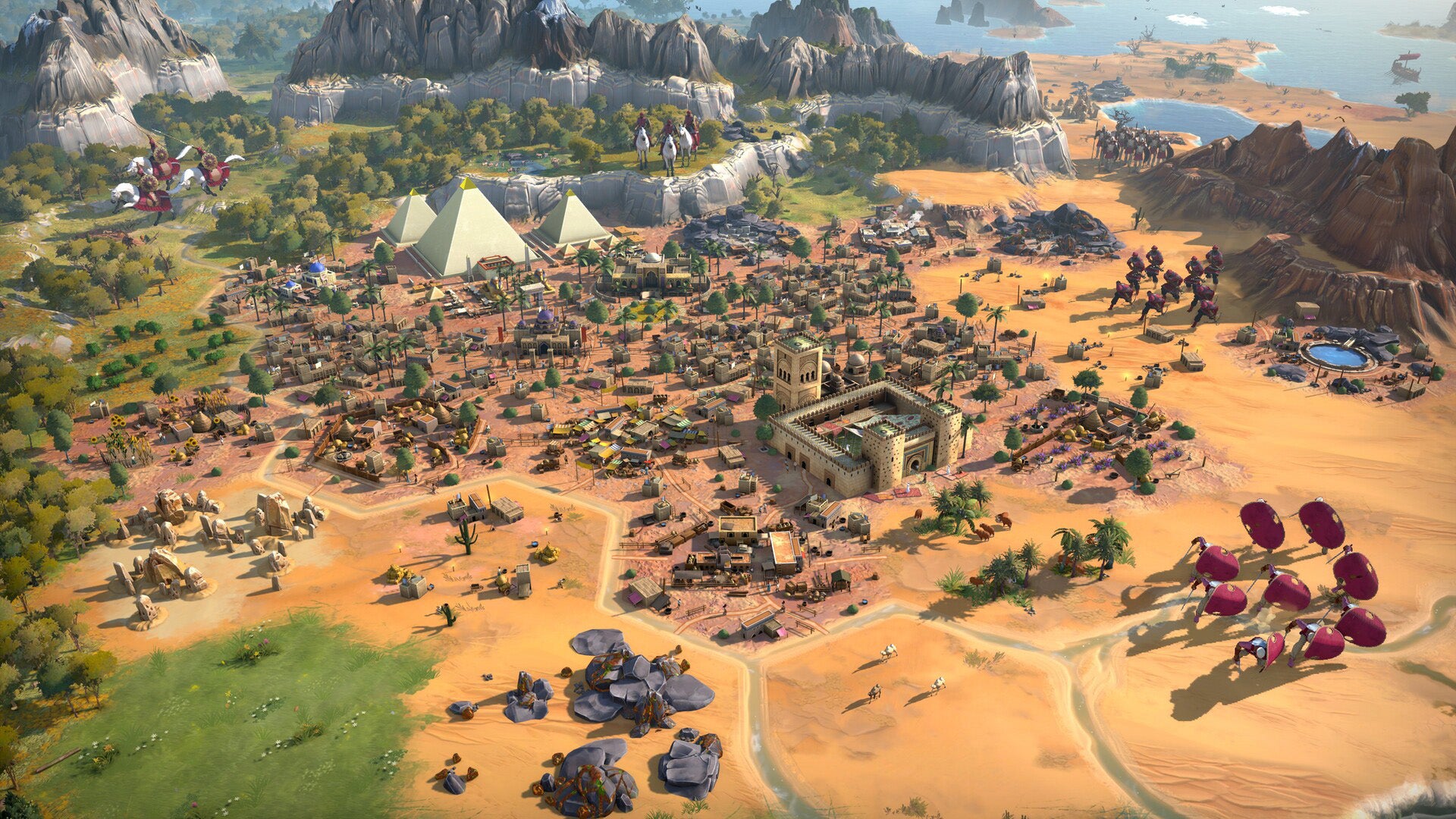

That problem of disconnection is one Amplitude are well aware of, as they’re currently working on their next 4X game Humankind 2. Similar to Civilization, it sees you pick a nation from history and carry it from early human settlement through to the space age. And, like Civilization 7 and the original Humankind, you will adopt different national cultures at key points in your campaign.
However, Humankind 2’s game director Benoit Humbert tells me he’s not concerned their game will receive the same reception as Civilization 7. In part because they’ve already been through it. “Players of Humankind told us that they had the feeling that they were switching from one culture to another and didn’t have the feeling that they were playing something evolving through time, so we changed that for Humankind 2.”
In Humankind 2, you don’t pick another nation to become, instead, Humbert says they’ve “made a system more like an RPG”. When you advance to a new age, you select cultural traits like skills from a skill tree. Humbert doesn’t go into specifics, but he says the main thing they’re aiming for is that players don’t feel like they’re switching between cultures but evolving a single nation – “you don’t leave something behind.”
All these systems – receding water, chapter breaks, evolving factions – get back to the “inherent problem” described by de Waubert de Genlis: how to refresh a 4X campaign as you play. “On the first Endless games we made, the main focus was to make a good solid classic 4X – ‘As it should be’,” de Waubert de Genlis says. “But of course we were not fixing that inherent problem you have of that mid to end game, which could be a bit flat, repetitive, not as exciting. So since Endless Space all our focus is on how we can renew that pleasure and keep the player excited until the last minute.”
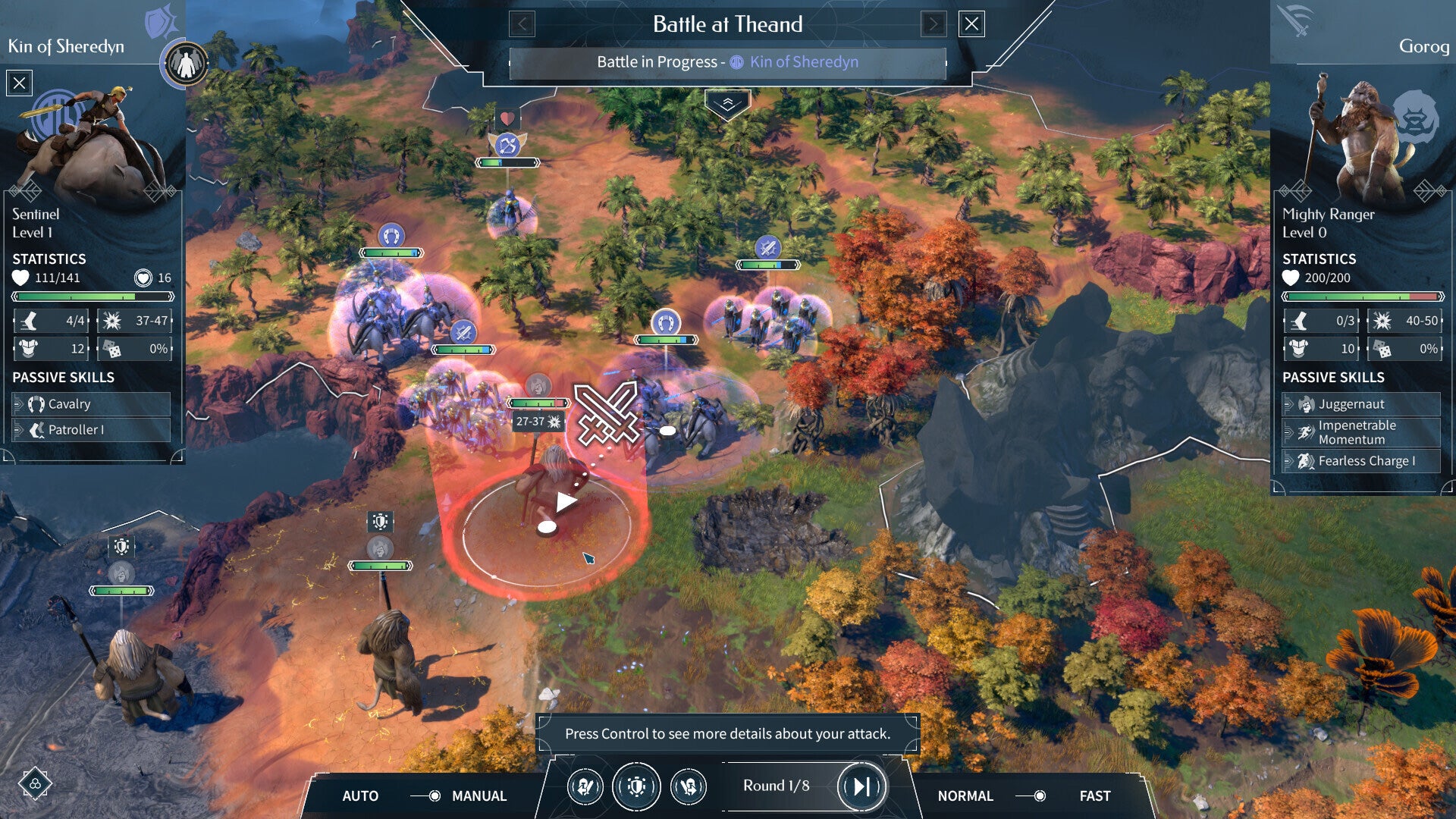
While Endless Legend 2, Humankind 2, and Civilization 7 are all 4X games that see you trying to take a faction through multiple phases of a campaign, there is a different inflection to those moments of transition that I find fascinating.
When the water recedes in Endless Legend 2, it is a universal moment of transition for all players that initiates a land grab. If you don’t move quickly, your opponent will seize the newly revealed resources that you desperately need. Similarly, when you enter a new chapter of Civilization 7, it happens for all players at the same moment. In that case, however, it’s less about having access to lands than bending your new faction to the old territory, with technologies such as sailing or oil drilling changing how you perceive a region. In Humankind 2, meanwhile, there is no universal moment. Instead, you can choose when to adopt new cultural traits. There is strategy in picking your moment; you can wait until an opponent has advanced, and then you can choose to pick a cultural evolution that counters their choice. Though, there is an advantage to being a first mover, as it may mean you can better exploit your territory than your less advanced rivals.
Will any of these games get more players to the end of the campaigns? Maybe. Maybe not. Still, as de Waubert de Genlis says, “It’s good to be able to have one genre yet very different gameplays, so you can always keep refreshing. [Otherwise], even for us, it wouldn’t be interesting”.
Accommodation and travel to Gamescom where the interviews with Amplitude were conducted was paid for by the conference organisers. The Firaxis interview was conducted in my flat over Google Meets for an article in The Guardian.