dailynewsnblog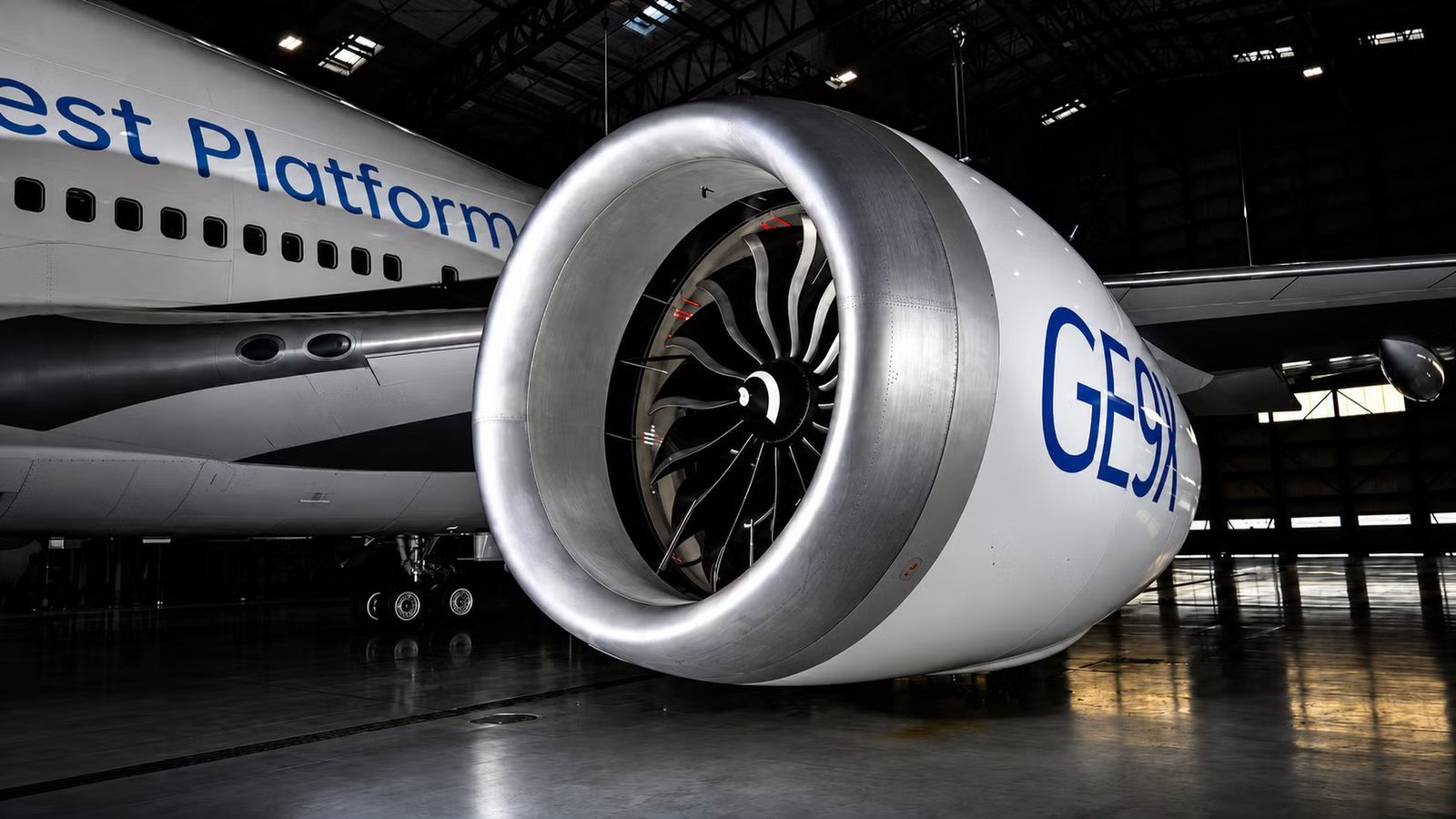
GE Aerospace says a durability problem affecting the GE9X engine should not push the already-delayed entry into service of the Boeing 777X beyond 2027. According to Investing.com, Chief Financial Officer Rahul Ghai said GE has a “huge degree of confidence” in a redesigned mid-seal following internal testing. Engines incorporating the new component began shipping to Boeing during the third quarter, with Federal Aviation Administration (FAA) approval of the modification expected within the next few months.
That reassurance matters for a program that has endured repeated schedule changes since the 777X first flew in January 2020.  Boeing now anticipates its first 777-9 delivery to
  Lufthansa in 2027, while Reuters reported earlier this year that the program is around six years behind schedule and has accumulated $15 billion in charges. Previous engine-related problems have also interrupted the aircraft’s development, making any new issue involving its sole-source GE9X powerplant particularly significant.
GE Says The Redesigned GE9X Seal Won’t Hold Up The 777X

The latest problem concerns the GE9X’s mid-seal, which Ghai described as the component connecting the engine’s front and rear sections. Testing found that the seal was not as durable as GE had expected. CEO Larry Culp said in April that GE had first identified the issue in January, when a crack was uncovered during a shop visit involving a 777X flight-test engine. GE subsequently identified the root cause, redesigned the component, and began preparing its production system for the modified part.
According to Reuters, the old and new seals are now following different certification paths. Ghai said the existing component remains usable for the 777X certification work currently underway, including approvals that Boeing needs before commencing ETOPS testing. Meanwhile, the redesigned seal intended for production aircraft is going through a separate FAA approval process. That means Boeing does not need to suspend its current certification campaign while waiting for approval of the new production configuration.
Date | GE9X Mid-Seal Development |
|---|---|
January 2026 | Crack discovered during a shop visit involving a flight-test engine. |
February 2026 | GE publicly discloses that it is studying a potential durability issue. |
April 2026 | GE says it has identified the root cause and is finalizing the modification. |
Q3 2026 | GE begins shipping GE9Xs incorporating the redesigned seal to Boeing. |
September 17, 2026 | CFO Rahul Ghai expresses a “huge degree of confidence” in the redesign. |
Next few months | GE expects FAA certification of the redesigned seal. |
2027 | Boeing continues to target first 777-9 delivery and service entry. |
GE’s position has therefore remained consistent as the year has progressed. In April, Culp said there was “no change to the schedule,” while noting that GE had more than 1,000 GE9Xs on order and was modifying tooling and ramping suppliers for the redesigned component.
Five months later, Ghai said that finished engines containing the new seal are reaching Boeing, although certification of that configuration remains outstanding.
“We understand the challenges, what happened with the first mid-seal. We developed a solution. We’ve tested that thoroughly internally, and we’ve been talking to the FAA about what that means. So we have a huge degree of confidence that our design will work. The confidence is so high that we’ve incorporated that design into everything that we are producing today. We started shipping those engines with the new and improved mid-seal to Boeing in the third quarter, and we’re going through the FAA certification process right now.”
What Is The GE9X Mid-Seal, And Why Does The Issue Matter?

While the seal is only one component, the engine surrounding it is central to the entire 777X program. The GE9X is the exclusive powerplant for the 777X family, leaving Boeing without an alternative engine supplier should development problems emerge. The engine itself received FAA certification in September 2020, and features a 134-inch (3.40-meter) fan with only 16 carbon-fiber composite blades and a 27:1 high-pressure compressor ratio.
Its scale is equally striking. The GE9X is in the 100,000-pound-thrust class and produced 134,300 pounds of thrust during a 2017 engineering test, setting a Guinness World Records mark for a commercial aircraft jet engine. GE has incorporated technologies including ceramic-matrix composites, additive-manufactured components, and a composite fan system as it seeks to meet the 777X’s enormous thrust requirements while reducing fuel consumption.
GE9X Characteristics | Detail |
|---|---|
Aircraft family | Boeing 777X |
Engine supplier | GE Aerospace — sole source |
Fan diameter | 134 inches (3.40 meters) |
Fan blades | 16 carbon-fiber composite blades |
Thrust class | 100,000+ lb |
Record test thrust | 134,300 lb |
High-pressure compressor ratio | 27:1 |
FAA engine certification | September 28, 2020 |
Engines on order | More than 1,000 |
Durability has been a significant part of the GE9X development program from the outset. GE previously subjected the engine to dust-ingestion testing designed to simulate operations in harsh environments, completing 1,600 test cycles before a teardown inspection. GE has therefore taken the current mid-seal issue very seriously, as it concerns a component GE expects to deliver a set level of durability for the GE9X’s operating life.
The 777X Still Has Plenty Of Certification Work Ahead

Removing the mid-seal issue as a potential schedule blocker does not mean the 777-9 is close to completing certification. Boeing said in July that its test fleet had accumulated more than 4,800 flight hours across roughly 1,700 flights, but had completed only about 50% of planned certification testing. The majority of Type Inspection Authorizations had been granted, although TIA 5 and the ETOPS-focused TIAs remained outstanding.
777-9 Certification Metric | Status In Boeing’s July 2026 Update |
|---|---|
Flight-test hours | 4,800+ |
Test flights | ~1,700 |
Planned certification testing | ~50% complete |
Type Inspection Authorizations | Majority granted |
Major TIAs remaining | TIA 5 and ETOPS-focused TIAs |
Full-scale fatigue testing | More than one aircraft lifetime completed |
Major upcoming activity | Approval for ETOPS demonstrations |
First delivery | Anticipated in 2027 |
ETOPS is particularly relevant to the latest engine development. Boeing specifically identified approval to begin ETOPS demonstrations as one of the key remaining certification steps, while Ghai says the existing GE9X mid-seal is suitable for the certification work necessary to reach that stage. Boeing has also completed the first flight of Lufthansa’s first production 777-9, which carries a fully outfitted customer cabin and will participate in additional certification and systems testing.
The stakes remain considerable. Boeing says customers have ordered more than 620 777X-family aircraft, while years of delays have already forced airlines to adjust fleet plans and retain older widebodies for longer. Fortunately, the mid-seal issue now seems increasingly likely to be resolved within the existing 2027 timetable, rather than becoming another event that resets it. For the 777X, however, significant FAA certification work still separates today’s test aircraft from carrying paying passengers.