dailynewsnblog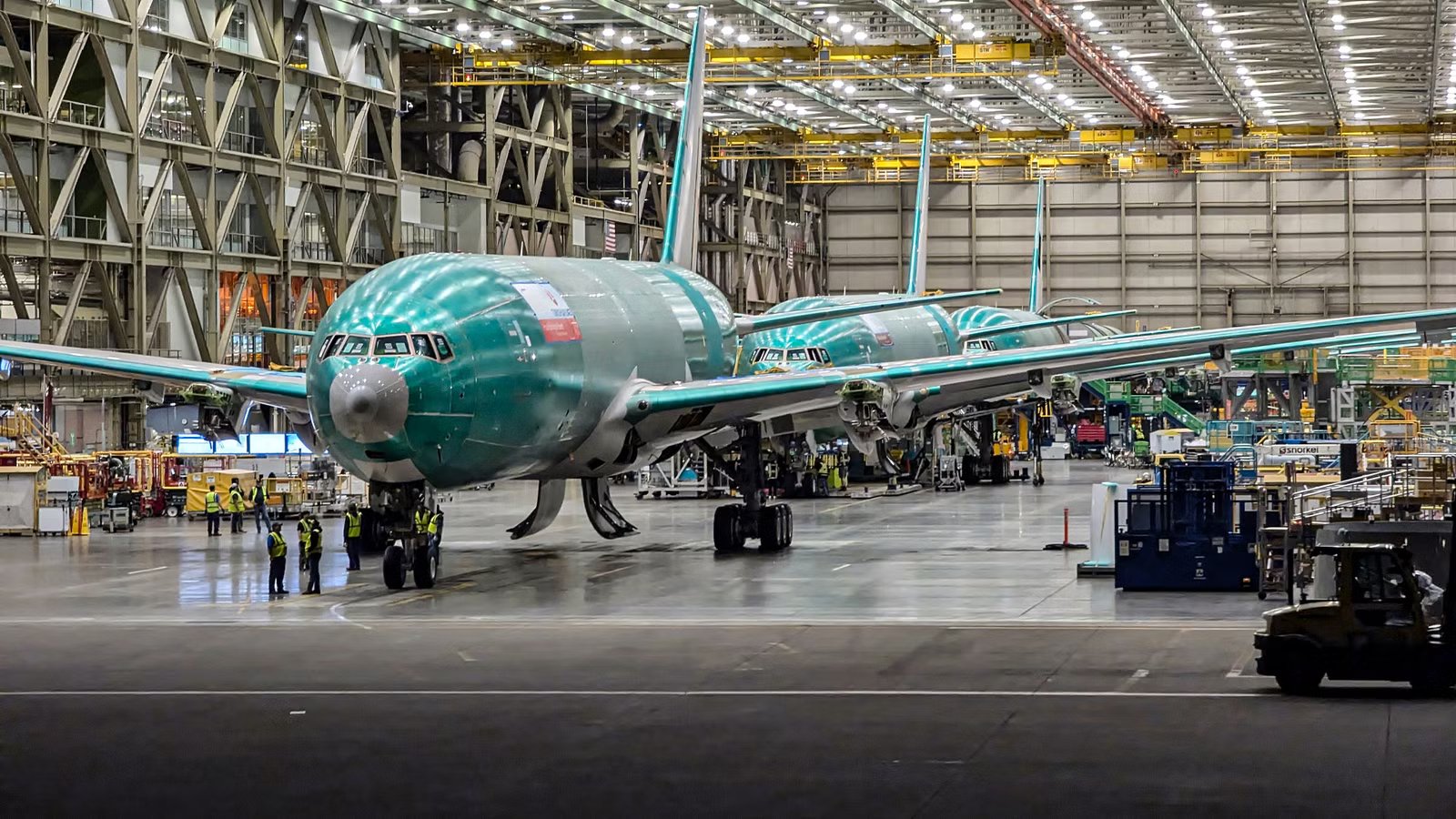
Commercial airliners rarely face a scrap heap before taking their first commercial flight, with the Boeing 777X becoming the latest exception to this rule. It is quite incredible to see a new widebody airliner carrying full airline livery sit dormant for six years before workers unbolted its components and sliced its fuselage into scrap aluminum. Rather than continuing with a standard delivery, the aircraft manufacturer destroyed an uncertified twinjet after determining that modifying the airframe to meet current safety standards would cost significantly more than building an entirely new jet.
This quiet destruction of a Boeing 777-9 epitomizes an unprecedented operational crisis in commercial aviation. Launch customer  Emirates has publicly refused delivery of its first ten early-build jets, while
  Lufthansa executives actively negotiate financial compensation for delayed deliveries. With carriers like
  United Airlines evaluating whether acquiring these orphaned airframes could shortcut delivery backlogs, the industry cannot avoid the reality that an airframe built for long-haul flagship service became an asset worth more than recycled scrap.
An Unavoidable Reality

The destruction of airframe WH007, line number 1611, stems almost directly from the Aircraft Certification Reform and Accountability Act passed by the United States Congress. Federal regulators instituted stringent Type Inspection Authorization requirements by removing delegated oversight authority previously granted to manufacturer engineers. As a result, six years of delayed flight testing led to mandatory engineering retrofits. For early 777-9 airframes built concurrently before final certification, this backlog rendered structural modifications technically prohibitive.
Rolled out in July 2019, line number 1611 endured six years of static storage, resting on concrete wing weights without its engines attached. When a severe thrust link failure halted testing in August 2024, structural redesigns had to be added across the 134,300 pound-force (597 kilonewtons) GE9X powerplant mounts. Stripping down composite wings and reinforced fuselage fittings to apply these structural fixes led to thousands of labor hours, destroying the financial viability of retrofitting early production frames.
This degradation exposed the ultimate flaw of concurrent manufacturing. As engineers generated thousands of individual modification tags across 30 to 40 stored 777-9 airframes, the cost of change incorporation surpassed the airframe’s residual value. Scrapping line number 1611 was unavoidable considering the $15 billion in cumulative program charges as a result of yearly delays. From an airline perspective, this write-down immediately pushed launch customers to evaluate their contractual exposure to stored inventory.
Emirates Took A Firm Stance

Contractual clauses on late deliveries enabled launch customer Emirates to refuse the initial ten 777-9 airframes built for its long-haul fleet. With an expansive order book for 270 of the widebody twinjets, carrier executives drew a firm line against accepting aircraft manufactured between 2019 and 2021. After seven years of static storage, these early airframes present an unacceptable operational risk, shifting the financial burden of uncertified inventory directly back to the manufacturer.
Addressing industry leaders at the Farnborough International Airshow 2026, Emirates President Sir Tim Clark stated, “We’re not taking that batch and that’s it,” suggesting the outdated jets are only suitable for “baked bean cans.” As well as structural modifications, the interior cabins feature obsolete 2019 inflight entertainment systems, older wiring harnesses, and outdated seat tracks.
With interior retrofits requiring complete cabin tear-outs alongside structural wing and pylon modifications, Everett mechanics now have to expend thousands of non-standard labor hours per airframe. Secondary market buyers refuse to absorb these modification expenses, so uncertified widebodies remain stranded on storage ramps, accumulating ongoing carrying costs while consuming critical maintenance resources.
A Second Rejection

German flag carrier Lufthansa has not issued an outright rejection yet. Chief Executive Officer Carsten Spohr confirmed that the airline is negotiating with executives to reject select early-build 777-9 units while demanding substantial financial compensation for accepting others, as per Aviation Week. To protect its long-haul schedule until a revised Q1 2027 delivery window, the European airline extended the operational life of its four-engine Airbus A340-300 fleet.
The standoff somewhat mirrors the early production crisis of the Boeing 787, where early airframes known as the ‘Terrible Teens’ accumulated years of storage. Those early 787 airframes suffered structural weight penalties and needed extensive modifications before finding buyers at steep discounts. Similarly, the early 777-9 batch carries thousands of pounds of extra structural reinforcement, making these twinjets permanently heavier and less fuel-efficient than standard production aircraft.
Accounting rules require stored inventory to be written down if expected selling prices fall below actual production costs, which is terrible news for a program that has seen costs spiral out of control. Now that major launch carriers are rejecting heavy early airframes, the manufacturer faces another wave of write-downs, leaving these stranded twinjets available at deep discounts to any operator willing to accept them. So are there any airlines actually interested?
No Interest From United

United Airlines was heavily linked to acquiring these rejected early-build 777-9s at steep discounts to bypass massive delivery backlogs for long-haul aircraft, though the airline later confirmed it had no desire to do so. Expanding international routes needs immediate widebody capacity that current production queues cannot deliver until late in the decade. Acquiring orphaned 777-9s at bottom-dollar prices is a fleet shortcut, allowing an ambitious carrier to capture international passenger demand while competitors wait six to eight years for factory-new aircraft deliveries.
However, accepting these discounted twinjets comes with long-term operational penalties over a 20-year lifespan. Increased Operating Empty Weight (OEW) raises fuel burn per flight hour, while unique wiring oddities create an isolated sub-fleet with higher maintenance overhead. Alternative conversion into cargo freighters is currently impossible because composite folding wingtip hydraulics and delicate passenger floor grid geometry cannot economically accommodate heavy main-deck freight doors or cargo floor beams without prohibitive structural redesign.
Cargo conversions offer no safety valve for residual value, so secondary sales fail to cover manufacturing costs. Selling orphaned airframes at fire-sale prices quickly brings with it massive accounting losses and ruins standard pricing models. As carrying costs mounted across storage ramps, executive leadership reached a tipping point where disassembly became the only viable option.
Taking Up Valuable Apron Space

Under Generally Accepted Accounting Principles (GAAP), inventory must be carried at a lower of cost or net realizable value. When cumulative modification expenses pushed projected production costs far beyond expected secondary market revenue, asset impairment rules led to an immediate balance-sheet write-down. Recognizing a total accounting loss on uncertified inventory allowed executive leadership to claim tax write-offs against current operating earnings, removing a non-performing asset from active capital records.
Apron logistics also massively constrained airfield operations across Everett. Storing dozens of massive twinjets with wingspans measuring 235 feet (71.6 meters) occupied critical flight line ramps, blocking daily delivery operations for active production aircraft. To clear high-value apron space, salvage crews stripped titanium wing fittings, flight control actuators, and uncertified landing gear sets for secondary parts inventory before feeding remaining airframe structures directly into industrial metal shredders.
Harvesting these high-value components brought minimal financial recovery relative to original manufacturing expenses, but it still removed perpetual storage liabilities and unlocked vital airfield capacity. Individual part sales offset minor administrative costs, though destroying an entire widebody airframe formally codified the absolute economic failure of change incorporation. With airfield ramps cleared and balance sheets adjusted, Boeing must now determine whether this destruction permanently alters long-term widebody manufacturing strategy.
A Warning To All Manufacturers

The destruction of zero-flight-hour airframes is almost certainly the end of concurrent manufacturing for uncertified widebodies. For many years, aerospace executives assumed that assembling production jets alongside flight test programs saved crucial time and preserved assembly line momentum. Now, heightened regulatory scrutiny and rigid certification gates have transformed stored pre-certification inventory into toxic financial liabilities. Moving forward, major airframe builders will likely refuse to freeze production configurations or build customer airframes until type certification is fully secured.
Whether this manufacturing change becomes permanent depends on how the remaining 30 stored 777-9 airframes are handled ahead of targeted 2027 deliveries. As the Federal Aviation Administration completes Phase Three testing, airline operators will watch closely how many early-build frames undergo modification versus how many follow line number 1611 into the scrapyard. If additional widebodies are dismantled, the financial fallout will lead manufacturers to restructure future development programs, completely ending speculative early-production runs across commercial aviation.
The Everett assembly line success will not be judged by type certification milestones or first delivery dates. The true measure of modern widebody economics lies in whether the remaining stored airframes can overcome their structural weight penalties and change incorporation liabilities to enter revenue service. It is still some time, yet before those parked airframes take to the sky with passengers aboard, and line number 1611 stands as a stark warning of the true cost of uncertified production.