dailynewsnblog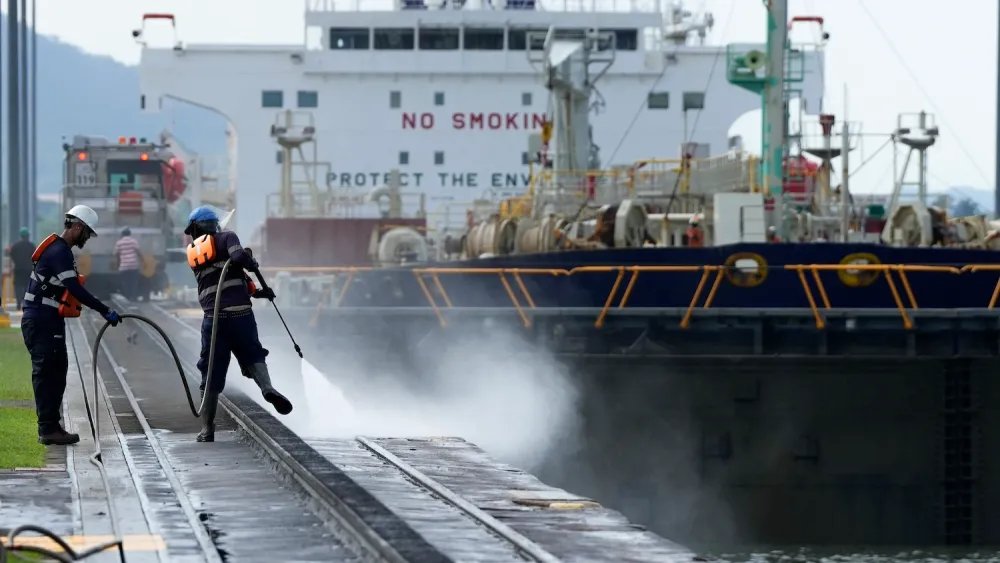
The Panama Canal is preparing for a sustained reduction in vessel traffic as worsening El Niño conditions squeeze the water supply needed to operate the trade conduit.
According to the budget proposal presented to Panama’s National Assembly earlier this month, the Panama Canal Authority (ACP) is projecting an average of 29.5 vessel transits per day during fiscal 2027, which begins Oct. 1.
The daily transit average would represent an 18 percent decline from the typical 36 transits that pass through the 51-mile waterway. Officials had previously cut the figure to 32 as drought conditions worsened.
Ilya Espino de Marotta, who took over as the new administrator of the ACP earlier this month, told French news agency AFP that the daily transit average could be reduced to 29. She said the limit would “probably not” be lowered to 24 slots.
With the transit restrictions in place, the ACP is forecasting 10,750 high-draft transits during the fiscal year, a 6.5 percent decline from last year’s budgeted level. However, cargo volume is expected to fall only 1.1 percent from the prior baseline, according to the proposal.
The relatively small decline in tonnage compared with vessel movements is central to the canal’s financial outlook, which still expects a 6.7 percent increase in total revenue to $5.56 billion for the upcoming fiscal year.
The canal expects that cargo mix to help offset the lower number of ships. More LNG and LPG vessels are expected to use the waterway, while bulk carriers are projected to account for a smaller share of traffic. The ACP consequently forecasts transit revenue of about $5.41 billion, up 5.7 percent from the fiscal 2026 budget.
The corridor can generate more revenue while handling fewer ships since scarce transit slots become more valuable. The canal has a long-term reservation system for transit slots, with a smaller portion made available through auctions.
Espino told the assembly’s budget committee that fewer than 10 percent of the canal’s daily transits are auctioned, meaning most ships are not competing in an auction for passage. Even when there are 38 ships going through in a day, the administrator says only three spots are usually auctioned off. But when capacity tightens, the value of those limited auction slots can rise sharply.
The current restrictions are being driven by concerns that there will be a redux of the months-long drought that struck the area from mid-2023 to early 2024, when daily transits were reduced to as low as 22 ships per day. The canal relies on freshwater from its watershed and Gatún Lake to operate its locks.
Panama declared a national emergency over El Niño conditions in August, while the ACP has warned that reduced rainfall could require additional operational measures.
According to Espino, the current conditions would necessitate more than a routine seasonal adjustment.
“2026 is another year that is expected to be as dry as the period between 1997 and 2023, based on what we have seen in the first months of the year,” she said during the budget presentation.
The potential consequences are substantial. Looking ahead to the driest portion of fiscal 2027, between February and May, the ACP has incorporated a scenario in which larger Neopanamax vessels face a 44-foot draft, which would reduce how much cargo ships can carry during their journey through the passage.
The canal has since postponed a previously announced reduction of the maximum Neopanamax draft to 47.5 feet that had been scheduled for Oct. 1, maintaining the current 48-foot limit while it reassesses Gatún Lake’s water levels and weather forecasts.
Ocean carriers are already dealing with the effects of the tighter operating environment. Hapag-Lloyd said reduced water levels and El Niño have made slots harder to secure and reduced cargo-loading ability on some vessels. The carrier also cited higher costs from priority auctions, surcharges and alternative routing, along with delays across multiple trade lanes.
The latest restrictions follow the decision from some ocean carriers to begin rerouting some services away from the Panama Canal, as disruptions elsewhere in global shipping have increased the importance of alternative routes.
For U.S. importers, that could mean more cargo flowing through West Coast gateways. Port of Los Angeles executive director Gene Seroka said recently that the combination of Panama Canal constraints and other global shipping disruptions could produce a 5 percent increase in cargo volumes at the California port.
The canal is also looking beyond the immediate drought, with its fiscal 2027 budget including $82 million for the Río Indio reservoir project.
That manmade reservoir is intended to provide additional water for both the canal’s operations and Panama’s population during El Niño events and dry seasons. The Río Indio project is expected to represent a roughly $1.6 billion investment over four years.
The wider budget also funds development of an energy pipeline, two new transshipment terminals and a logistics corridor as the ACP seeks to expand the canal’s role beyond simply moving ships between oceans.