dailynewsnblog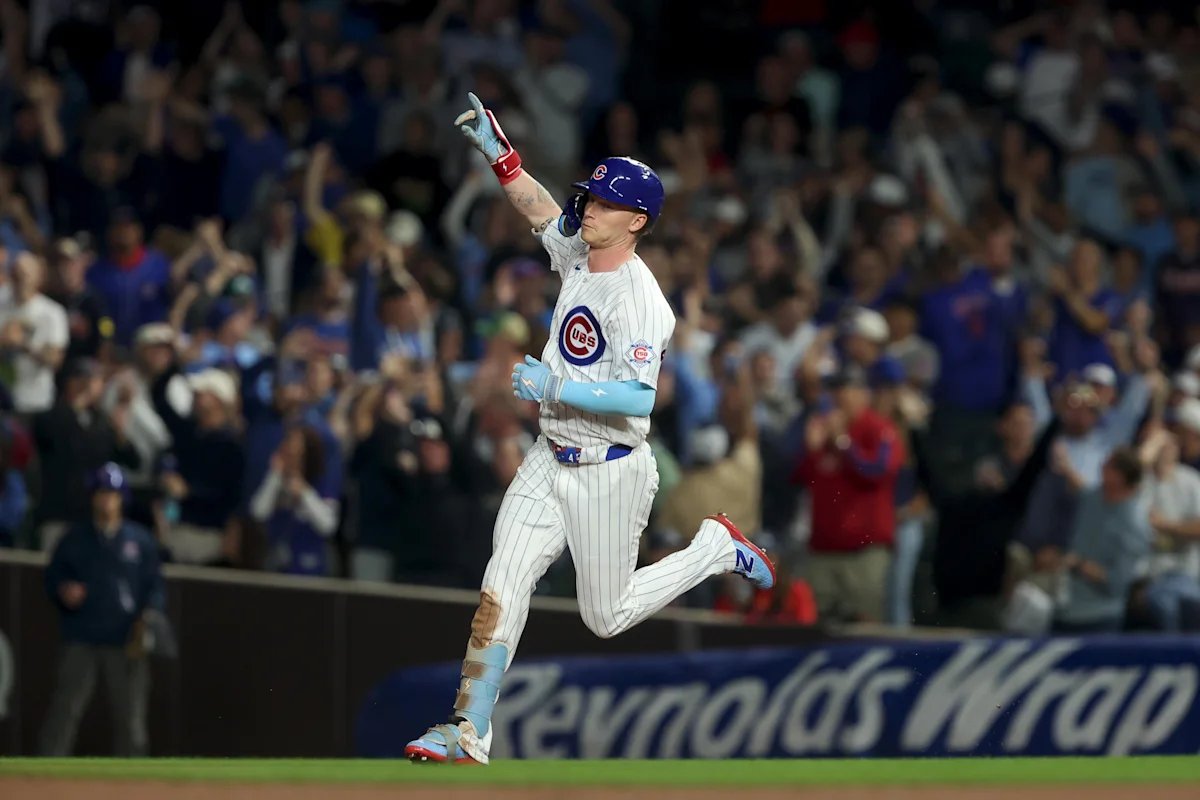
We’ve reached another Wednesday here at BCB After Dark: the grooviest spot for night owls, early risers, new parents and Cubs fans abroad. Rain or shine, we’re open. Come on in. There’s no cover charge. We still have a few tables available. The hostess will seat you now. Bring your own beverage.
BCB After Dark is the place for you to talk baseball, music, movies, or anything else you need to get off your chest, as long as it is within the rules of the site. The late-nighters are encouraged to get the party started, but everyone else is invited to join in as you wake up the next morning and into the afternoon.
Advertisement
Last night I asked you who should be the third starter in the Cubs first-round playoff series. You went with trusty Matthew Boyd, with 57 percent. Another 28 percent of you chose David Peterson.
Here’s the part with the music and the movies. It’s my favorite part. If it’s not your favorite part, it’s OK.
Continuing to pay tribute to John Coltrane in advance of the 100th anniversary of his birth next week, tonight we have him teaming up with also legendary Duke Ellington in 1963 playing “In A Sentimental Mood.” Generally we think of Coltrane as being big and brash in his sax playing, but here he shows that he had a softer and more subtle side to him as well.
Joining Trane and Duke are Aaron Bell on bass and Elvin Jones on drums.
I wanted to watch a Western last week, so I thought Santa Fe Trail (1940) sounded promising. With Michael Curtiz directing and starring Errol Flynn, Olivia de Havilland, Ronald Reagan and Raymond Massey, it certainly had the pedigree of something that could be quite good.
Advertisement
Santa Fe Trail is a terrible film. Everyone involved in it, other than maybe Raymond Massey, should have been embarrassed to make it. It’s a bad movie, it’s a bad piece of history and it’s racist to the core. Not only that, but despite its title, it’s not even a Western! I guess it’s kind of partially set in the West, but it’s really a Civil War movie about Bleeding Kansas and John Brown.
Flynn plays James Ewell Brown “Jeb” Stuart, a Virginia West Point cadet who is best friends with Ohio classmate George Armstrong Custer. To be clear, in real life these future famous generals never met. Custer was also younger and still a cadet at West Point when the events of Bleeding Kansas took place. But I guess the film demanded a northern famous general to complete the story.
Van Heflin plays fictional cadet Carl Rader, who gets kicked out of West Point for spreading abolitionist literature. He’s considered a menace because he sows dissension among the graduating class, which starts fistfights. Rader will eventually join up with John Brown (Massey) in Kansas.
Both Stuart and Custer are sent to Kansas after graduation. Kit Carson Holliday (de Havilland) is a pretty young railroad heiress and both Stuart and Custer are smitten with her. This is a ridiculous subplot because from the get-go, you know there is zero chance that de Havilland is going to pick Ronald Reagan over Errol Flynn. Honestly, I give Curtiz some credit for not trying to insult our intelligence by trying to make this look like a tough decision for Holliday. Again to the film’s meager credit, it doesn’t give de Havilland a lot of screen time.
Advertisement
The rest of the film deals with Stuart and Custer, well, mostly Stuart, trying to bring John Brown, who is terrorizing the territory with his sons and band of abolitionists, to justice. Here at least the film does get history right in that Stuart was assigned to Kansas as part of the anti-John Brown forces. However, in Santa Fe Trail, Brown is the only one committing any violence in Kansas. The pro-slavery bushwhackers whom Brown was responding to are completely absent. Or any other pro-slavery violence, of which there was a lot.
The racism of the film doesn’t stop there. Brown is part of the Underground Railroad and is running freed slaves through Kansas. (Brown was involved in the Underground Railroad, but more before he got to Kansas. He certainly helped those running it through Kansas though.) But Brown is also portrayed as a hypocrite. He makes lots of speeches to the freed slaves about their dignity, but he also doesn’t treat them very well. When the barn that he’s keeping the runaway slaves in catches fire after an encounter with Stuart and his men, Brown flees, leaving his charges to die. Stuart, on the other hand, risks his life in the burning barn to save the lives of the trapped slaves.
After Stuart saves their lives, it gets worse. An elderly Black couple talk, with the woman saying “If this here Kansas is ‘freedom,’ then I’ve got no use for it” and her husband responds “Me, neither. I just wants to get back home to Texas and sit till Kingdom Come.” The film repeatedly makes the claim that slavery, while bad, wasn’t that bad and it certainly wasn’t worth fighting over. Stuart, who in real life was a slave owner, makes the case to John Brown if he were to just stop his crusade, the Southern states will get rid of slavery peacefully. Eventually.
Eventually we get to the raid at Harper’s Ferry, which is stopped because Heflin’s character betrays John Brown because he hasn’t gotten paid. Which again, portrays the abolitionists as hypocrites who don’t really believe in the cause and are just in it for fame, money and glory.
Advertisement
The one saving grace of the film is that Massey really plays John Brown out to the max as a bug-eyed zealot. Yes, he’s the villain in this movie and he shouldn’t be, but he’s also the most interesting character in the film by far. Brown is a difficult figure in America history because he was probably mentally ill and he did massacre some defenseless people. He was also pretty much right in all his beliefs. Santa Fe Trail does at least give Brown a measure of dignity after he is captured and they do let Massey quote his final words correctly: “I, John Brown, am now quite certain that the crimes of this guilty land will never be purged away but with blood.” It’s the best moment of the film.
Beyond all the racism, the film is just bad. The characters, other than Brown, are boring and flat. The constant need to insert cameos of people who will be famous a few years later in the Civil War is tiring. There’s also no moral struggle over the question of slavery that literally every American of the 1850s was dealing with in one way or the other. Abolitionists are violent hypocrites. The army that enforces the slave order are just doing their duty and are good and decent people.
The previous year, Gone With the Wind proved that there was a big market in America for pro-Confederate movies. But with World War II underway in Europe and the threat of another war looming in America, the film also makes the case that America needs to be united. If that means the freedoms of non-white Americans have to be thrown under the bus, so be it.
Here’s the trailer for Santa Fe Trail. Notice how Custer is called “gallant” and John Brown is termed as “infamous.”
Welcome back to everyone who skips the music and movies.
Advertisement
Pete Crow-Armstrong continues to do stuff that no one thought possible. With two more home runs against the Braves tonight, he moved to 44 on the season. That’s just one fewer than the current NL leader in home runs, Kyle Schwarber.
So tonight’s question is simply “Can Crow-Armstrong catch Kyle?” The Cubs have nine games left on the schedule. Three against the Reds at Great American Ballpark and three more are against Boston at Fenway park. There are just three games left at Wrigley against the Marlins.
The Phillies have one more game left to play, but they seem to have the tougher road. They have four games starting tomorrow versus the Mets at Citi Field. Then three at home versus the Brewers and three more against the Rays.
Citizens Bank Park is certainly the most homer-friendly of any of these ballparks. But the Rays and the Brewers have good pitching staffs. The Brewers are well-below-average in home runs allowed and the Mets are about average. The Rays give up a fair number.
Advertisement
For the Cubs, the Reds give up a ton of home runs, almost as many as the Cubs. The Red Sox and Marlins are below average in that category.
No one other than PCA or Schwarber has a realistic chance at the NL home run crown. The Braves Matt Olson has 39 and the Rockies Hunter Goodman has 38. It’s possible one of those two goes on a nine home runs in nine games tear, but it’s highly improbable.
So will PCA win a HR crown? As far as definitions go, if you think PCA will tie with Schwarber, they both get a crown. So you’d vote yes in that case.
Thank you for coming by tonight. We’ve enjoyed spending time with you. Get home safely. Recycle any cans and bottles. Tip your waitstaff. And join us again next week for more BCB After Dark.