dailynewsnblog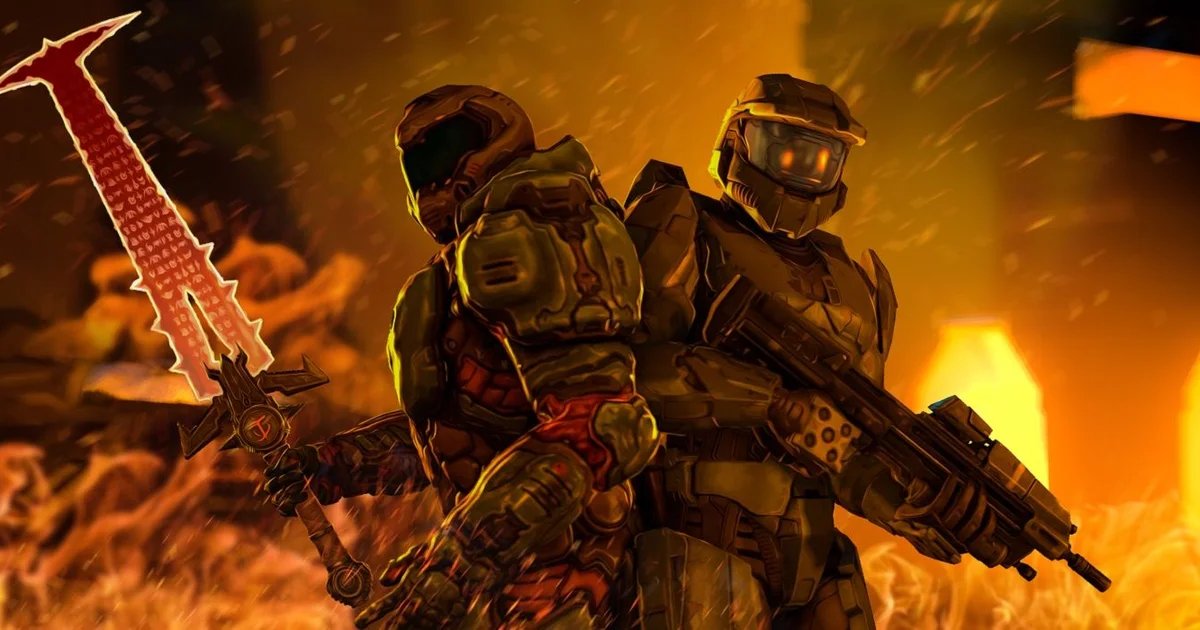
Former Doom: The Dark Ages producer Andrew Willis has shared tuppence on the state of the blockbuster videogame trade, arguing that the biggest companies and most popular series are going through the final stage of a familiar “cycle” whereby the moneyfolk finally displace the creatives, and start messing games up in the name of short-term returns. He reckons that the likes of Halo are well on their way to becoming “a dried husk of a product that everyone just now associates with like, slop”.
I imagine the wizened amongst you are mouthing “you don’t say????” while theatrically fanning yourself with dog-eared copies of Cory Doctorow’s book Enshittification. I admit, I don’t really like Willis’s somewhat nostalgic articulation of the artform as defined by the fortunes of megabrands like Halo, but he does specify that he’s talking about “AAA” games. In general, it’s good to hear somebody loudly restate the argument that any cool thing that finds a following will generally attract people who don’t really care for that thing, beyond siphoning a few million bucks from its expiring carcass.
Willis is one of several former id Software developers and union members who’s spoken out about the studio’s recent gutting by Microsoft – part of a wider Xbox “reset” that seems increasingly akin to carving an actual Xbox in half with a chainsaw and then expecting it to play Fortnite.
In a lengthy chat with Kiwi Talkz, Willis ridicules Microsoft CEO Asha Sharma’s suggestion that the company’s on-going mass layoffs are designed to deliver “a flatter organization that is built around makers” rather than managers, pointing out almost all of the 158 id Software staff who lost their jobs in July were union members and as such, not managers by definition (as confirmed by a WARN notice acquired by Game Developer).
Willis goes on to argue that Microsoft’s belt-tightening fits a historical pattern, elsewhere seen in Hollywood. It all starts with “unproven technology” in the hands of “passionate” creatives, aided and abetted by “money people [who] care about it enough to take that risk”. From such unions of the Muse and Mammon we get “big franchises that have lasted decades, Indiana Jones and Star Wars and Jaws,” Willis says. But eventually, it all turns sour.
“It makes so much money that you get the money people who could care less about the craft,” he goes on. “They don’t care at all, but they see, oh wow, this is starting to make some money. I need to get in between that somehow. I don’t care about it at all – it’s a stupid hobby that I don’t even participate in. Let me just see where I can insert myself. And they start to take over, and make decisions about financialising the product, or changing the product to match focus groups, or marketing strategies, or media crossover distribution strategies, and all the stupid things that make art worse, and diminish your return year-over-year.”
Willis feels that the biggest videogame publishers are now firmly in cash-in mode. “We’ll just slap the name on there, and then we’ll slowly squeeze the value that was built up over the last 30 years, and turn that into short-term financial gain,” he mourns. “And yes, when we do it enough times, it’ll leave a dried husk of a product that everyone just now associates with like, slop, and have basically brand exhaustion.
“That’s happened to Star Wars,” Willis goes on. “That’s happened to Halo, and a bunch of other stuff. And then you know once it’s extracted all the value that was built up, you can just sort of toss it on the side and then move on to the next thing. But I think games are in that cycle right now, where we had this peak of establishing all the brands that people know and love, that had room and legs to run.”
Willis offers the caveat that Nintendo “have brand protection as this strategy”, and are in his opinion not running their biggest names into the ground. (Going by slightly shellshocked reactions to the recently trailered Ocarina of Time remake, I feel like a few Zelda players are going to take issue with this statement.) But he maintains that otherwise, “we’re starting to get to the point where the financialisation period is taking place in video games in which, you know, basically every level of AAA gaming is managed by these people.
“They don’t participate, they’re not consumers of the end product,” Willis goes on. “They don’t participate in the development of the product and they never have. So they don’t really understand how that side of it works either. And the decisions they make are all driven by short-term gain.”
Willis feels that, in practice, there won’t even be short term gain. “They think that’s what they’re getting out of it, to please their shareholders,” he says. “They’re actually going to get neither, because it’s both not going to make money, and it’s not going to create a good product, because you can’t just dump these things on people, and expect them not to notice that the quality has tanked. And something that was a day one purchase, like a Halo, becomes not that. It’s not a day one purchase. For a millennial like myself, Halo is something that’s like, sacred and a cornerstone of amazing sci-fi FPSs. For a zoomer today, it’s just something that keeps coming out, for whatever reason, and it’s like a mid-tier game and that’s their fault.”
Again, I think this will be familiar reasoning for most of you moderately old heads. It’s possibly too abstract to be useful. I’d like Willis to ground his account in specific industry Happenings such as the recent sector boom under Covid lockdown conditions, the associated overweening company expansions, the consolidation of various studios and series under a few megacorps such as Embracer, and the scrabbling around for magic bean technologies such as NFTs and generative AI to keep the music going after the lockdown boom ran its course.
Still, I agree with the sentiments at large. It’s hard to look at Microsoft’s current first-party line-up – recently expanded with a new, sort-of-throwback Diablo, yet another attempt at turning StarCraft into a shooter, and a World of Warcraft… thing that seems to consist of just speed-rewinding World of Warcraft – and not agree with the line about “brand exhaustion”.