dailynewsnblog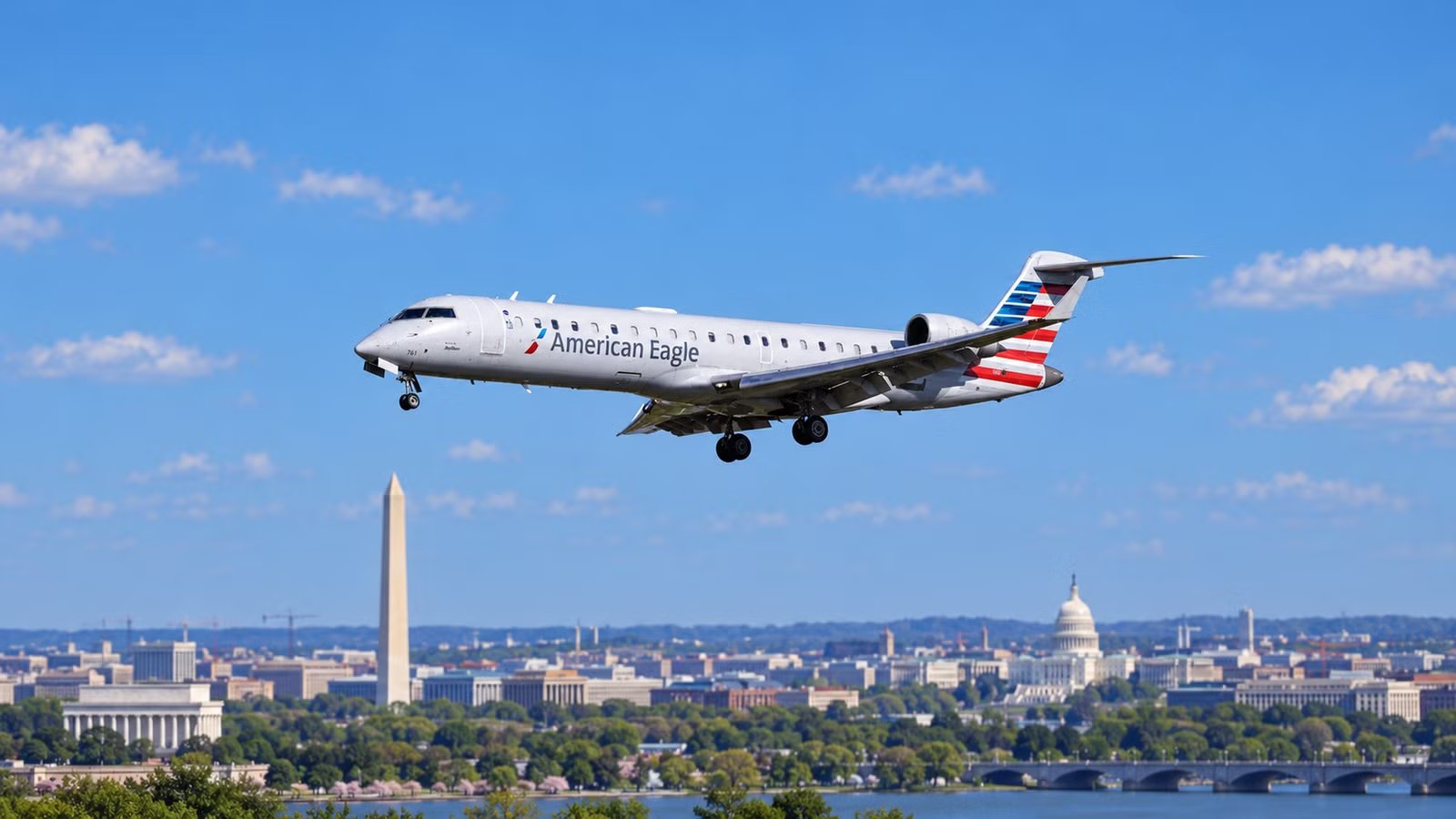
The National Transportation Safety Board (NTSB) has rejected the Federal Aviation Administration‘s (FAA) responses to 11 of 33 safety recommendations stemming from the January 2025 midair collision near  Ronald Reagan Washington National Airport (DCA), classifying the regulator’s responses as “unacceptable.” The collision between PSA Airlines-operated American Airlines Flight 5342 , operated by a Bombardier CRJ-700, and a US Army Sikorsky UH-60L Black Hawk, killed all 67 people aboard the two aircraft, becoming the deadliest US aviation accident since November 2001.
The finding doesn’t mean that the FAA has taken no action. Helicopter operations around DCA have been radically changed since the disaster, while air traffic control procedures and staffing practices have also come under intense scrutiny. However, the NTSB’s final investigation blamed systemic failures in FAA airspace design and risk management, alongside failures by the Army and flight crews, and the latest disagreement shows that significant post-crash reforms remain unresolved more than 19 months later.
NTSB Says 11 Of The FAA’s 33 Responses Are “Unacceptable”

The scale of the NTSB’s response to the accident goes well beyond 11 disputed items. Its final report generated 50 new safety recommendations, including 33 to the FAA, eight to the Army, five to the Department of Defense Policy Board on Federal Aviation, two to the US Department Of Transportation(DOT), and one each to the DOT inspector general and RTCA. The NTSB separately tracks how recipients respond, with an “unacceptable” classification used when an agency rejects a recommendation, proposes an inadequate alternative, or does not act quickly enough.
The full list of NTSB recommendations is available to view on its Case Analysis and Reporting Online (CAROL) system, with the majority of them marked as “Closed – Acceptable Action.” But there are 11 that remain marked “Open – Unacceptable Response,” as follows:
Recommendation | Issue | What The NTSB Wants The FAA To Do |
|---|---|---|
A-26-008 | Supervisor workload | Establish time-on-position limits for supervisory ATC personnel, adaptable to local staffing and procedures |
A-26-009 | Controller training | Provide annual instructor-led, scenario-based threat-and-error-management training covering scanning, communication, decision-making and developing threats |
A-26-010 | Operational risk | Develop a risk-assessment tool for supervisors to identify and mitigate threats during operations |
A-26-015 | ATC facility classification | Establish objective criteria for determining ATC facility levels, taking traffic, airspace complexity, operational factors and cost of living into account |
A-26-016 | DCA tower classification | Reassess whether DCA tower’s Level 9 designation accurately reflects the complexity of its operations |
A-26-022 | Post-incident testing | Change procedures so an appropriate on-site supervisor can promptly determine which controllers require post-accident drug and alcohol testing |
A-26-023 | Testing-procedure training | Provide annual training and knowledge assessments for staff responsible for post-accident and post-incident drug and alcohol testing decisions |
A-26-031 | ADS-B In | Require aircraft operating where ADS-B Out is mandatory to also carry ADS-B In with cockpit traffic displays and audible crew alerts |
A-26-037 | Close-proximity data | Create an objective definition of a close-proximity encounter and a public database showing where such encounters occur |
A-26-038 | Near-miss notification | Create a process to promptly notify involved parties after near-midair collisions or TCAS resolution advisories while relevant data are still available |
A-26-040 | Combined ATC positions | Require supervisors to document whenever control positions are combined, including the reason for doing so |
The FAA argues that considerable work is already underway. It says several recommendations have been addressed and more are expected to be completed by the end of 2026, while others will take longer as they require formal rulemaking or development of new technical standards. The agency says it actually exceeded one NTSB recommendation by suspending visual separation between helicopters and airplanes in busy controlled airspace nationwide, and instead requiring defined radar separation. The broader dangers of relying on visual approaches and separation in increasingly congested US airspace have already prompted additional FAA warnings and procedural changes.
However, Reuters reports that the sharpest disagreement between the two agencies concerns collision-warning technology. The NTSB says that the FAA has not agreed to mandate key safety systems, which could have been instrumental in saving lives. NTSB Chair Jennifer Homendy expressed significant frustration with that decision:
“How many more decades have to go by before we again and again and again have to recommend it after terrible tragedy?”
The 59 Seconds At The Center Of The Fight

At the center of the dispute is Automatic Dependent Surveillance-Broadcast In, or ADS-B In. ADS-B Out transmits an aircraft’s GPS-derived position and other information, and has been mandatory in most controlled US airspace since 2020. ADS-B In goes further by allowing pilots to receive traffic information in the cockpit. Recommendation A-26-31 calls for aircraft operating wherever ADS-B Out is mandated to also carry ADS-B In, with a cockpit traffic display and audible alerts. The FAA has not committed to writing such a rule.
The reason the NTSB is pushing so strongly is illustrated by its reconstruction of Flight 5342. Investigators calculated that a suitable ADS-B-based system could have given the  American Airlines crew its first visual and audible alert 59 seconds before impact. A simulation of the traffic display available to the Black Hawk crew indicated an alert 48 seconds before impact. The CRJ’s existing TCAS did provide a traffic advisory, but much later, while low-altitude limitations prevented the system from delivering the stronger resolution advisory used to command an evasive maneuver.
Aircraft | Potential ADS-B-Based Warning | Existing Warning |
|---|---|---|
American Eagle Flight 5342 | 59 seconds before collision | TCAS advisory came substantially later |
Army Black Hawk PAT25 | 48 seconds before collision | No equivalent integrated collision warning |
That explains why the NTSB’s recommendations extend beyond ADS-B In itself. The Board wants richer TCAS alerts, directional traffic symbols, evaluation of lower alert-inhibit altitudes, and wider adoption of next-generation ACAS X and eventual ACAS Xr equipment for rotorcraft in Class B airspace. Other recent incidents have continued to highlight the problem of aircraft operating without sufficiently effective traffic-warning information, including close encounters involving military helicopters and commercial aircraft.
Technology | What It Does | Current Position | NTSB Recommendation |
|---|---|---|---|
ADS-B Out | Broadcasts aircraft position | Required in much controlled airspace | Retain |
ADS-B In | Receives and displays surrounding traffic | Generally not required | Mandate where ADS-B Out is required |
TCAS | Detects collision threats and warns crews | Required on applicable airliners | Improve alerts and directional information |
ACAS X/Xr | Next-generation collision avoidance | Not universally required | Phase in for fixed-wing aircraft and rotorcraft |
It is worth noting that the dispute also predates Flight 5342. The NTSB says it has repeatedly called for improved ADS-B-based collision avoidance since 2006, with Homendy arguing to Congress that readily available cockpit information would overcome some of the inherent weaknesses of “see-and-avoid.”
DCA Has Changed Dramatically, But The Bigger Battle Isn’t Over

Washington’s airspace today looks very different from when the tragedy of Flight 5342 occurred. The FAA permanently closed the affected Route 4 segment between Hains Point and the Wilson Bridge, restricted routine helicopter operations, changed helicopter zones, increased separation from airline traffic, and curtailed controller use of visual separation. ADS-B Out broadcasting has also been strengthened around DCA, while the FAA has increased staffing and oversight at the tower.
Changes Since Flight 5342 | Status |
|---|---|
Route 4 segment between Hains Point and Wilson Bridge closed | Permanent |
Routine mixed helicopter/fixed-wing operations near DCA restricted | Permanent |
Helicopter zones modified and moved away from airline flight paths | Implemented |
Visual separation between helicopters and airplanes curtailed | Implemented |
Runway restrictions during essential helicopter operations | Implemented |
ADS-B Out around DCA | Required with limited exceptions |
Mandatory ADS-B In | Not implemented |
Broader ACAS X/Xr mandates | Not implemented |
Yet the accident investigation also suggested the hazard had been visible for years. FAA-supplied data reviewed by the NTSB showed 4,067 encounters between airplanes and helicopters on Routes 1 or 4 from January 2018 through February 2025 where separation fell to 0.19 miles (0.30 km) or less. In a staggering 348 cases, it fell to less than 160 yards (150 meters). That evidence helped drive the Board’s conclusion that the problem extended beyond a single controller, crew or unlucky sequence of events.
Separation Between Aircraft | Encounters | Monthly Average |
|---|---|---|
≤0.19 miles (0.30 km) | 4,067 | 65.6 |
≤0.09 miles (0.15 km) | 348 | 5.6 |
Congress has meanwhile split over how far reform should go. The Senate unanimously passed the ROTOR Act, with a strong ADS-B requirement, but the measure fell one vote short of the two-thirds House majority required under expedited rules. The House subsequently approved its broader ALERT Act 396-10, although the NTSB argued that key provisions — particularly on ADS-B In — still fell short of its recommendations. The Board’s aviation safety director, Tim LeBaron, has repeatedly warned against weakening recommendations developed from the year-long DCA investigation:
“Efforts to now water-down our evidence-based recommendations are counter to safety and dishonor the lives of 67 people who died on January 29, 2025.”
The Associated Press reports that families of the 67 victims returned to Capitol Hill this week alongside Homendy to demand further action, as the FAA continues reviewing helicopter routes elsewhere in the country. The fundamental question has therefore moved well beyond how to make DCA safer: the NTSB now wants lessons from Flight 5342 embedded across the national airspace system before another close encounter becomes another fatal collision.